Why Is Sprinkler Pressure Low? Find the Cause
August 17, 2026
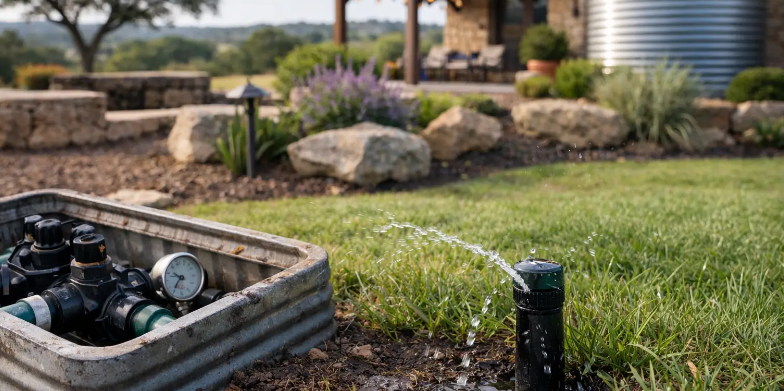
A sprinkler zone that once covered the lawn evenly can start leaving dry rings around heads, weak streams near the end of a line, or mist that blows away before it reaches the grass. In the Texas Hill Country, that is more than an appearance issue. When heat is high and water is valuable, poor coverage can quickly stress turf, trees, shrubs, and flower beds. So, why is sprinkler pressure low? The answer is usually not one single problem. It is often a restriction, a leak, a valve issue, or a system that is trying to water more than its water supply can support.
The good news is that low pressure is usually diagnosable. The key is to look at when it happens, where it happens, and whether the issue affects one zone or the entire irrigation system.
Why Is Sprinkler Pressure Low in One Zone?
If only one zone has weak spray, focus on the equipment and piping assigned to that zone. When every zone is weak, the problem is more likely tied to the main water supply, a master valve, a backflow device, or a system-wide flow issue.
Start by running the affected zone by itself. Watch the heads at the beginning, middle, and end of the zone. A few weak heads may point to clogged nozzles or damaged heads. Pressure that gets noticeably worse farther down the line often points to a leak, a partially closed valve, a crushed pipe, or too many heads operating on that zone.
A partially closed valve restricts flow
Irrigation systems have several valves that can affect performance. A shutoff near the backflow assembly, the irrigation supply connection, or the water meter may have been left partly closed after winterizing, maintenance, or plumbing work. A partially closed valve may still allow water through, but it creates enough restriction to weaken the entire zone.
The zone valve itself can also cause trouble. Debris inside the valve, a worn diaphragm, or a solenoid that is not opening fully can limit water flow. This is especially common in systems supplied by well water, rainwater storage, or older plumbing where sediment can move through the line.
Do not force a valve that is stuck or corroded. That can create a larger repair. A technician can inspect the valve, clean or replace internal parts, and verify that it is opening properly.
Clogged nozzles and filters reduce spray
A sprinkler head can look like it is working while still delivering poor coverage. Sand, grass clippings, mineral buildup, and small insects can clog the nozzle or filter screen. The head may produce a weak fan of water, shoot in an odd direction, or barely rise above the soil.
Turn off the system before cleaning a head. Remove the nozzle carefully, rinse the filter, and flush the line briefly if appropriate. Avoid pushing wire or sharp tools deep into the nozzle, since that can change the opening and alter the spray pattern. If the nozzle is worn or damaged, replacing it with the correct model is generally the better fix.
A low head can create the same visual problem as low pressure. Soil, mulch, or turf can bury the body of a pop-up head, keeping it from extending fully. Raise and level the head so the nozzle clears the surrounding grade.
A leak steals pressure before water reaches the heads
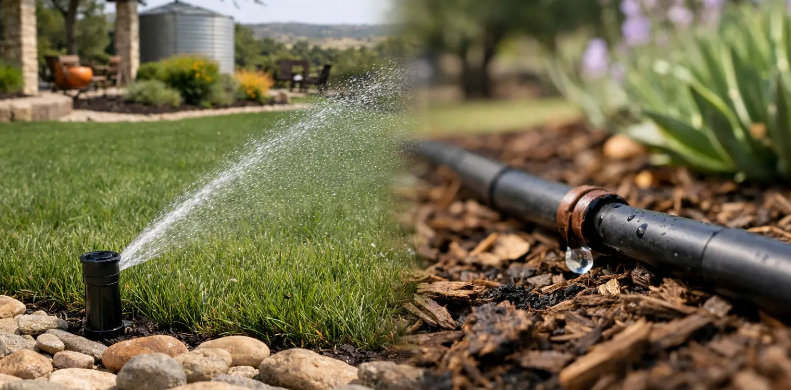
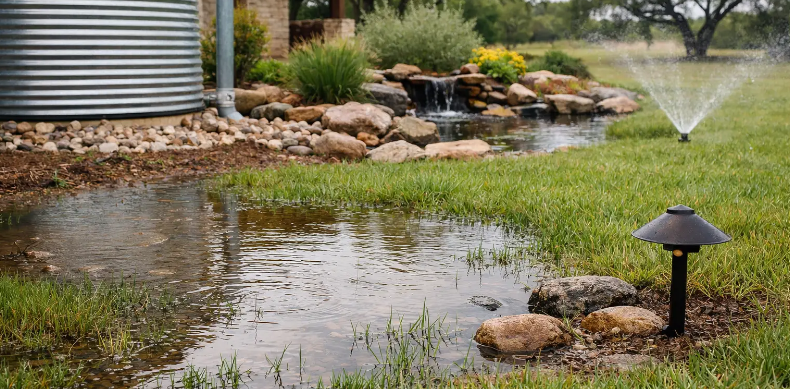
A damaged irrigation line can lose a surprising amount of water underground. The visible symptom may be weak heads, but the real problem is water escaping before it reaches them. Look for soggy spots, unusually green patches, soft ground, water pooling around a valve box, or runoff while the zone is running.
Leaks are not always obvious. A small split in a lateral line can reduce performance without creating a dramatic puddle, particularly in dry soil. On large properties, a hidden leak can also mean higher water bills and long-term erosion near foundations, driveways, or landscaped areas.
If you suspect a leak, avoid repeatedly running the zone for long periods to compensate for dry areas. More run time wastes water and may make the damaged section worse. Finding the leak and repairing the pipe is the more efficient path.
When Low Sprinkler Pressure Affects Every Zone
When all zones have low pressure, check the water source before replacing individual sprinkler heads. It may be a supply problem, but it can also be a scheduling or system-design issue.
Too much water demand at one time
An irrigation system needs enough flow, measured in gallons per minute, and enough pressure, measured in pounds per square inch, to operate each zone correctly. Those are related but not interchangeable. A property can have good static pressure when no water is running, yet not enough available flow to run a large sprinkler zone effectively.
Pressure can drop when sprinklers run while someone is showering, filling a stock tank, washing equipment, or using outdoor faucets. On a municipal supply, demand in the neighborhood may also affect performance at certain times of day. For systems on a well, the pump capacity, pressure tank, filter condition, and pump controls all matter.
Try running the affected zone when no other water is being used on the property. If performance improves, the system may be competing with another water demand. The answer may be a schedule adjustment, smaller zones, or a system update that better matches the available water supply.
Backflow preventers and filters need attention
Backflow prevention equipment protects the potable water supply, but it can become a point of restriction when it is damaged, improperly adjusted, or filled with debris. A clogged irrigation filter can have the same effect. These components are particularly worth checking after construction work, a line break, heavy sediment movement, or changes to a well or rainwater collection setup.
Because backflow devices protect drinking water, repairs and testing should be handled by a qualified irrigation or plumbing professional. A quick inspection can identify whether the device is contributing to the pressure loss or whether the issue lies farther down the system.
The zone may be oversized or poorly matched
Sometimes nothing is broken. The system may simply be asking too much of the available water supply. This can happen when a landscape expands, when additional heads are added over time, or when a zone combines high-flow rotors with spray heads that require different operating pressure.
An oversized zone usually shows its weakness at the far end. Heads close to the valve may look acceptable while the final heads barely spray. Mixing mismatched nozzles can make that pattern even worse. Bigger nozzles are not always the solution, either. They can demand more flow and lower pressure across the zone.
A proper irrigation evaluation measures available flow and pressure, counts the demand of each nozzle, and checks spacing and coverage. In some cases, changing nozzle sizes or separating a large zone provides a better result than replacing the entire system.
A Practical Way to Diagnose the Problem
Before calling for service, note a few details that make diagnosis faster. Run one zone at a time and identify whether the issue occurs in one zone or all of them. Watch for wet ground, geysers, water around valve boxes, heads that do not rise, and heads that spray differently from the rest.
Also consider when the problem started. Low pressure after a freeze, excavation, landscaping work, a water-provider repair, or a controller change can point toward a specific cause. If the controller has recently been adjusted, make sure zones are not accidentally programmed to run at the same time. Most residential systems should operate one zone at a time unless they were specifically designed for simultaneous operation.
Do not assume brown grass means a pressure problem. Heat stress, poor soil, shade changes, disease, and incorrect watering duration can all create dry-looking areas. Still, uneven pressure creates a recognizable pattern: watered areas near some heads and dry areas between or beyond others.
When It Is Time for Irrigation Repair
Simple cleaning and a visual check can solve minor problems. Call for professional help when you see a suspected underground leak, low pressure across several zones, a leaking or damaged backflow device, electrical valve issues, repeated clogging, or a zone that has never delivered even coverage.
Joshua Buss Irrigation helps Fredericksburg-area property owners identify the source of irrigation problems instead of applying a temporary fix. A careful repair can protect the landscape, reduce unnecessary water use, and help your system deliver the coverage it was designed to provide.
A healthy landscape should not depend on longer runtimes and crossed fingers. If the sprinkler pattern has changed, address it early, while the repair is usually smaller and your lawn, beds, and trees still have a fair chance to recover.