Lawn Watering Schedule Texas Homeowners Can Trust
August 19, 2026
A green lawn in July is not proof that it is getting enough water. It may be getting watered too often, too shallowly, or at the wrong time of day. A dependable lawn watering schedule Texas property owners can live with starts by watering for the conditions on the ground, not by running the same timer setting all year.
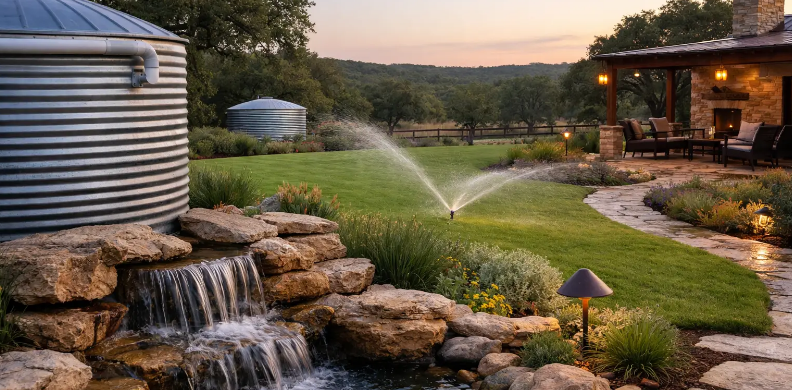
In Fredericksburg and across the Hill Country, heat, wind, thin soil, limestone, and long dry stretches can change a lawn's needs fast. The goal is not to keep the soil wet. It is to encourage deeper roots, avoid runoff, and give turf enough moisture to recover from Texas weather without sending water down the street.
A Practical Lawn Watering Schedule for Texas
For most established Texas lawns, plan on watering deeply one to two times per week during hot, dry weather. That usually means applying about 1 inch of water per week, including rainfall. During extreme heat, sandy soil, new landscaping, or periods of high wind, some areas may need closer attention. During cooler weather or rainy periods, the system may need little water or none at all.
A schedule is a starting point, not a promise. Two neighboring properties can need different run times because one has shallow rocky soil and full afternoon sun while the other has deeper soil, mature shade, and better moisture retention.
For an established lawn, this seasonal approach is a sound place to begin:
- Winter: Water only when conditions are unusually dry and the ground is not frozen. Many lawns need no supplemental irrigation for extended periods.
- Spring: Begin watering as active growth returns, often every 7 to 10 days if rainfall is limited. Watch for rain before turning on the system.
- Summer: Water deeply one or two days per week, preferably early in the morning. Increase only when the lawn shows real drought stress or conditions demand it.
- Fall: Gradually reduce watering as temperatures cool and rainfall improves. Deep, less frequent watering remains better than daily light cycles.
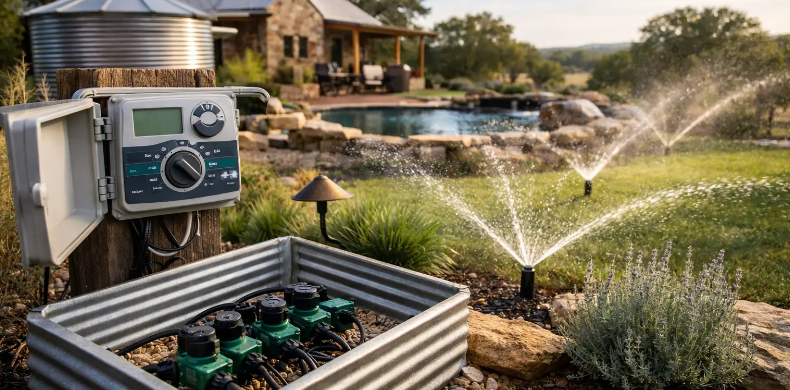
That broad schedule protects against a common mistake: treating a Texas irrigation controller like a set-it-and-forget-it appliance. It needs seasonal adjustment.
Water Early, Not Often
The best time to run most irrigation zones is early morning, ideally before 9 a.m. Cooler temperatures and calmer wind help more water reach the root zone. Leaves also have time to dry after sunrise, which is better than leaving turf wet overnight.
Evening watering can work when necessary, but it is generally less desirable because foliage stays damp longer. Midday watering loses more water to evaporation and wind. It can still be useful as a short hand-watering measure for a stressed plant, but it is not the right routine for the lawn.
Frequent short watering is another costly habit. A lawn that receives a few minutes every day tends to form shallow roots near the surface. Those roots are the first to suffer when a hot, windy week arrives. Longer, properly spaced cycles encourage roots to move down where moisture lasts longer.
How Long Should Each Zone Run?
Run time depends on your sprinkler type, water pressure, soil, slope, and the precipitation rate of each zone. There is no honest one-size-fits-all answer. A rotor zone may need much longer than a spray-head zone to deliver the same amount of water.
The simplest way to find out is the catch-can test. Place several straight-sided cans around one irrigation zone, run that zone for 15 minutes, and measure the water collected. Average the measurements, then calculate how long the zone needs to apply about one-half inch. If you water twice per week, that half-inch target per cycle is often appropriate for an established lawn during dry summer conditions.
For example, if your cans collect one-quarter inch in 15 minutes, the zone needs about 30 minutes to apply one-half inch. If they collect one-eighth inch, it needs closer to 60 minutes. Uneven amounts across the cans can point to clogged nozzles, poor spacing, pressure problems, or heads blocked by grass and shrubs.
A professionally designed system should account for different water delivery rates. Turf sprays, rotors, drip irrigation, foundation zones, beds, and trees should not be treated as though they all need the same run time.
Use Cycle and Soak on Slopes and Hard Ground
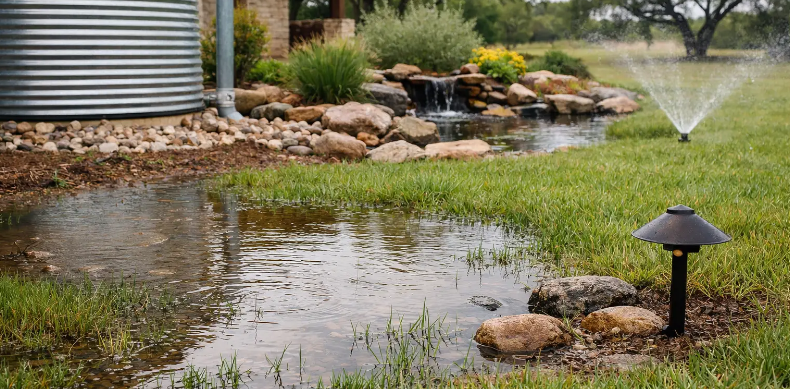
Hill Country ground often cannot absorb water as fast as sprinkler heads apply it. When water starts running across the lawn or down a driveway, the system is not watering efficiently, even if the controller says the zone ran for 30 minutes.
Cycle and soak solves much of this problem. Rather than running one 30-minute cycle, run three 10-minute cycles with 30 to 60 minutes between them. The first cycle wets the surface, and the later cycles allow water to move deeper instead of becoming runoff. This method is especially useful on compacted soil, slopes, and rocky properties.
Let Rainfall Change the Schedule
Texas weather can swing from drought to heavy rain quickly. An irrigation schedule that ignores rainfall wastes water and can leave roots sitting in overly wet soil. Rain sensors, soil-moisture sensors, and smart controllers can help, but they still need correct setup and occasional inspection.
Do not assume a passing shower replaced a full irrigation cycle. Light rain may wet the grass blades without reaching the root zone. On the other hand, a slow, soaking rain may provide all the moisture the lawn needs for several days. Check the soil with a screwdriver or soil probe. If it slides easily 4 to 6 inches into the ground, moisture is likely reaching the root area. If the ground is hard and dry just below the surface, the lawn may need a deeper soak.
Pay attention to local watering restrictions as well. Schedules must follow current rules, and restrictions can change with drought conditions. A water-efficient system gives you more control when watering days are limited.
Know the Signs Before You Add More Water
A lawn does not always turn brown first. Look for bluish-gray color, folded or curled blades, and footprints that remain visible after you walk across the grass. These can signal that turf is under moisture stress.
Still, brown patches do not automatically mean the lawn needs more water. Irrigation coverage issues, chinch bugs, fungal disease, compacted soil, pet damage, or a broken sprinkler head can create similar symptoms. More water may make some of those problems worse.
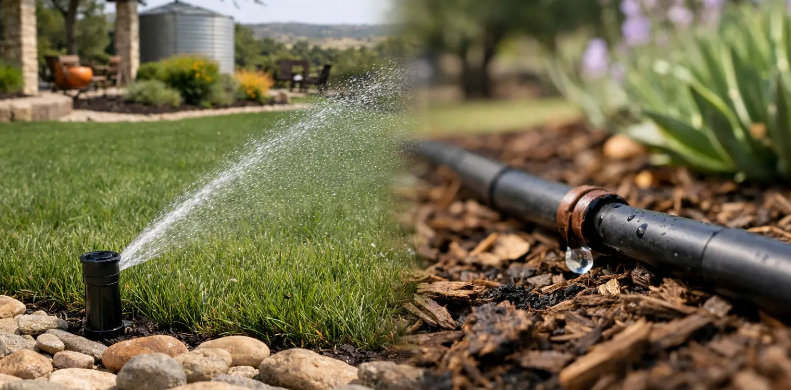
Walk the property while the system is running at least once a month during irrigation season. Look for misting, clogged heads, overspray onto pavement, broken risers, low spots, and water pooling near foundations. Small repairs prevent a surprising amount of waste and help protect the landscape work you have invested in.
New Sod, Seed, Trees, and Beds Need Their Own Plan
New sod and seed need more frequent, lighter watering at first because the roots have not yet established. The surface should stay consistently moist during the establishment period, but not muddy. Once the roots begin holding the soil and growth is established, transition gradually to deeper, less frequent watering.
New trees and shrubs need a different approach from turf. Their root balls must be watered slowly and thoroughly, often with drip irrigation or hand watering directed at the root zone. A lawn sprinkler may keep the surface green while failing to provide enough water where a young tree needs it most.
Established native and adapted plants can usually handle a leaner watering schedule than thirsty turf or annual color beds. Separating these areas into different irrigation zones is one of the best ways to improve both landscape health and water efficiency.
When a Schedule Problem Is Really an Irrigation Problem
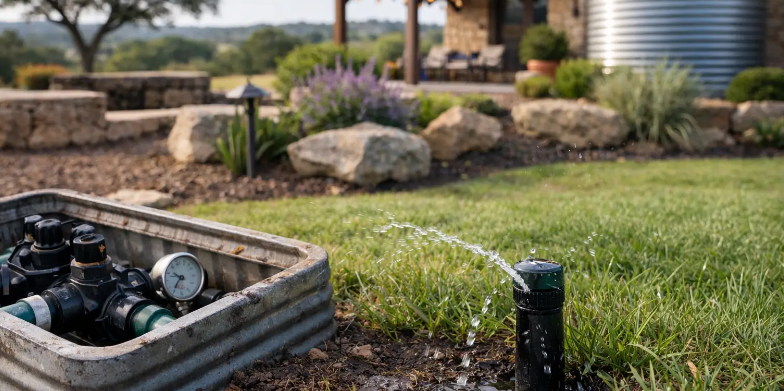
If one part of the lawn stays dry while another becomes soggy, changing the controller alone may not fix it. The issue may be design, pressure, nozzle selection, damaged valves, poor head placement, or a system that was never matched to the property.
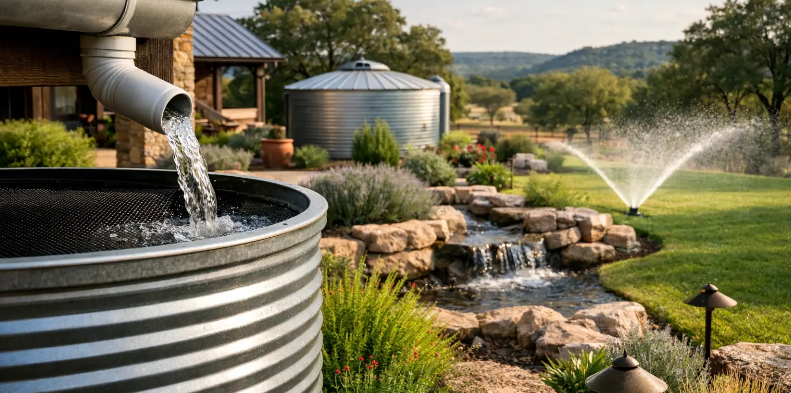
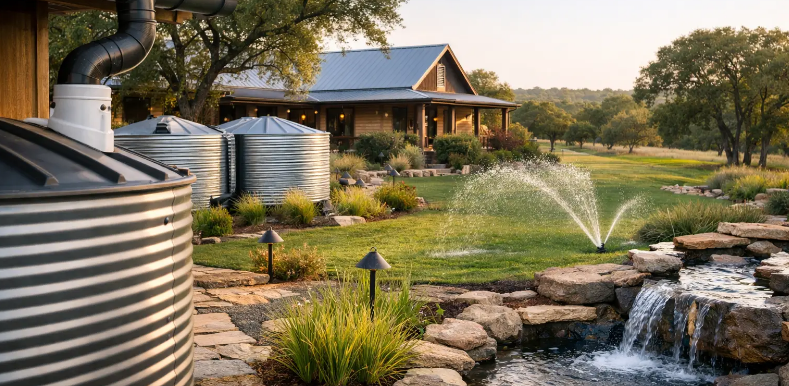
Joshua Buss Irrigation helps Hill Country property owners evaluate these practical details, from irrigation repairs and upgrades to custom systems that support lawns, beds, trees, and rainwater collection goals. A properly working system gives you the ability to water with purpose instead of guessing every time temperatures climb.
Set your controller for the season, check it after rain and weather changes, and let the lawn tell you when adjustments are needed. A little attention at the right time can keep your landscape healthier, your water bill more reasonable, and your property looking cared for through the toughest part of a Texas summer.