Sprinkler Zones Versus Drip Lines: What Fits?
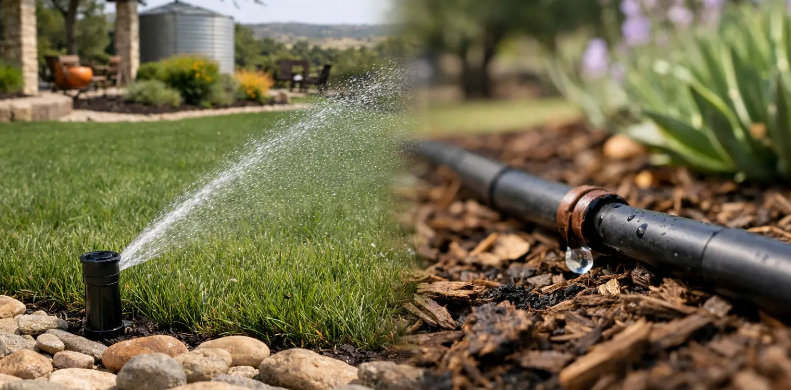
A lawn can look thirsty while a nearby bed of native shrubs is drowning. That is the problem behind sprinkler zones versus drip lines: different parts of a landscape do not need water in the same way, on the same schedule, or at the same rate. Choosing the right irrigation approach is not just about lowering a water bill. It helps protect the plants, preserve the appearance of the property, and avoid wasting water during long Texas Hill Country heat spells.
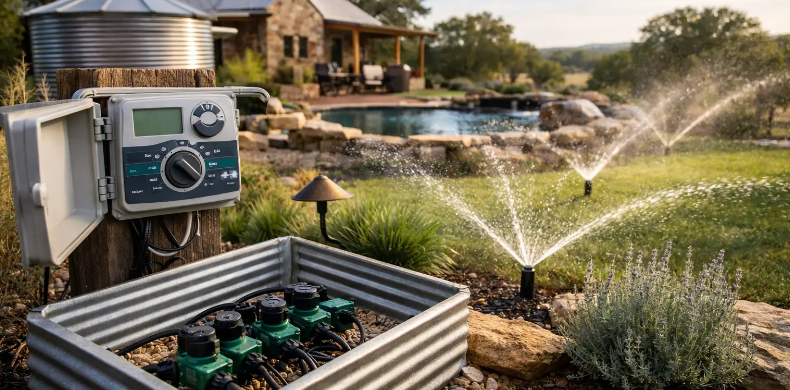
The first thing to clear up is that sprinkler zones and drip lines are not always competing choices. A zone is the controlled section of an irrigation system that runs when a valve opens. Drip line is one way to deliver water within that zone. A well-designed property often uses both - dedicated sprinkler zones for turf and dedicated drip zones for beds, trees, gardens, and foundation plantings.
Sprinkler Zones Versus Drip Lines: The Real Difference
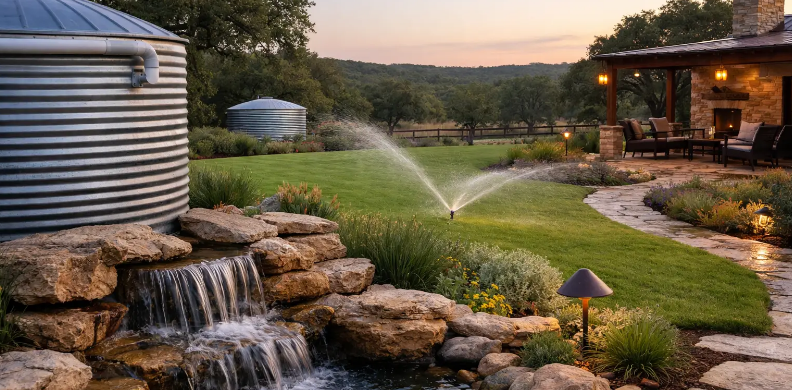
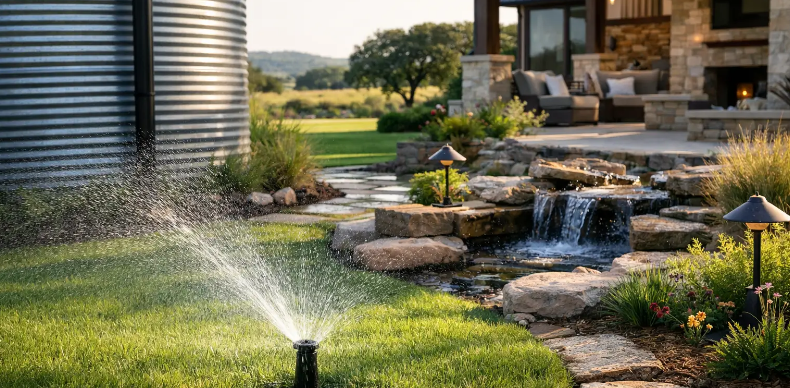
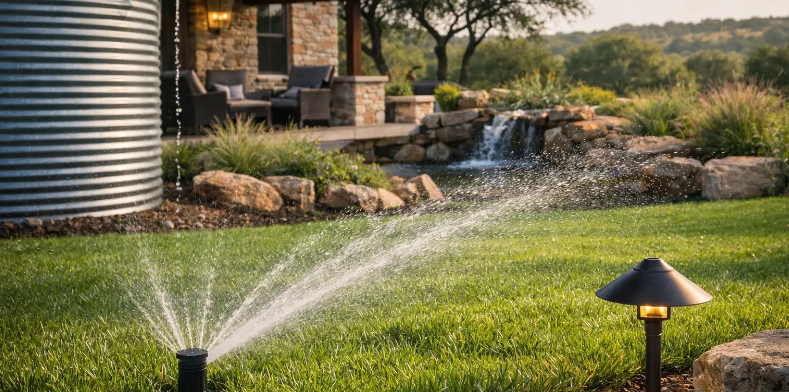
A sprinkler zone sends water through spray heads, rotary nozzles, or rotors that distribute water over an area. It is built for coverage. When the heads are selected and spaced correctly, sprinklers can water a lawn evenly from one end of the zone to the other.
Drip irrigation applies water slowly at or near the soil surface. Tubing with built-in emitters, or individual emitters placed near plants, delivers water directly to the root zone. Rather than wetting the entire bed, it gives moisture where the plant can use it.
The practical question is not, “Which system is better?” It is, “What is this part of the property growing, and what does it need?” Bermuda grass, buffalo grass, ornamental beds, mature live oaks, vegetable gardens, and newly planted shrubs all require different watering strategies. Trying to run them from one type of irrigation or one watering schedule usually leads to waste and uneven results.
Where Sprinkler Zones Make the Most Sense
Sprinklers are generally the right choice for established lawn areas. Grass has a dense, shallow root system spread across a broad surface. To keep turf looking consistent, the entire area needs reasonably uniform coverage. Drip tubing can keep some grass alive, but it is rarely the efficient or attractive solution for a lawn.
A properly designed lawn zone accounts for the size and shape of the turf, water pressure, nozzle precipitation rate, sun exposure, and slope. Those details matter. A head that sprays onto a driveway or a rotor that throws water beyond a narrow strip of grass is not doing its job, even if the lawn looks green in spots.
Sprinklers work best for open, planted turf
Open front lawns, larger side yards, common areas, and broad commercial turf are strong candidates for sprinkler zones. Rotary nozzles and conventional spray heads are often used on smaller areas, while rotors may fit larger expanses. The right equipment depends on available pressure and layout, not simply on what was installed years ago.
Sprinklers do have trade-offs. Wind can carry water off target, especially on exposed Hill Country properties. Water landing on sidewalks, fences, and hardscapes does nothing for the landscape. Frequent light watering can also encourage shallow roots and make turf less resilient during heat and dry weather. A smart controller, seasonal adjustments, and good zone design help control those issues.
Separate turf from everything else
One of the most common irrigation mistakes is putting grass and landscape beds on the same zone. Turf often needs a longer, more uniform watering cycle than shrubs or native plants. If the zone runs long enough for the lawn, the bed may receive too much water. If it runs lightly for the shrubs, the lawn may struggle.
Separate zones give the property owner control. A sunny lawn may run on a different schedule than shaded turf. A recently installed lawn may need more frequent watering for a short period than an established area. That flexibility is what keeps a system useful after the landscape matures or changes.
Where Drip Lines Earn Their Keep
Drip lines are especially effective in planting beds, around trees, along foundation landscaping, and in vegetable gardens. They deliver water slowly enough for it to soak into the soil instead of running across the surface. That is valuable in Fredericksburg-area landscapes, where rocky ground, slopes, and quick-drying soils can make conventional spray irrigation less efficient.
A drip zone can be tailored to the planting. Larger shrubs may need more emitters or wider coverage than small perennials. Newly planted trees need watering that reaches their developing root zone, not just a wet spot against the trunk. A native bed with drought-tolerant plants may need only occasional deep watering once established.
Drip irrigation reduces waste in planted beds
Because drip applies water low to the ground, less is lost to wind and evaporation than with overhead spray. It also keeps foliage drier, which can be helpful for plants that are prone to leaf disease. Mulch over the tubing further reduces evaporation, protects the line from sunlight, and gives the bed a clean appearance.
That does not mean drip irrigation is maintenance-free. Emitters can clog if the system lacks proper filtration. Tubing can be cut during planting, edging, or landscape work. Roots, rodents, and shifting soil can create issues over time. A quality installation includes the right filter, pressure regulation, flush points, and accessible components so the system can be serviced without tearing up the landscape.
Drip needs its own zone and pressure control
Drip equipment operates at lower pressure than most sprinkler heads. It should not simply be tied into a spray zone without the proper regulator and valve setup. Mixing drip and sprinklers on the same zone usually creates poor results because one application method is over-pressurized, under-watered, or both.
A separate drip zone also makes scheduling more practical. Drip runs are often longer because water is applied gradually, but they can run less often depending on the soil, season, plant maturity, and rainfall. Deep, measured watering encourages roots to grow down where conditions are more stable.
Design Around Plants, Soil, and Slope
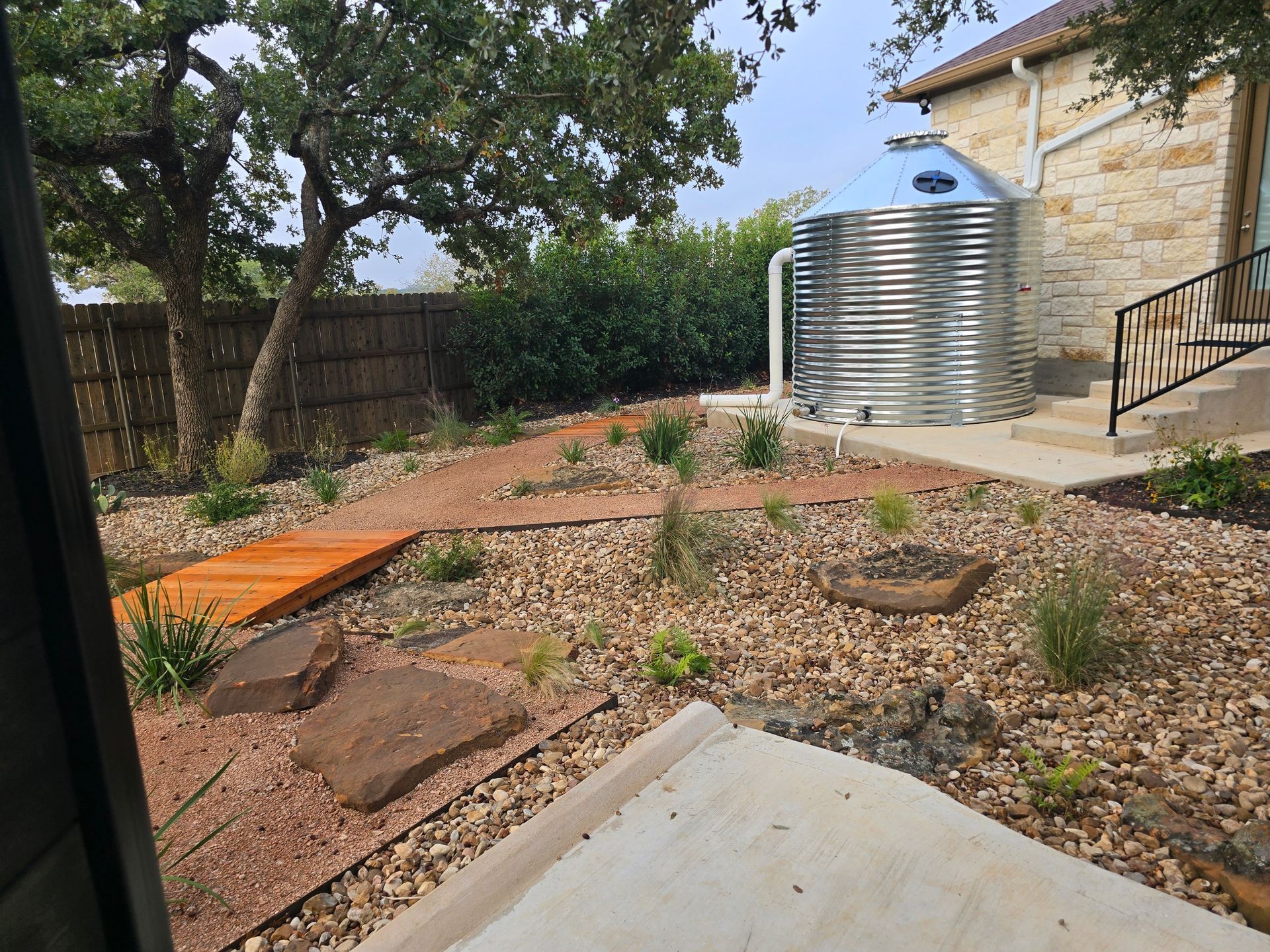
The Texas Hill Country is not a one-size-fits-all irrigation environment. One property may have shallow limestone soil in full afternoon sun, while another has deeper soil, large shade trees, and a low area that holds moisture. The irrigation plan should follow those conditions instead of relying on a standard timer setting.
On slopes, sprinklers may need shorter cycle times with breaks between them. This cycle-and-soak approach gives water time to enter the soil before runoff begins. Drip lines can be an excellent option on planted slopes, but the tubing should be laid out carefully so the system distributes water consistently and does not leave dry pockets.
Plant selection matters, too. A bed filled with native and drought-tolerant plants should not be watered like a bed of annual color. Likewise, a newly installed landscape needs more attention during establishment than it will need a year or two later. Good irrigation design allows those schedules to change without rebuilding the whole system.
A Better Answer Is Often a Mixed System
For many homes, ranch entrances, and commercial properties, the best setup is straightforward: sprinklers for lawn areas and drip lines for everything planted in beds. Each section gets its own valve, its own equipment, and its own run time.
This approach improves control without making the system unnecessarily complicated. It also makes troubleshooting easier. If a lawn is dry, the turf zone can be inspected and adjusted without disturbing the shrub beds. If plants in one bed are stressed, the drip zone can be checked for a clogged filter, damaged tubing, or an outdated schedule.
A mixed system is particularly useful when adding landscaping to an existing property. Instead of extending lawn sprinklers into new beds and hoping for the best, a contractor can create a dedicated drip zone that supports the new plant material from day one.
How to Decide What Your Property Needs
Start by looking at the purpose of each landscape area. If it is turf that needs even coverage across a wide surface, sprinklers are usually the better tool. If it is a bed of shrubs, trees, perennials, or vegetables, drip is usually the more efficient choice. If the area contains both, separate them whenever possible.
Then consider the conditions that affect performance: sun, slope, soil depth, plant type, water source, and the amount of maintenance the property can realistically receive. A system that looks good on a plan but cannot be adjusted, repaired, or managed easily will not serve the property well over time.
Joshua Buss Irrigation designs and installs custom irrigation systems with those real-world conditions in mind. A thoughtful consultation can identify wasteful zones, weak coverage, and opportunities to give lawns and planting beds the water they actually need. The right irrigation plan should make caring for your landscape feel more manageable, especially when the weather is not.