Front Yard Lighting Design That Works After Dark
August 8, 2026
A front yard should not disappear when the sun goes down. The right front yard lighting design makes the walk from the driveway safer, gives guests a clear path to the door, and lets the best parts of your property keep working after dark. Done well, outdoor lighting feels natural - not overly bright, not cluttered with fixtures, and not like a runway leading to the front porch.
For homes, ranches, and commercial properties in the Texas Hill Country, lighting also has to hold up. Heat, dust, changing weather, uneven terrain, and mature landscaping all affect where fixtures belong and which equipment will last. A good plan starts with the property itself, then adds light where it serves a purpose.
Start Front Yard Lighting Design With a Purpose
The strongest lighting plans do not begin by choosing fixtures. They begin by asking what needs to work better after sunset. For one property, the priority may be a dark front walk. For another, it may be a long drive, an unmarked change in elevation, or a handsome stone entry that deserves to be seen at night.
Most front yards need a balance of three jobs: safe movement, useful security, and curb appeal. These goals overlap, but they are not exactly the same. A bright floodlight may help someone see the edge of a driveway, yet it can wash out the landscaping and make the front of the house feel harsh. A decorative fixture may look good at the gate but still leave the actual walking path too dark.
Think about how people use the property after dark. Where do family members park? Which door do visitors use? Is there a sidewalk, front gate, porch step, or detached garage? Are there low stone walls, tree roots, drainage swales, or grade changes that become hazards at night? These answers shape a practical layout before a single fixture is installed.
Build Light in Layers, Not in One Bright Blast
Good outdoor lighting is layered. That means using several controlled sources of light rather than relying on one powerful fixture. The result is easier on the eyes and more useful across the property.
Light the route people actually walk
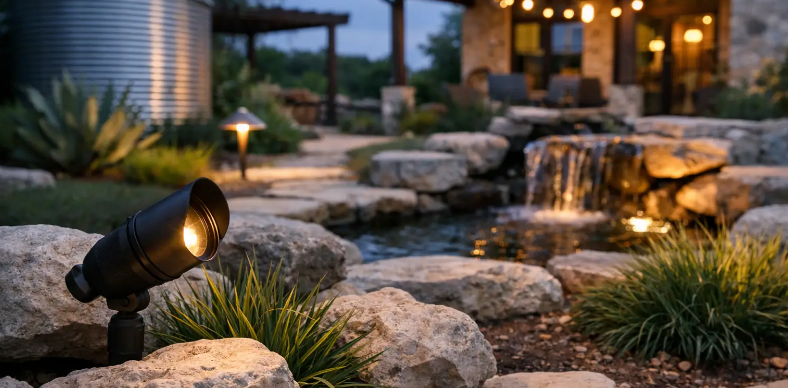
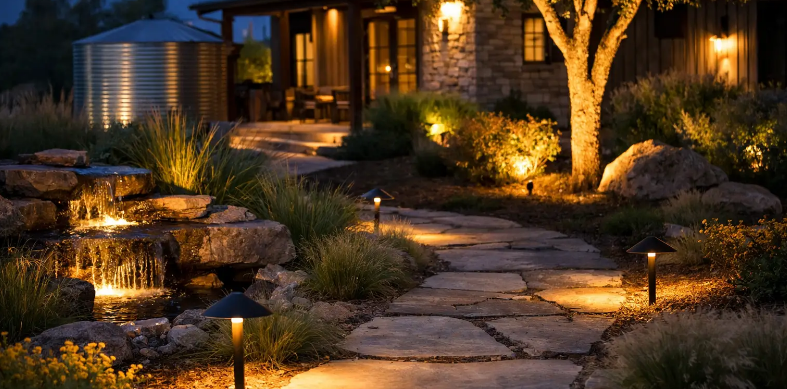
Path lighting should make walking areas easy to follow without placing a fixture every few feet. Low-voltage path lights are usually installed along one side of a walkway, with enough spacing for overlapping pools of light. The goal is to see the surface, the edge of the path, and changes in elevation - not to create a row of glowing caps.
At steps, lighting deserves extra attention. A discreet fixture aimed across the tread or a properly placed downlight can reveal each step without shining into someone's face. Driveways benefit from subtle guidance at curves, gates, transitions, and parking areas, especially on larger Hill Country properties where a front entry may sit well away from the road.
Give the entry a clear focal point
Your front door should be easy to find and comfortable to approach. Wall-mounted fixtures beside the door can provide the main light, while a porch ceiling fixture, downlight, or nearby landscape lighting can soften shadows around the entry.
Fixture scale matters here. A small light beside a tall stone entry can look lost and provide too little useful illumination. Oversized fixtures can overwhelm a modest porch. The finish should also fit the home and hold up to outdoor conditions. Dark bronze, black, and weathered metal finishes often work well with stone, stucco, wood, and native landscape materials common in this area.
Highlight what gives the property character
Accent lighting is where a front yard becomes more than a place to park and walk. Uplighting can bring out the texture of a limestone wall, the branching form of an oak, a specimen cactus, an architectural agave, or a well-built sign at a ranch or business entrance.
Use restraint. One mature tree may need two carefully aimed fixtures to show its canopy, while a small ornamental tree may only need one. Too many uplights flatten the landscape and create glare. It is better to identify a few features worth seeing than to light every plant bed from end to end.
Downlighting from a tree or structure can be especially effective when a property needs usable, natural-looking light. A soft downward beam over a walkway, gate, or seating area can feel more welcoming than a visible fixture pointed up from the ground. This approach depends on having a suitable mounting location and enough access for future service.
Choose Low-Voltage Equipment Built for the Job
Low-voltage outdoor lighting is a strong fit for many front yards because it is efficient, flexible, and easier to expand than line-voltage lighting. A properly sized transformer reduces household current to a safer working voltage, then delivers power through buried cable to each fixture.
The details matter. Cheap fixtures may look acceptable on installation day but can fade, crack, corrode, or fail early in the Texas sun and weather. Quality metal fixtures, solid connections, correct wire sizing, and weather-rated components make a real difference over time. LED lamps also use far less energy than older halogen systems and typically require less frequent replacement.
A professional layout accounts for voltage drop, which is the loss of power that can occur across long cable runs. This is particularly important on large lots, long driveways, and estate entries. Without proper planning, fixtures farther from the transformer may appear dimmer or produce inconsistent color.
Controls should fit the way you live. A photocell can turn lights on at dusk, while a timer sets when they turn off. Smart controls offer more scheduling flexibility, but they are not necessary for every property. Simple, dependable controls are often the better choice when the goal is consistent operation with minimal fuss.
Avoid the Common Front Yard Lighting Mistakes
The most common mistake is overlighting. More brightness does not automatically mean more safety. Excessive light creates glare, obscures the night sky, and can make it harder for the eye to adjust to darker areas beyond the porch. It can also spill into a neighbor's property or toward the road.
Poor aiming is another problem. Fixtures should generally direct light down toward the feature or surface being illuminated, not outward toward drivers, guests, or windows. Shielded fixtures and careful aiming help keep light where it belongs.
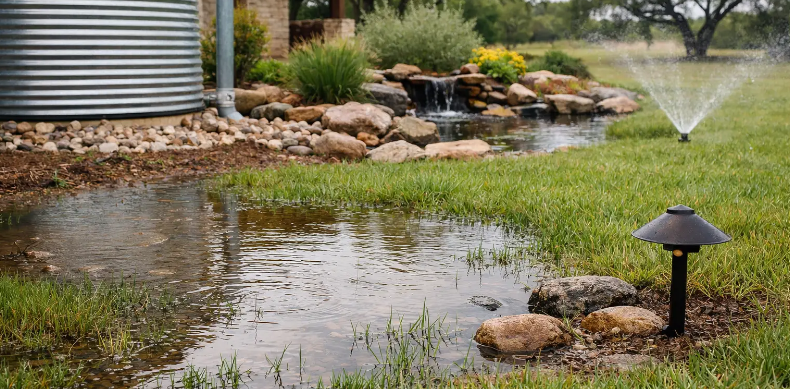
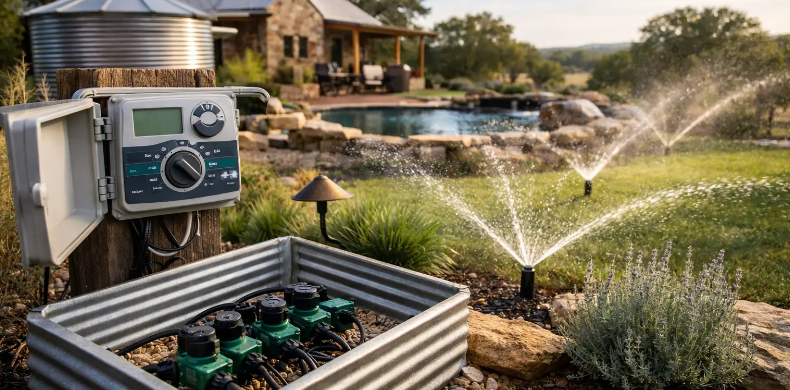
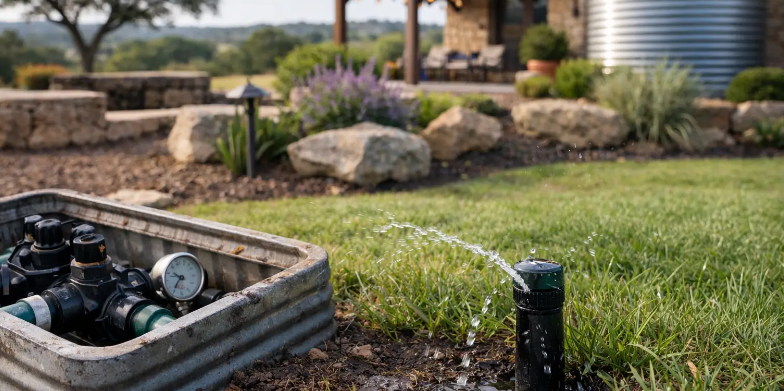
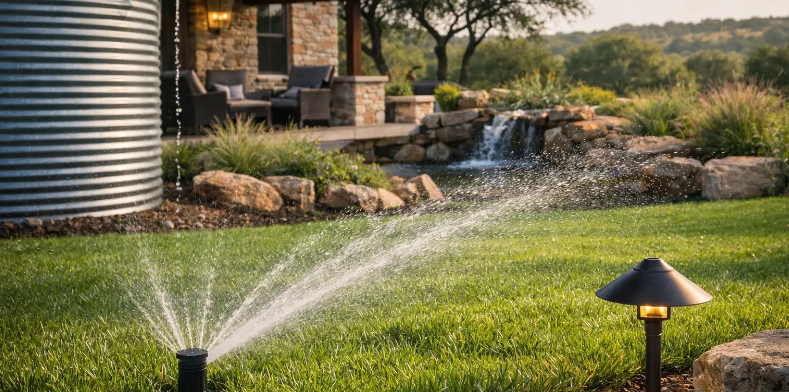
Placement must also respect the landscape. Avoid installing fixtures where irrigation repairs, mowing, pruning, or seasonal planting will constantly disturb them. Keep path lights clear of sprinkler heads, and plan cable runs that do not interfere with future landscape work. When irrigation and lighting are designed together, the finished yard is cleaner, easier to maintain, and less likely to develop avoidable conflicts.
Finally, do not treat maintenance as an afterthought. Mulch shifts, plants grow, fixtures get bumped, and lenses collect dust. A quality lighting system still needs periodic adjustments, cleaning, and occasional lamp or component replacement to look its best.
Plan for the View From the Street and the House
A well-lit front yard should look good from the street, but that is not the only viewpoint that matters. Stand at the front door looking out. Look through the living room windows. Pull into the driveway after dark. These perspectives reveal whether lighting is creating warmth and depth or shining directly into the home.
The best results usually come from a nighttime walkthrough after installation. Small adjustments in fixture angle, brightness, and spacing can make a major difference. Lighting is not just about the equipment on paper. It is about what the property feels like when someone comes home late, welcomes guests, or sees the landscape at the end of a long day.
For a front yard that is safer, more inviting, and built to last, start with a plan shaped around your property rather than a box of random fixtures. Joshua Buss Irrigation can help homeowners in the Fredericksburg area design low-voltage lighting that respects the landscape, fits the architecture, and gives the property a dependable presence after dark.