Sprinkler Timer Reviews for Texas Properties
August 11, 2026
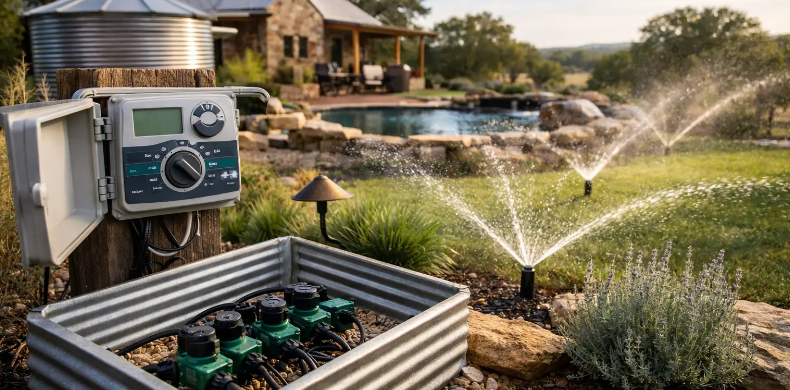
A sprinkler timer can be the difference between a landscape that survives a hard Texas summer and one that wastes water while plants still struggle. The most useful sprinkler timer reviews do not focus only on app features or a low price. They look at whether a controller can run the right schedule for the right zones, handle weather changes, and remain dependable when your property needs it most.
For a small lawn with one or two straightforward zones, a basic timer may be all you need. For a Fredericksburg-area home, ranch entrance, commercial property, or estate with turf, native plants, drip irrigation, and shaded beds, the better choice is often a controller with more flexibility. The right timer should make watering easier to manage without turning irrigation into another problem to solve.
What Good Sprinkler Timer Reviews Should Measure
A timer is only one part of an irrigation system, but it controls every watering decision the system makes. That is why the best reviews look past the screen and ask practical questions: How many zones can it control? Is it easy to program? Can it adjust for rain and seasonal heat? Will it work with the valves and wiring already on the property?
Reliability matters just as much as convenience. A beautiful touchscreen does not help if a controller loses its schedule after a power interruption, struggles to connect to Wi-Fi, or makes it difficult to run a zone manually when a repair is needed. Homeowners and property managers need a timer that can be understood quickly and operated without guesswork.
Water-saving features deserve attention, but they need to be used correctly. A smart controller can reduce unnecessary watering when it accounts for rainfall and local weather. Still, no timer can fix broken sprinkler heads, poor drainage, mismatched nozzles, or a drip zone that has been scheduled like turf. The controller needs a sound irrigation system behind it.
Smart Wi-Fi Controllers: Best for Changing Conditions
Smart Wi-Fi controllers are often the strongest fit for properties with multiple landscape areas and owners who want more control from a phone. Popular options in this category commonly use local weather data to recommend or automatically make seasonal schedule adjustments. Many also allow remote access, alerts, and easy schedule changes when you are away from the property.
That flexibility is valuable in the Hill Country, where a heavy rain can be followed quickly by hot, drying conditions. Instead of leaving a fixed schedule running week after week, a smart timer can help reduce watering after measurable rainfall and increase run times carefully during high-heat periods.
The trade-off is setup and connectivity. Wi-Fi must reach the controller location consistently, and the timer must be configured with accurate zone information. If every zone is labeled simply as “front” or “back,” the controller cannot make wise decisions about sun exposure, soil, plant material, and irrigation method. A turf zone in full sun should not receive the same schedule as a shaded bed on drip irrigation.
Smart controllers are a good choice when the property has reliable internet, several irrigation zones, and a homeowner or manager who wants visibility and control. They are less appealing when the controller is far from Wi-Fi, the system is very simple, or nobody wants to use an app.
The Value of Weather-Based Watering
The main benefit of a smart controller is not that it can be controlled from a phone. The real value is better scheduling. A quality controller can account for rain, temperature, and seasonal demand, helping prevent the common mistake of watering like it is July during a cool spring week.
Even so, automatic adjustments should be reviewed from time to time. Weather data is useful, but it cannot see that a tree has grown over a flower bed, a new patio changed drainage, or a ranch gate landscape receives more wind than the rest of the property. Good irrigation management still includes periodic observation.
Conventional Controllers: Simple and Dependable
A conventional programmable controller remains a practical option for many homes and commercial landscapes. These timers usually provide a straightforward dial, buttons, or digital display for setting start times, zone run times, and watering days. They may not offer remote access, but they are familiar, affordable, and easy to service.
For a property with stable conditions and a simple irrigation layout, that simplicity can be a benefit. There is no dependence on Wi-Fi, no app updates to manage, and less technology between the owner and the irrigation schedule. A properly programmed conventional controller can water efficiently, especially when paired with a rain sensor.
The downside is that fixed schedules need manual attention. When rainfall arrives or summer heat increases, someone must adjust the controller. Too often, those adjustments never happen. The timer keeps watering on the same calendar schedule while water runs down the curb, pools around foundations, or misses plants that need it.
Conventional controllers make sense for budget-conscious projects, smaller systems, and clients who prefer hands-on control. They can also be a solid choice where internet service is unreliable. The key is selecting enough stations for current needs and leaving room for future landscape improvements.
Hose Timers Have a Place, but They Have Limits
Battery-operated hose timers can work well for a small garden, a newly planted tree, or a temporary drip setup. They are convenient because they attach directly to an outdoor faucet and do not require an in-ground controller or valve wiring.
They are not a replacement for a properly designed irrigation system on a larger property. Hose timers are exposed to the weather, depend on battery life, and generally lack the zone-by-zone control needed for diverse landscaping. They are best treated as a simple tool for a limited watering task, not as the long-term answer for turf, beds, trees, and multiple landscape areas.
Features Worth Paying For
The right feature set depends on the property, but a few capabilities consistently make a difference. Look for a controller with enough stations for every existing valve, plus room for expansion if you may add beds, drip irrigation, or a water feature. A rain sensor connection is valuable on both conventional and smart controllers because it can stop watering during rain events.
Manual run capability is also essential. When checking coverage, diagnosing a leak, or adjusting heads, you should be able to turn on one zone without disrupting the full schedule. Clear zone labeling and an easy-to-read display may sound minor, but they save time every season.
For smart models, confirm that the controller has dependable weather adjustment options, useful alerts, and a practical way to manage multiple properties if needed. A commercial property manager may value remote oversight far more than a homeowner with a compact yard. On the other hand, a homeowner may prefer a simple controller that anyone in the household can operate without a password or app training.
A Better Way to Choose a Sprinkler Timer
Before buying a timer, take inventory of the system. Count active zones, identify which ones serve turf versus drip or planting beds, and consider how much sun each area receives. Check the controller location for power access, signal strength if you want Wi-Fi, and the condition of the existing valve wiring.
Then consider who will manage it. A smart timer is a strong investment if someone will use its scheduling tools and respond to alerts. A conventional timer may deliver better value if the irrigation schedule is simple and a responsible person will make seasonal adjustments.
Do not choose a timer based on the promise that it will lower your water bill by itself. Water savings come from matching run times to the soil, plant material, precipitation rate, and weather. A controller supports those decisions. It does not replace proper design, maintenance, or regular inspections.
When Professional Programming Makes Sense
Many timer problems are programming problems, not equipment failures. Zones may run too long, start too often, or water at the wrong time of day. A system may have drip irrigation and spray heads on the same schedule, even though they apply water at very different rates.
Professional setup is especially worthwhile after installing a new controller, changing landscaping, adding rainwater harvesting, or noticing rising water use. Joshua Buss Irrigation can evaluate the system as a whole, program schedules around the landscape’s actual needs, and identify issues a new timer alone will not solve.
Choose a controller that fits the property you have, not just the features printed on the box. When the schedule matches the landscape and the system is maintained well, your timer becomes a quiet, dependable tool that helps protect both your water supply and the investment you have made outdoors.