How to Reduce Lawn Runoff in Texas Heat
August 4, 2026
A good residential rainwater collection design starts long before a tank arrives on the property. It starts with the roof, the slope of the site, the plants you want to protect, and a clear answer to one practical question: what job should this water do when the next dry spell hits?
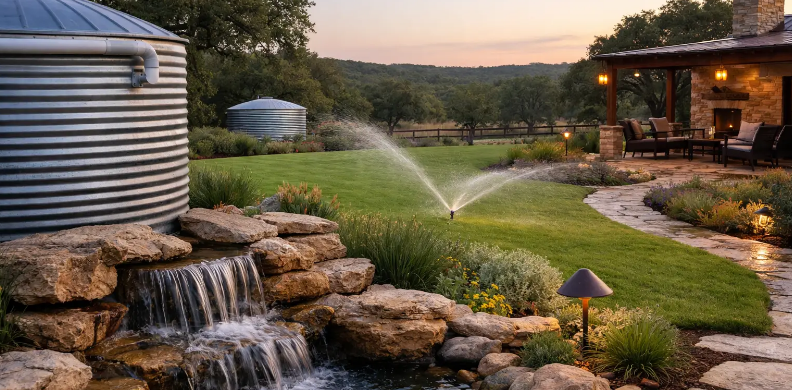
For many Texas Hill Country properties, rainwater is too valuable to let rush off the roof, cut across a driveway, or disappear into rocky ground. Capturing it can reduce demand on a well or municipal supply, give established trees and landscape beds a better chance during hot weather, and make irrigation more dependable. But the system needs to be sized and built around the property, not around a one-size-fits-all tank package.
Start With the Water You Can Actually Catch
The roof is the collection surface, so its size and material set the ceiling for what the system can produce. A simple planning estimate is that one inch of rainfall on one square foot of roof yields about 0.62 gallons of water. In other words, a 2,000-square-foot roof can collect roughly 1,240 gallons from a one-inch rain, before allowing for minor losses.
That number gets homeowners' attention, but it should not be treated as a promise. Not every section of the roof may be practical to connect. Some downspouts may be too far from the preferred tank location, and some roof areas may be better left alone to avoid difficult trenching or awkward pipe runs. Metal roofs are especially well suited to collection, though properly maintained composition roofs can also work for landscape irrigation.
The local rainfall pattern matters just as much as the roof area. Fredericksburg and surrounding Hill Country communities can see heavy rain in a short window, followed by long stretches with very little precipitation. A system must handle fast runoff without overflowing where it should not, while storing enough water to be useful after the ground turns dry.
Match Tank Storage to the Purpose
The best tank size depends on how the homeowner plans to use the water. A small system that supplies a few raised beds or a vegetable garden has different demands than one intended to run drip irrigation for native plantings, shade trees, or several landscape zones.
Storage is where realistic planning matters. A larger tank captures more during a hard rain, but it also needs a stable base, enough room for access, and a location that works with the property layout. It costs more upfront, and it may be unnecessary if the landscape demand is modest. On the other hand, undersizing the tank is frustrating when the first major storm sends hundreds or thousands of gallons through the overflow.
A practical design looks at both supply and demand. First, estimate how many gallons the connected roof can produce in a typical rain. Then estimate how much water the intended irrigation zones use each week during the hottest part of the year. The goal is not always to water every square foot of turf with rainwater. Often, the smarter move is to reserve collected water for the plants that provide the most value: trees, foundation beds, gardens, new plantings, and high-visibility areas near the home.
For a property with broad turf areas, rainwater collection often works best alongside an efficient irrigation system rather than as a complete replacement for another water source. Drip irrigation, hydrozoning, and weather-conscious scheduling help every gallon go further.
Choose a Tank Location That Makes Maintenance Easy
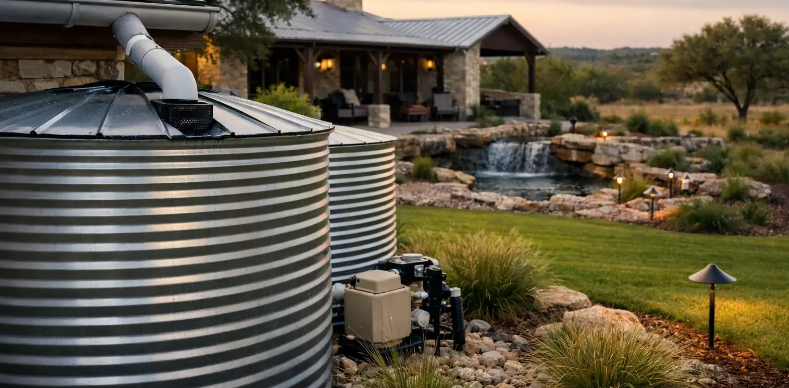
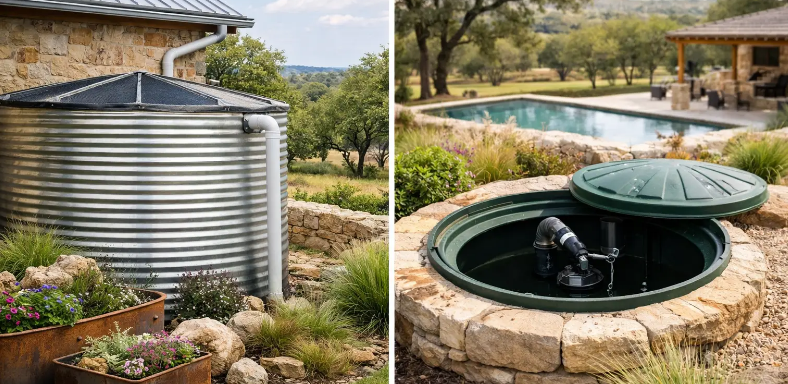
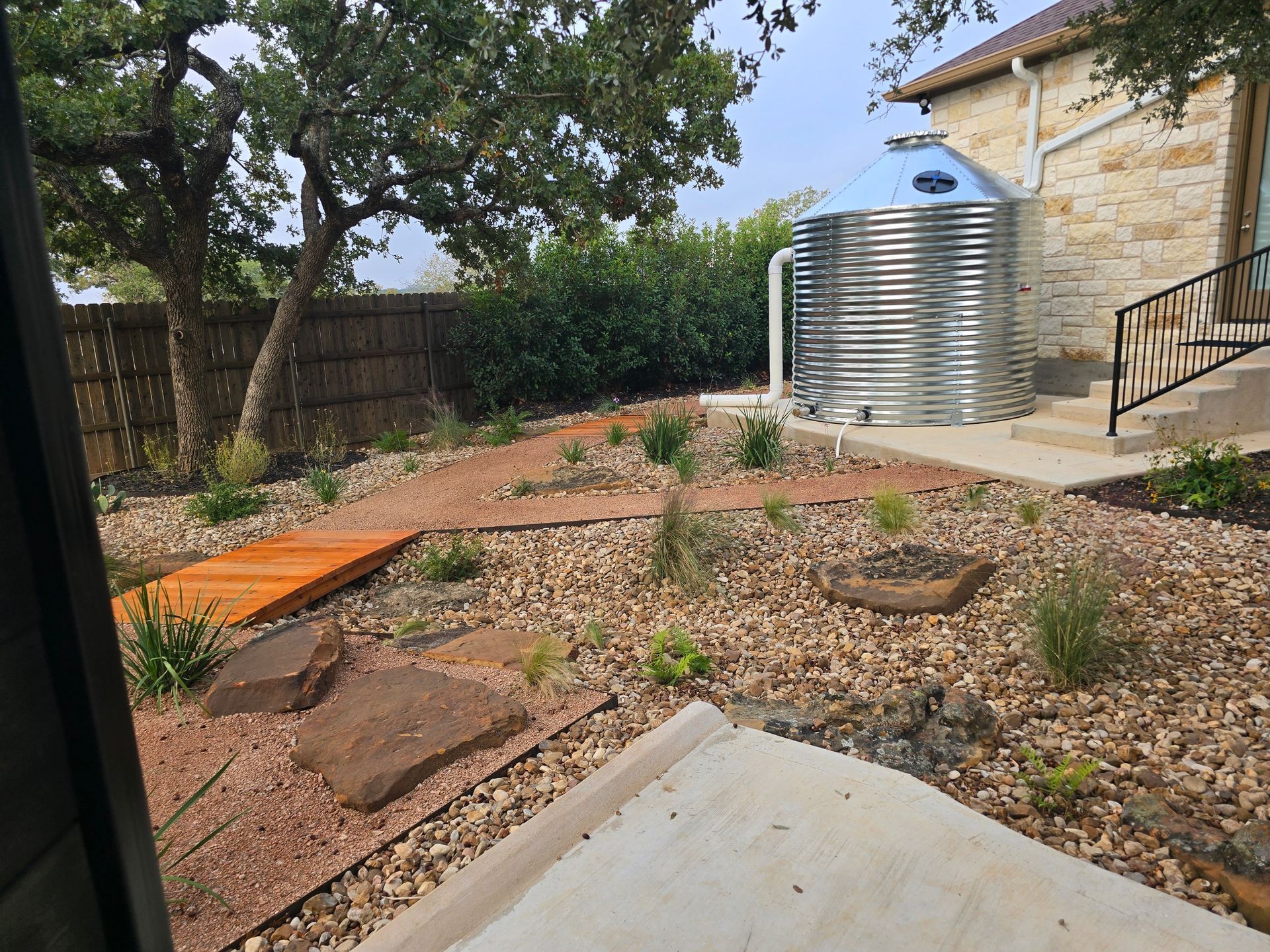
A tank can be tucked beside a garage, placed behind a fence, incorporated into a landscape screen, or set farther out on a ranch or estate property. The right location balances appearance, drainage, access, and plumbing.
Gravity is always worth considering. If a tank sits above the landscape area it serves, gravity may provide useful pressure for low-demand uses. Most irrigation systems, however, need a pump and pressure controls to deliver water evenly through drip lines or sprinkler zones. Pumps give greater flexibility, but they also introduce electrical requirements, filtration needs, and service considerations.
The tank foundation is not an afterthought. Water weighs more than eight pounds per gallon, so a full 5,000-gallon tank weighs more than 40,000 pounds before the tank itself is counted. The pad must be level, compacted, and built to support the full load without settling. A tank that shifts can strain fittings, affect pump performance, and create expensive repairs.
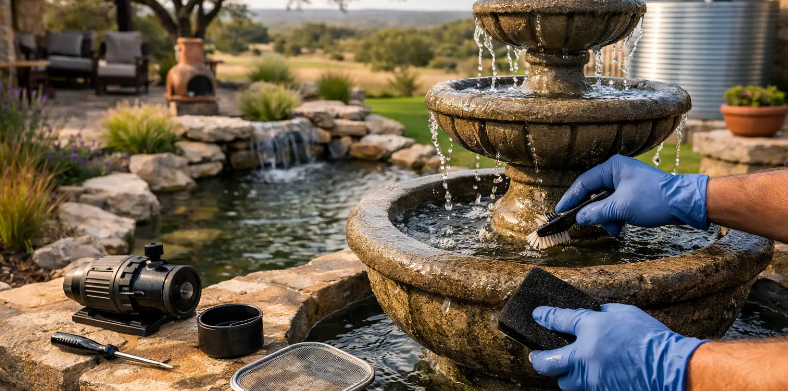
Keep room around the tank for inspecting fittings, cleaning filters, servicing pumps, and checking screens. A hidden tank may look neat on installation day, but a system that cannot be accessed easily becomes harder to care for over time.
Build the Collection System Around Clean Water and Safe Overflow
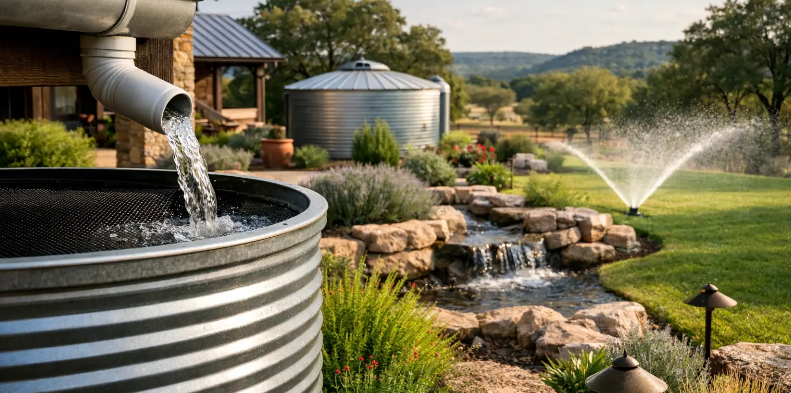
Rainwater begins on the roof, which means leaves, acorns, dust, bird droppings, and roof grit will enter the system unless the design addresses them. Gutters should be correctly pitched and sized for the roof area. Downspouts need secure connections, especially in locations that see intense storm runoff.
A properly designed system usually includes leaf screening, a first-flush device or similar debris management component, and filtration appropriate for the intended use. For landscape irrigation, the objective is to protect valves, emitters, and pumps from sediment. Water intended for indoor or potable use requires a much more advanced treatment and regulatory approach, so it should be planned separately from a basic irrigation collection system.
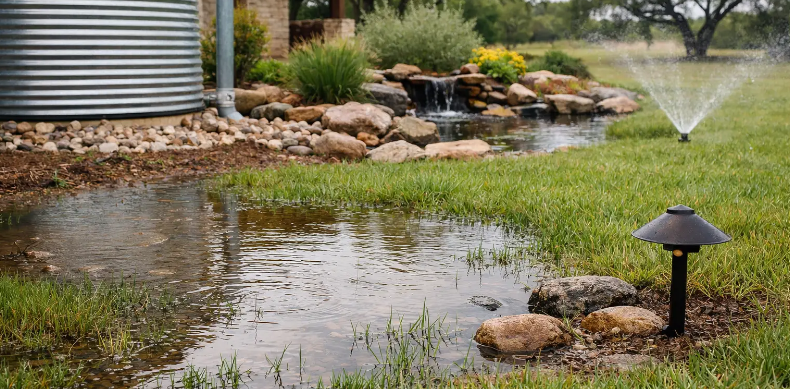
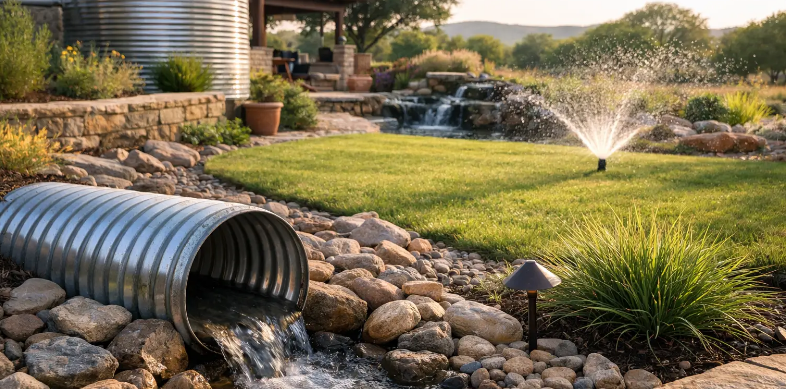
Overflow deserves the same attention as the inlet. When the tank is full, water needs a controlled place to go. That may mean routing overflow to a drainage area, a swale, a rain garden, or another part of the property that can absorb runoff without eroding soil or affecting a building foundation. In the Hill Country, where hardscapes and shallow soils can move water quickly, this detail protects both the system and the property.
Design Irrigation Zones for Rainwater Use
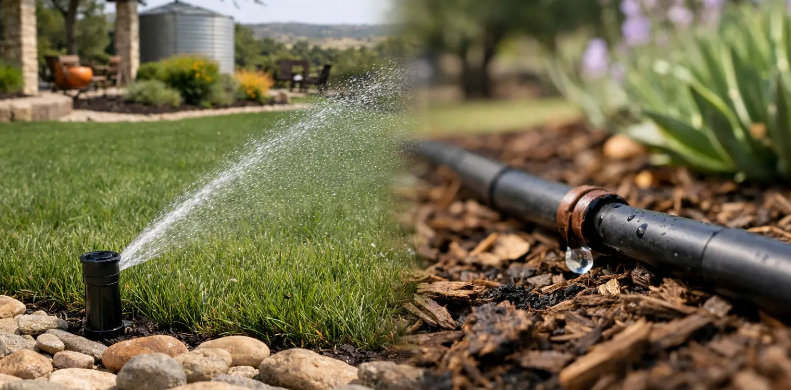
Rainwater collection is most useful when the irrigation system is designed to use it wisely. Drip irrigation is often the best fit for landscape beds, trees, shrubs, and gardens because it applies water slowly at the root zone. It reduces wind loss and limits the waste that comes with spraying water across hot ground.
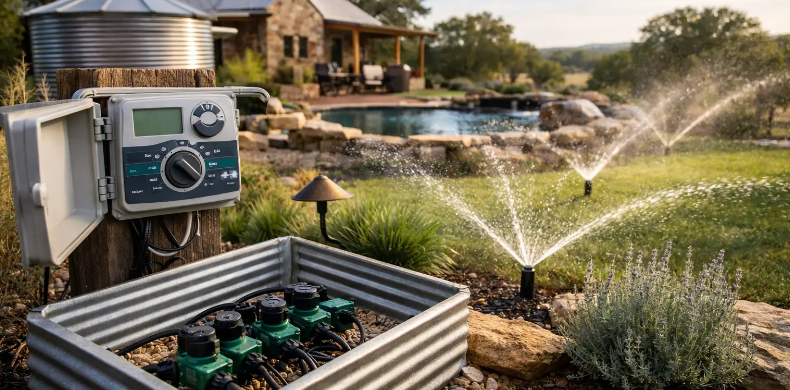
Separate zones by plant type and water needs. Native or established drought-tolerant plants should not receive the same schedule as new trees, container plants, or a productive garden. A well-planned controller can also switch between rainwater and another supply when necessary, depending on the equipment and property goals.
This is where custom work pays off. A tank with a strong pump will not fix an irrigation layout that overwaters one area and misses another. Likewise, a carefully designed drip system will still struggle if the pump, filter, and pressure settings are not matched to the zone demand.
Plan for the Details That Protect Your Investment
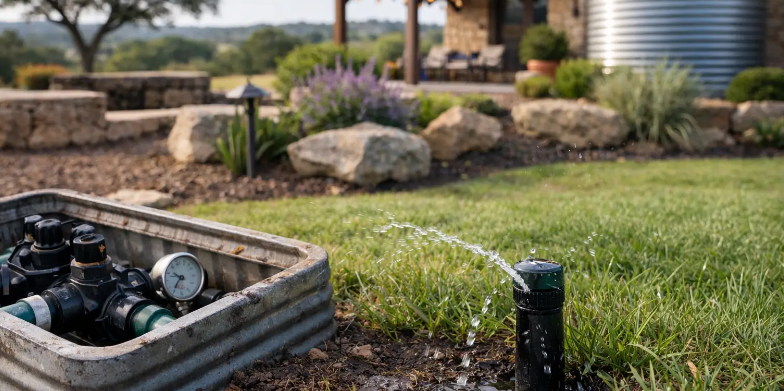
Homeowners sometimes focus on tank capacity and overlook the smaller components that keep a system dependable. Quality valves, unions, shutoffs, screens, overflow fittings, pump protection, and accessible cleanouts make future service far easier. Freeze protection may also be needed for exposed plumbing during occasional winter cold snaps.
Before installation, review local requirements, homeowner association rules if applicable, setbacks, electrical needs, and any plumbing rules related to cross-connections. Rainwater used for irrigation should be kept properly separated from potable water supplies unless the system includes the required safeguards and is designed for that purpose.
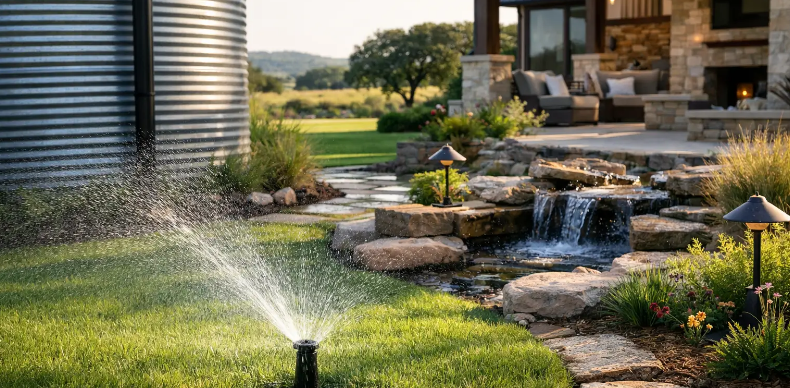
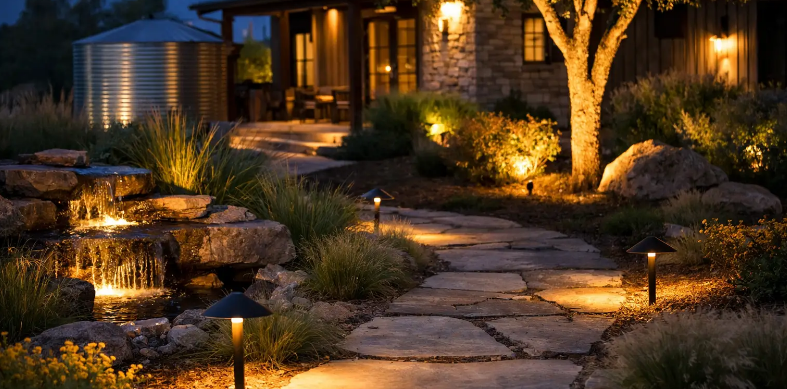
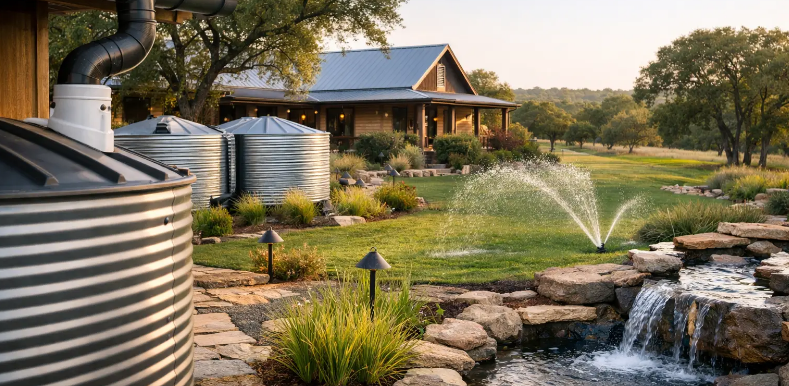
Appearance can be planned into the project instead of treated as a compromise. Tank colors, fencing, native plant screening, stonework, and thoughtful placement can help the collection system feel like part of the landscape. On a visible residential property, that matters just as much as the mechanical performance.
A rainwater system should make the landscape easier to care for, not add another chore to the property. Joshua Buss Irrigation can help homeowners turn roof runoff into a practical water source with a design that fits the site, the landscape, and the way the property is actually used. A straightforward on-site consultation is the right place to start, especially before adding tanks, trenching lines, or rebuilding irrigation zones around the system.