What a Low Voltage Lighting Installer Does
August 23, 2026
A well-lit property should feel intentional after sunset, not overly bright or pieced together with a few fixtures from the hardware store. A qualified low voltage lighting installer designs a system around how you use your outdoor space, where people walk, what deserves to be seen, and how the equipment will hold up through Texas heat, rain, and changing seasons.
For homeowners, ranch owners, and commercial property managers, outdoor lighting is about more than curb appeal. It can make a front entry safer, give guests a clear path to the patio, show off mature oak trees or stonework, and help a property feel cared for long after daylight fades. The difference is in the planning and workmanship behind the fixtures.
What a low voltage lighting installer handles
Low voltage outdoor lighting typically operates at 12 volts rather than standard household line voltage. A transformer reduces the electrical current, allowing the system to power landscape fixtures safely and efficiently. That does not mean it is a project to treat casually. Fixture placement, wire sizing, transformer capacity, connections, drainage, and long-term access all affect how well the system performs.
A professional installer starts by walking the property and asking practical questions. Which entrance gets the most traffic? Is the driveway difficult to navigate at night? Do you want to light a seating area without shining glare into someone’s eyes? Are there trees, walls, water features, beds, or architectural details worth highlighting?
From there, the installer develops a layout that balances function with restraint. Good landscape lighting does not flood every corner of the yard. It creates layers of light that guide people naturally through the space while preserving the calm, dark-sky feel many Hill Country property owners value.
The work generally includes selecting fixtures, determining transformer size, running and burying low-voltage cable, making weather-resistant connections, installing the transformer and controls, aiming each light, and testing the finished system after dark. The nighttime adjustment is especially important. A fixture that looks correctly placed in daylight may create a harsh hotspot or miss its target once the sun goes down.
Where professional lighting makes the biggest difference
Every property has different priorities, but certain areas benefit from thoughtful lighting more than others. The front entry and address area are often first because they improve arrival, visibility, and curb appeal. Walkways, steps, and changes in elevation also deserve attention, particularly where family members or guests move around after dark.
Driveways and gates are another common need on larger properties. A controlled amount of lighting can make turning, parking, and entering a gate easier without creating the look of a commercial parking lot. For businesses, lighting near signage, entrances, patios, and parking areas can make the property more welcoming and easier to navigate.
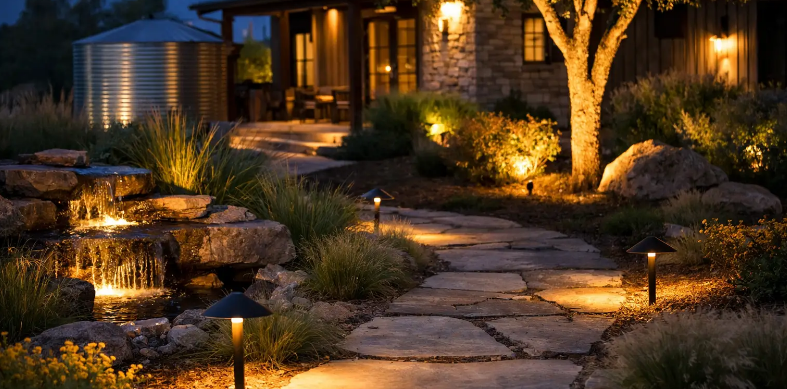
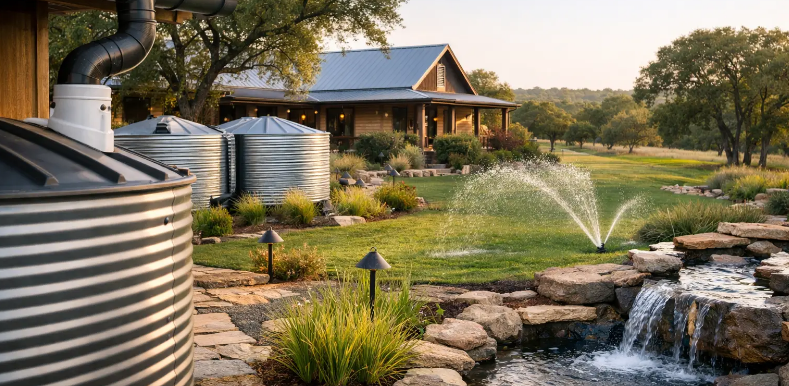
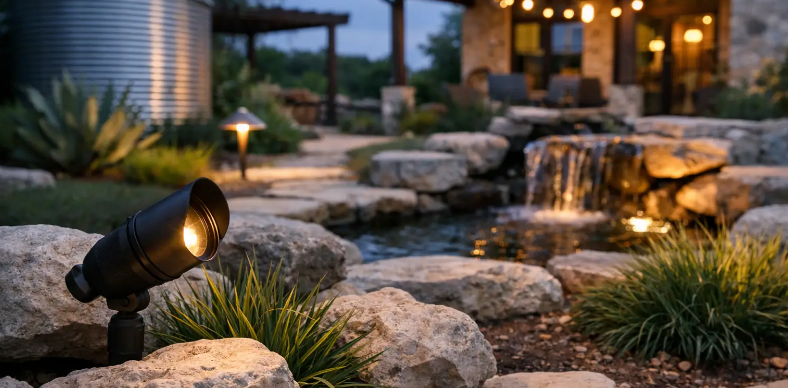
Landscape and architectural lighting adds the finishing layer. Uplighting can bring out the texture of native stone, specimen trees, and columns. Downlighting from a tree can create a softer, moonlit effect over a lawn or gathering space. Grazing light across a wall can highlight material and depth. These techniques work best when the installer understands that the fixture itself should fade into the landscape while the result stands out.
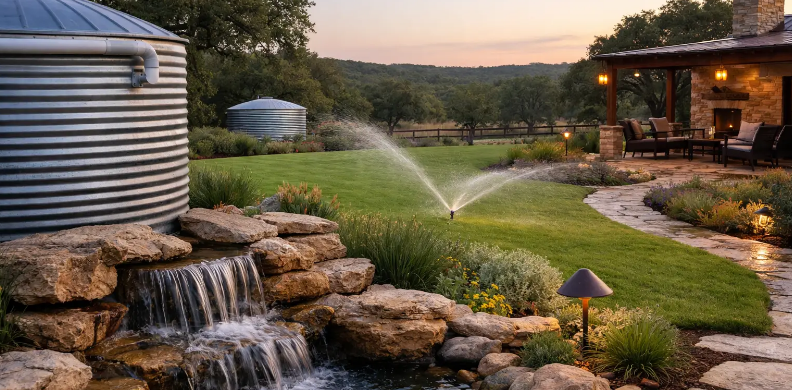
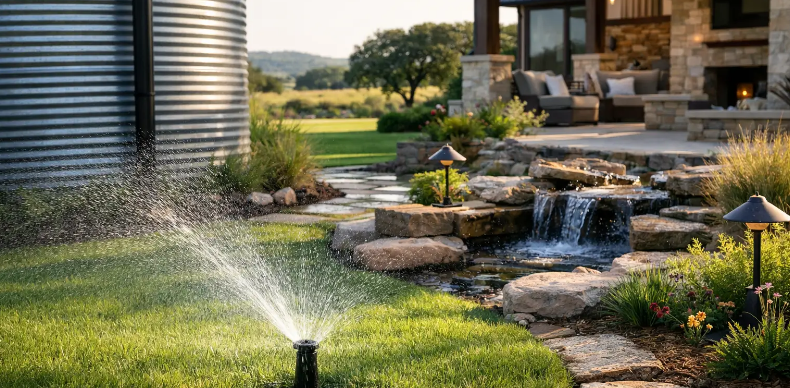
Water features also benefit from carefully selected lighting. The goal may be to catch moving water, define a pond edge, or make a patio view more inviting. In these areas, proper equipment selection and installation matter even more because water, wiring, and maintenance access must all be considered from the beginning.
Design for the property, not a fixture package
A common mistake is buying a boxed lighting kit based only on fixture count. Ten fixtures may be too many for one yard and not nearly enough for another. The right number depends on the property’s layout, the size of the transformer, desired lighting effects, cable runs, and how much capacity should be reserved for future additions.
Fixture quality matters as well. Inexpensive fixtures can fade, crack, corrode, or develop connection problems quickly in outdoor conditions. Better fixtures use durable materials, replaceable components, and LEDs rated for long service life. They cost more up front, but they often reduce the frustration of replacing failed lights one at a time.
Color temperature is another decision that affects the finished look. Very cool white light can feel harsh against limestone, natural wood, and warm landscape materials. Many residential properties look more inviting with a warmer light that complements the home and planting beds. The best choice still depends on the architecture, existing exterior lights, and the mood the owner wants to create.
Brightness requires the same judgment. More lumens are not always better. Excessive brightness creates glare, washes out landscaping, and can disturb neighbors or wildlife. A skilled installer uses enough light to create visibility and interest, then adjusts the aiming and output to keep the effect comfortable.
Why installation details matter in the Texas Hill Country
Outdoor systems in this area deal with plenty of stress: intense sun, high summer temperatures, hard rain, rocky soil, active landscaping, and occasional freezing weather. A system that looks good on installation day still needs to be built for those conditions.
Cable should be routed where it is protected from foot traffic, mower blades, future planting, and irrigation work. Connections must be made with products designed for direct burial and moisture exposure. The transformer should be sized correctly rather than loaded to its limit. Underpowered systems can produce uneven lighting, while poorly planned voltage distribution can leave fixtures at the far end of a run dimmer than those near the transformer.
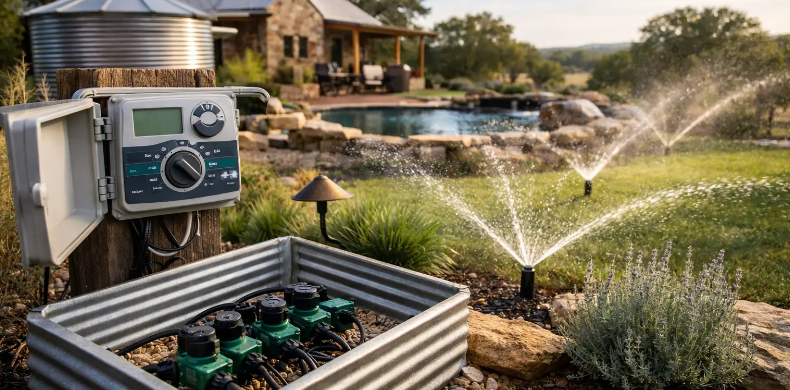
An experienced installer also pays attention to irrigation. Lighting cable and irrigation lines often share the same landscape areas, which makes coordination essential. When both systems are planned together, the crew can avoid cutting into fresh wiring during later repairs or creating a layout that makes routine maintenance harder than it needs to be.
This is one advantage of working with an outdoor contractor who understands the whole property. Joshua Buss Irrigation can consider lighting alongside irrigation, landscaping, drainage needs, and water features rather than treating each improvement as a separate project with no connection to the others.
What to ask before hiring an installer
Before choosing a contractor, ask how they approach the design. A dependable professional should be willing to discuss what you want the lighting to accomplish, not simply quote a set number of fixtures. Ask whether the proposal identifies fixture types, transformer capacity, control options, and the areas being illuminated.
It is also reasonable to ask about materials and service after installation. Outdoor lighting will eventually need attention, even when it is built well. Landscaping grows, fixtures can be bumped, and bulbs or LEDs may need replacement over time. Find out whether the contractor provides adjustments, repairs, additions, and seasonal service.
Ask to see examples of completed work if available, especially projects similar to yours. A small in-town residence, a wide ranch entrance, and a commercial patio each call for a different design approach. The contractor should be able to explain the reasoning behind the layout in clear terms.
Price matters, but it should not be the only comparison. A lower estimate may leave out durable fixtures, enough transformer capacity, proper burial practices, or the after-dark aiming that gives professional lighting its finished appearance. A clear, detailed proposal helps you compare value instead of guessing what is included.
Controls and maintenance keep the system useful
Modern low-voltage lighting can be controlled with timers, photocells, smart controls, or a combination of these options. The right choice depends on the property. A simple timer may be all a homeowner needs, while a commercial property or part-time residence may benefit from controls that allow easier scheduling and adjustments.
Maintenance is usually straightforward, but it should not be ignored. Seasonal checks can catch damaged fixtures, shifted angles, exposed cable, plant growth blocking light, and dirty lenses. Trimming around fixtures helps maintain the intended effect. If a light begins flickering or several lights dim at once, it is better to have the system inspected than to keep replacing parts without identifying the source of the issue.
A properly installed system is also easy to expand. If you later add a patio, garden path, outdoor kitchen, gate, or water feature, available transformer capacity and a documented layout make additions much simpler.
The best outdoor lighting does its job quietly. It helps people find their way, makes a property look cared for, and gives you another reason to enjoy the outdoors after the heat of the day has passed. Start with the places that matter most, then let a well-planned system grow with your property.