How to Harvest Roof Runoff for Texas Landscapes
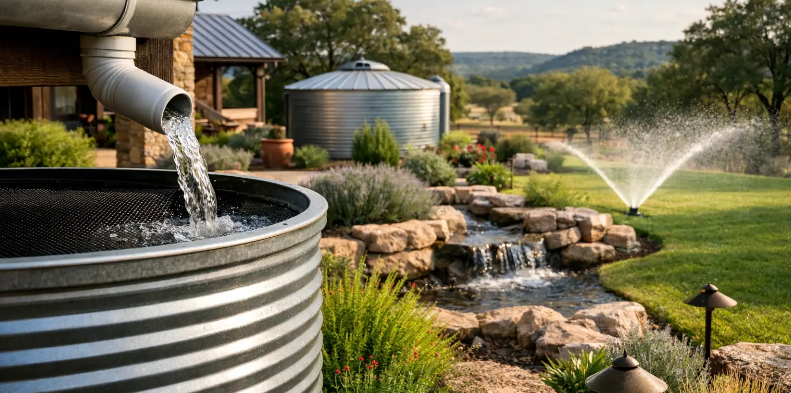
A hard Texas rain can send hundreds or even thousands of gallons off a roof in a single afternoon. That water often rushes across driveways, cuts channels through beds, and disappears just when lawns, trees, and native plantings need it most. Learning how to harvest roof runoff gives that rainfall a practical job: supporting your landscape while reducing demand on your well or municipal water supply.
For Hill Country properties, a good rainwater collection system is not simply a barrel tucked under a downspout. It is a planned setup that accounts for roof area, rainfall patterns, storage needs, drainage, filtration, and the way you actually irrigate your property. The right system can make your landscape more resilient without creating overflow problems, mosquito habitat, or a tank that never holds enough water to be useful.
Start With the Roof and the Water Need
The roof is your collection surface, so its size and material determine how much water you can reasonably capture. A simple planning rule is that 1 inch of rain falling on 1,000 square feet of roof produces about 623 gallons of water before minor losses. A 2,500-square-foot roof can therefore produce more than 1,500 gallons from a 1-inch rain.
That number is helpful, but it should not be the only number driving the project. Consider what you want the stored water to do. A small system may be enough to hand-water patio containers, a vegetable garden, or newly planted trees. A larger tank system can supply drip irrigation for landscape beds, native plantings, or portions of a lawn. Ranch and estate properties may need multiple tanks, a larger transfer system, or collection from barns and outbuildings in addition to the home.
Start by looking at your highest-value landscape areas. Mature trees, foundation plantings, gardens, and newly installed shrubs are often better candidates for harvested rainwater than a large area of thirsty turf. Focusing on these zones helps you size the system around a realistic water budget rather than trying to collect every drop that lands on the roof.
Roof material matters, too. Metal and composition shingle roofs are commonly used for landscape collection. Avoid collecting runoff from roof sections with deteriorating materials, exposed treated wood, heavy moss treatment, or areas that may carry unusual contaminants. If the water is intended for drinking or household use, the system needs a higher level of treatment, testing, and design than a landscape irrigation system.
How to Harvest Roof Runoff Step by Step
A dependable collection system follows the water from the roof edge to storage, then safely delivers it to the landscape. Each part matters. A quality tank cannot make up for undersized gutters, and a good pump will not solve drainage problems caused by poor overflow planning.
1. Collect water with clean, properly sized gutters
Gutters and downspouts guide runoff to the collection point. They need enough capacity to handle intense rain, not just a light shower. In Fredericksburg and across the Texas Hill Country, storms can arrive quickly, and undersized or clogged gutters may spill before the tank receives much water.
Keep gutters clean and securely fastened. Add leaf screens where trees create regular debris, but remember that screens still need periodic cleaning. Downspouts should be routed with solid, well-supported piping toward the tank. Sharp turns, loose connections, and poorly sloped pipe can slow the flow and create places for debris to collect.
2. Remove debris before water reaches the tank
The first runoff from a roof carries dust, pollen, leaves, bird droppings, and other debris. A first-flush diverter is designed to separate that initial dirty water from the cleaner water that follows. For landscape irrigation, this is a sensible protection for your stored water, filters, pump, and drip emitters.
A pre-tank screen or basket filter also helps stop leaves and larger debris. It should be accessible enough to inspect and clean. Filters that are difficult to reach tend to be ignored, and a neglected filter can reduce collection capacity during the exact storm when you need it.
3. Choose storage that fits the property
Rain barrels work for modest collection needs, but they fill fast. A standard 50-gallon barrel can fill from a relatively small amount of roof runoff, leaving most of the stormwater with nowhere to go. They are useful near gardens and patios, but they are rarely enough for a whole landscape plan.
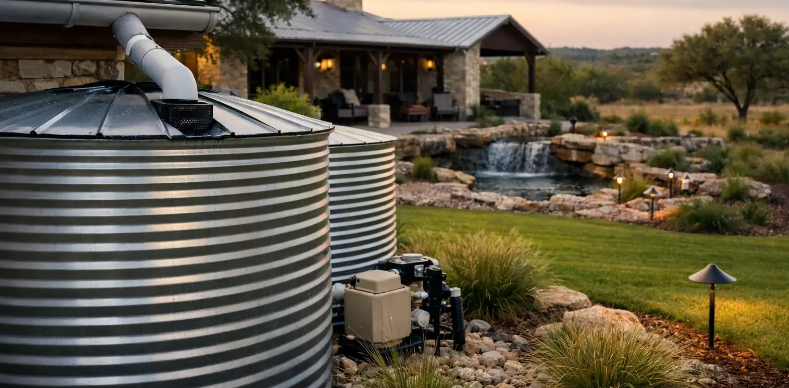
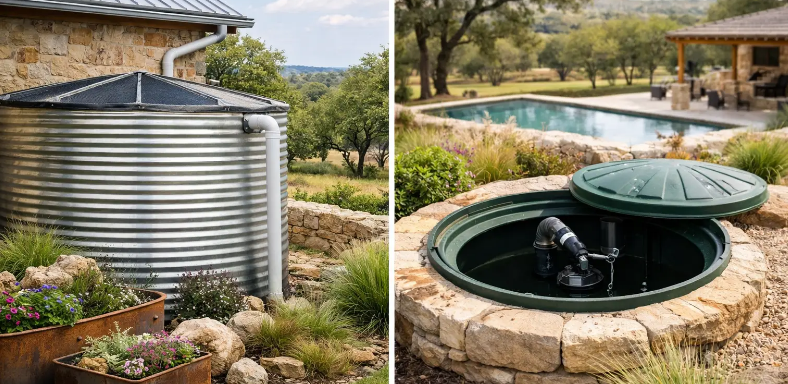
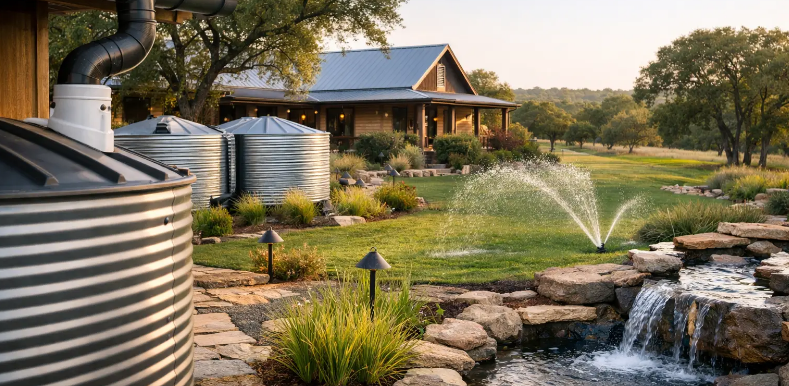
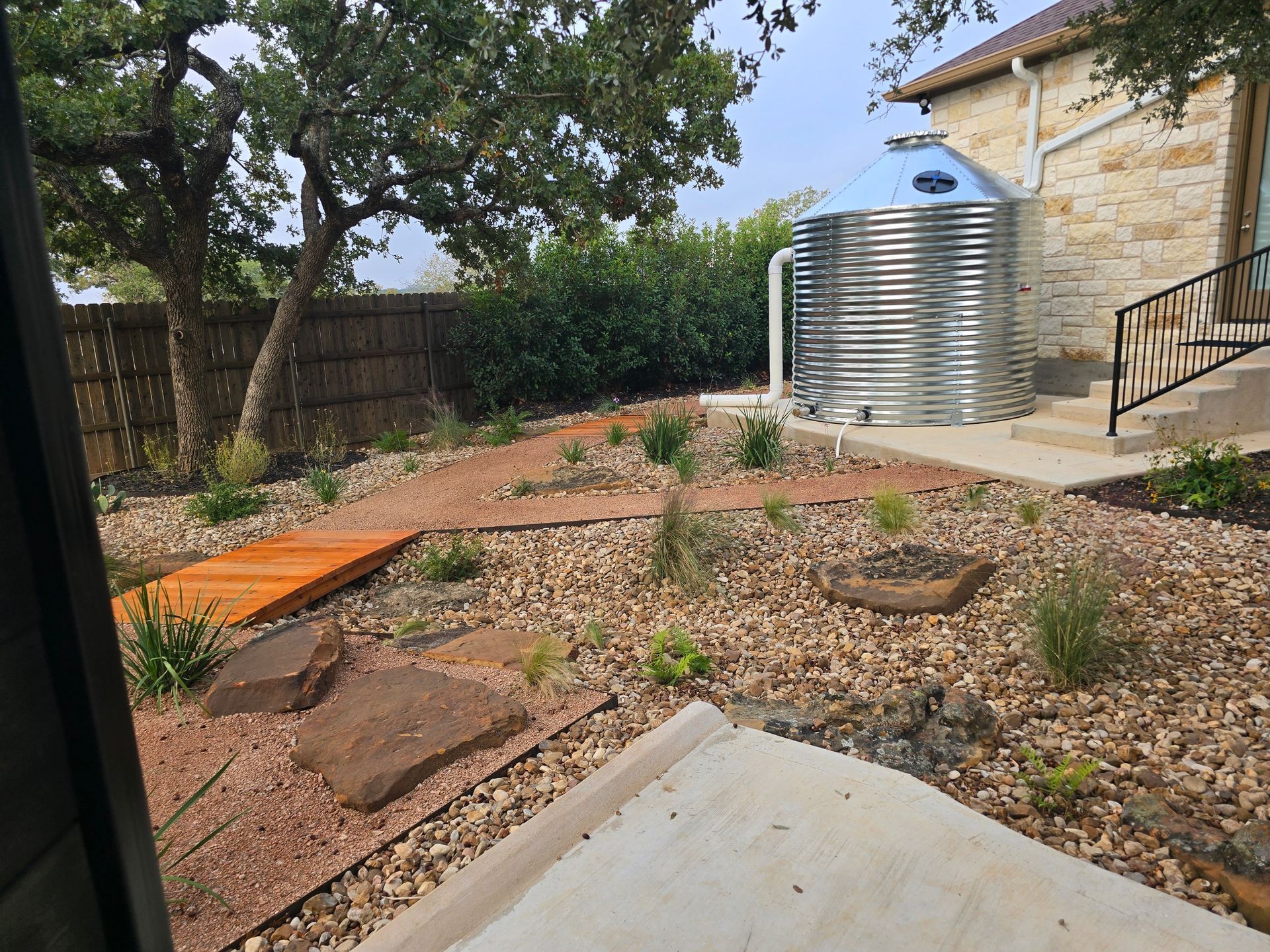
Larger polyethylene, fiberglass, steel, or concrete tanks offer more meaningful storage. The best choice depends on available space, appearance, budget, access for installation, and whether the tank will sit above ground or below ground. Above-ground tanks are generally easier to inspect and maintain. Underground storage preserves views and usable yard space, but excavation, access, and pumping requirements add cost and complexity.
A tank needs a stable, level base engineered for its loaded weight. Water weighs more than 8 pounds per gallon, so a 2,500-gallon tank holds more than 20,000 pounds when full. A compacted base, concrete pad, or properly prepared gravel foundation protects the tank and helps prevent settling over time.
4. Plan for overflow before the first storm
Every collection system must safely manage a full tank. The overflow outlet should be sized to handle major rainfall and routed away from foundations, driveways, neighboring properties, septic components, and areas prone to erosion.
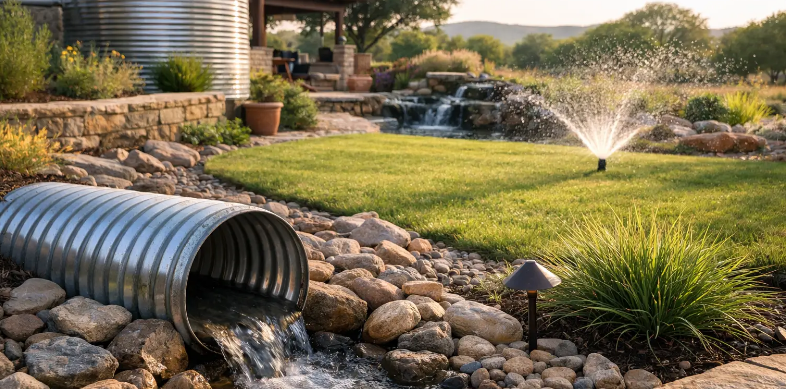
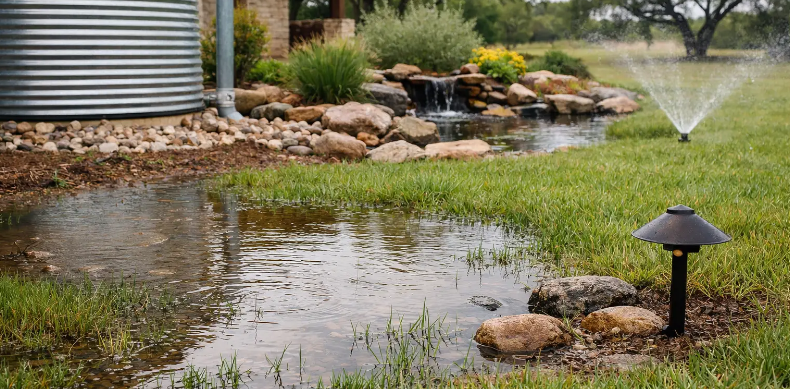
This overflow can become an asset when designed correctly. It may feed a rock-lined swale, rain garden, drainage easement, or a planted area built to absorb occasional heavy flow. It should not dump concentrated water at the base of a house or onto a slope where it can wash out soil. On sloped Hill Country sites, careful grading and erosion control are especially important.
5. Deliver the water in a way the landscape can use
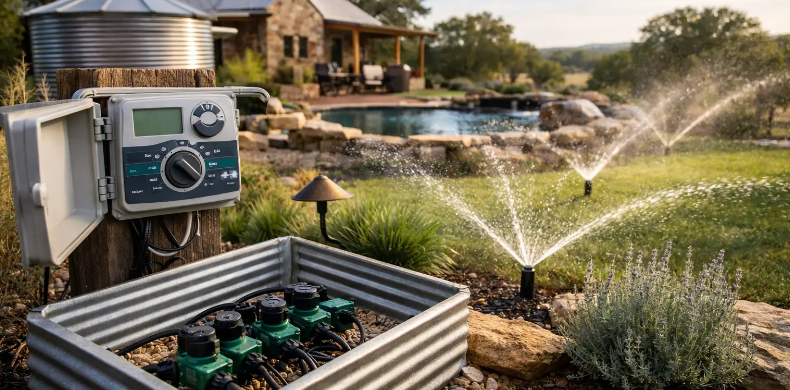
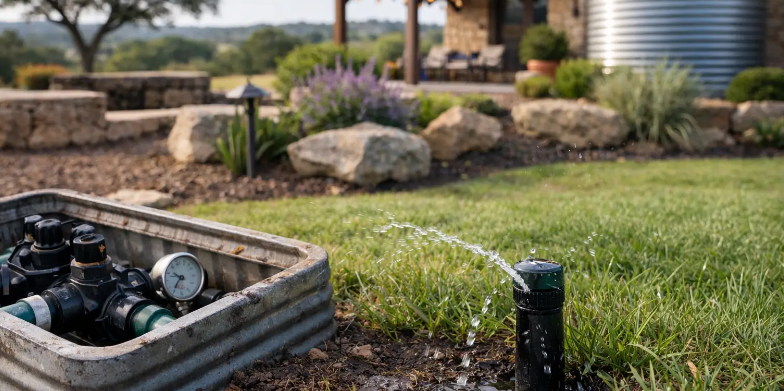
Gravity can supply water when the tank sits high enough above the planting area, but many properties need a pump and pressure controls. A pump system should match the number of irrigation zones, elevation changes, pipe size, and flow requirements of the emitters. Too little pressure leads to uneven watering; too much pressure can damage drip components and waste water.
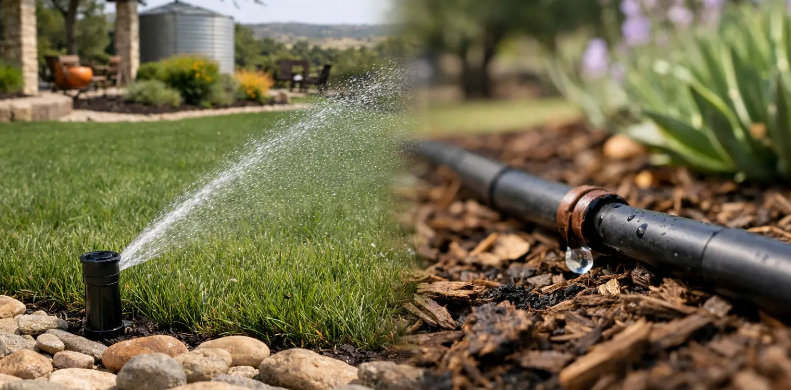
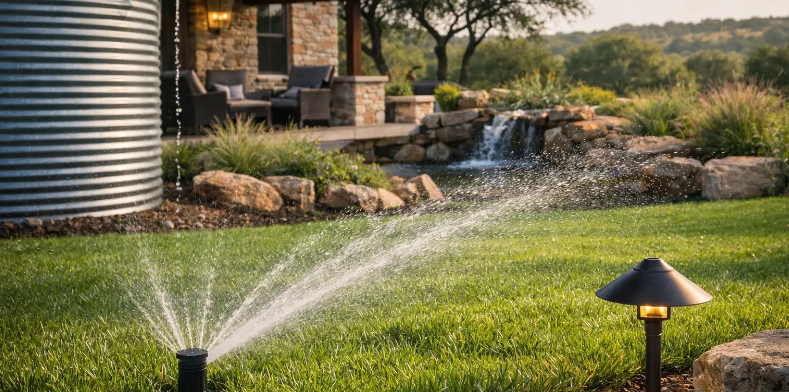
Drip irrigation is usually the strongest match for stored rainwater because it applies water slowly at the root zone. It works well for shrubs, trees, flower beds, gardens, and many native plantings. A filter is essential before drip lines, even when the collection system has pre-tank filtration. Fine sediment can clog emitters over time.
If harvested water will connect to an existing irrigation system or a potable water backup line, proper valves and backflow protection are required. Keep rainwater plumbing clearly separated from drinking-water plumbing unless the system has been professionally designed for potable use.
Maintenance Keeps Collected Water Useful
Rainwater harvesting is low-maintenance, not no-maintenance. Inspect gutters, screens, and first-flush components after heavy storms and during leaf-drop season. Check tank lids, inlet screens, and vents to make sure insects and small animals cannot enter. Stored water should be shaded or kept in an opaque tank when possible to limit algae growth.
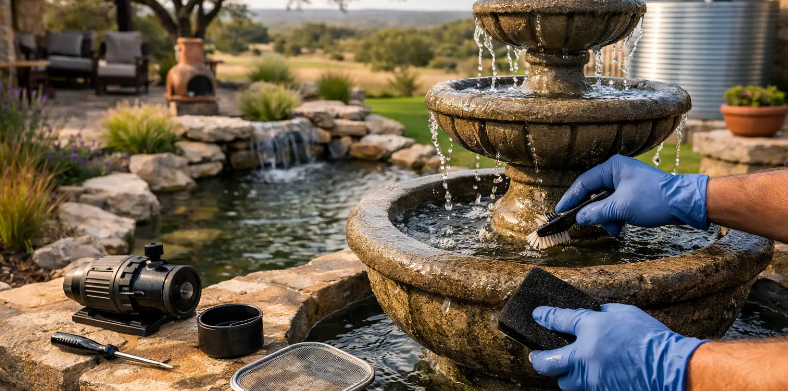
Periodically inspect the tank base, plumbing connections, overflow route, pump operation, and irrigation filter. Flush or clean drip filters on the schedule recommended for the system, especially after a dusty period or a storm that carries extra debris from the roof.
Mosquito control deserves attention. Tanks should have secure lids and fine screens over every opening. Do not rely on an open barrel or uncovered container. If water sits where mosquitoes can access it, the system becomes a nuisance rather than a resource.
Make the System Fit Your Landscape, Not the Other Way Around
The most successful rainwater systems are designed alongside the landscape and irrigation plan. A homeowner with a compact courtyard may benefit from one discreet tank feeding drip irrigation. A larger home, vineyard, ranch entrance, or commercial property may need several collection points, zone-based irrigation, and purposeful overflow drainage.
There is also a budget decision to make. A basic barrel system is affordable and can be a worthwhile first step. A larger tank, pump, filtration, and irrigation integration costs more upfront, but it can provide dependable water for the landscape areas that matter most during dry weather. The right answer depends on roof area, water goals, site conditions, and how much maintenance you want to handle.
Joshua Buss Irrigation can help property owners plan collection, storage, drainage, and irrigation as one working system rather than a series of disconnected parts. A site evaluation can identify where roof runoff is currently causing problems and where it can become a useful water source.
The next time rain hits your roof, pay attention to where it goes. With sound collection design and a landscape-ready plan, that brief Texas downpour can keep doing good work long after the clouds clear.