Rainwater Collection Versus Cisterns: What Fits?
August 9, 2026
A hard Texas rain can send thousands of gallons off a roof in a single afternoon. The question is whether that water is being put to work on your property or rushing away through the downspouts. When people compare rainwater collection versus cisterns, they are often comparing two things that actually work together: the complete harvesting system and the tank that stores the water.
For homeowners, ranch owners, and commercial property managers, getting the distinction right makes it easier to choose a system that supports the landscape, reduces pressure on a well or municipal supply, and holds up through the dry stretches common in the Hill Country.
Rainwater Collection Versus Cisterns: The Key Difference
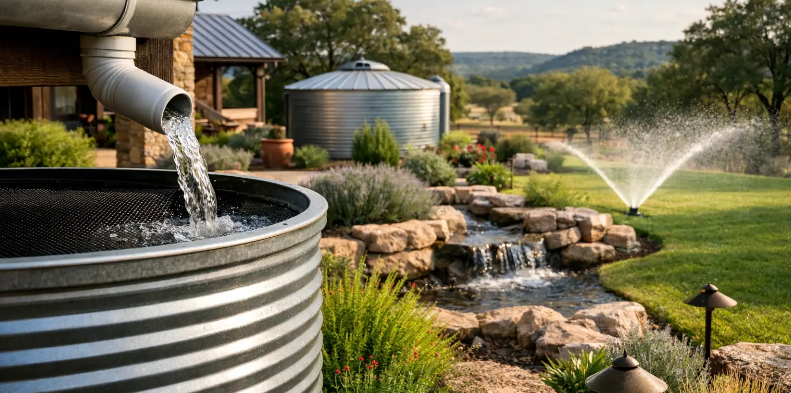
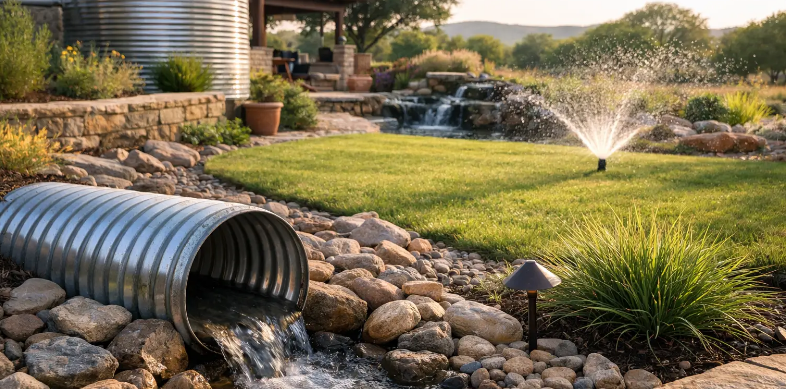
Rainwater collection, also called rainwater harvesting, is the full process of capturing rainfall and putting it to use. It can include the roof catchment area, gutters, screens, downspouts, first-flush diversion, filters, storage, pumps, plumbing, and irrigation controls. A simple setup may direct one downspout into a rain barrel for hand watering. A more capable system can collect water from a large roof and supply designated irrigation zones through a pump.
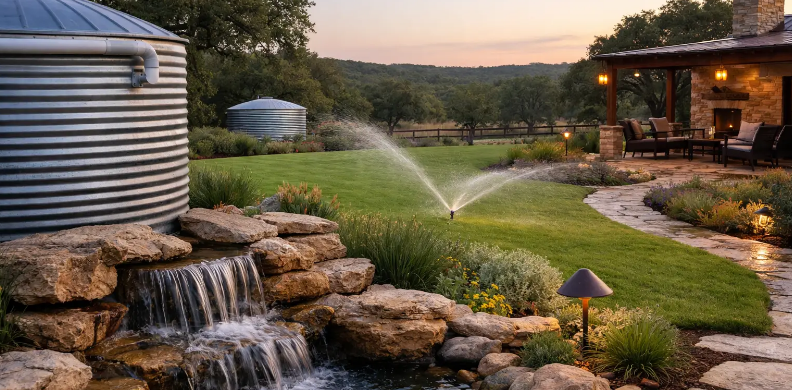
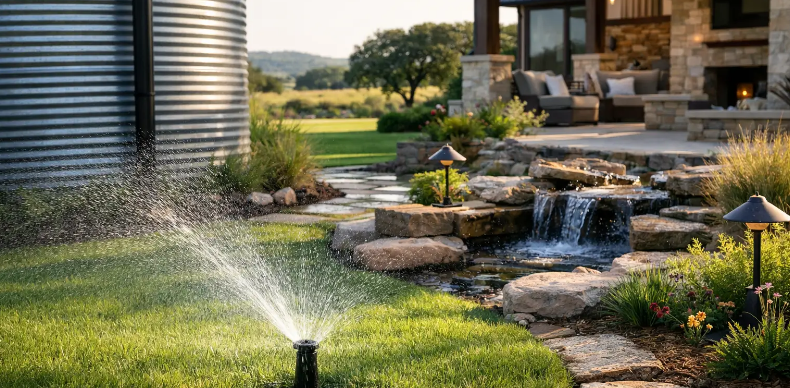
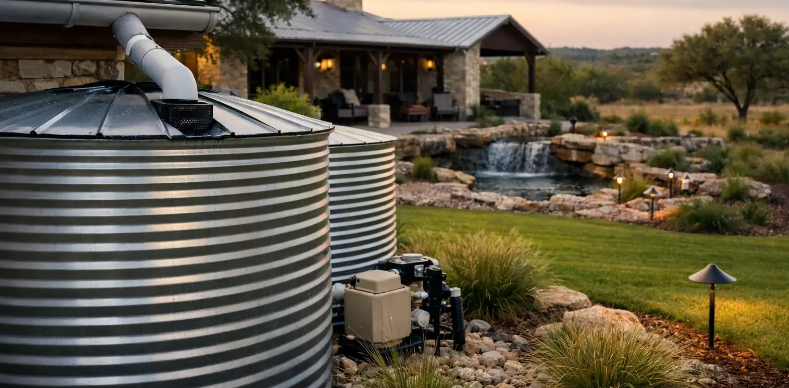
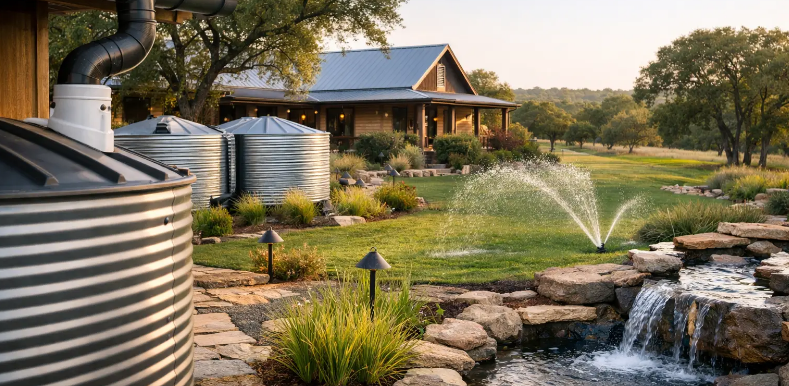
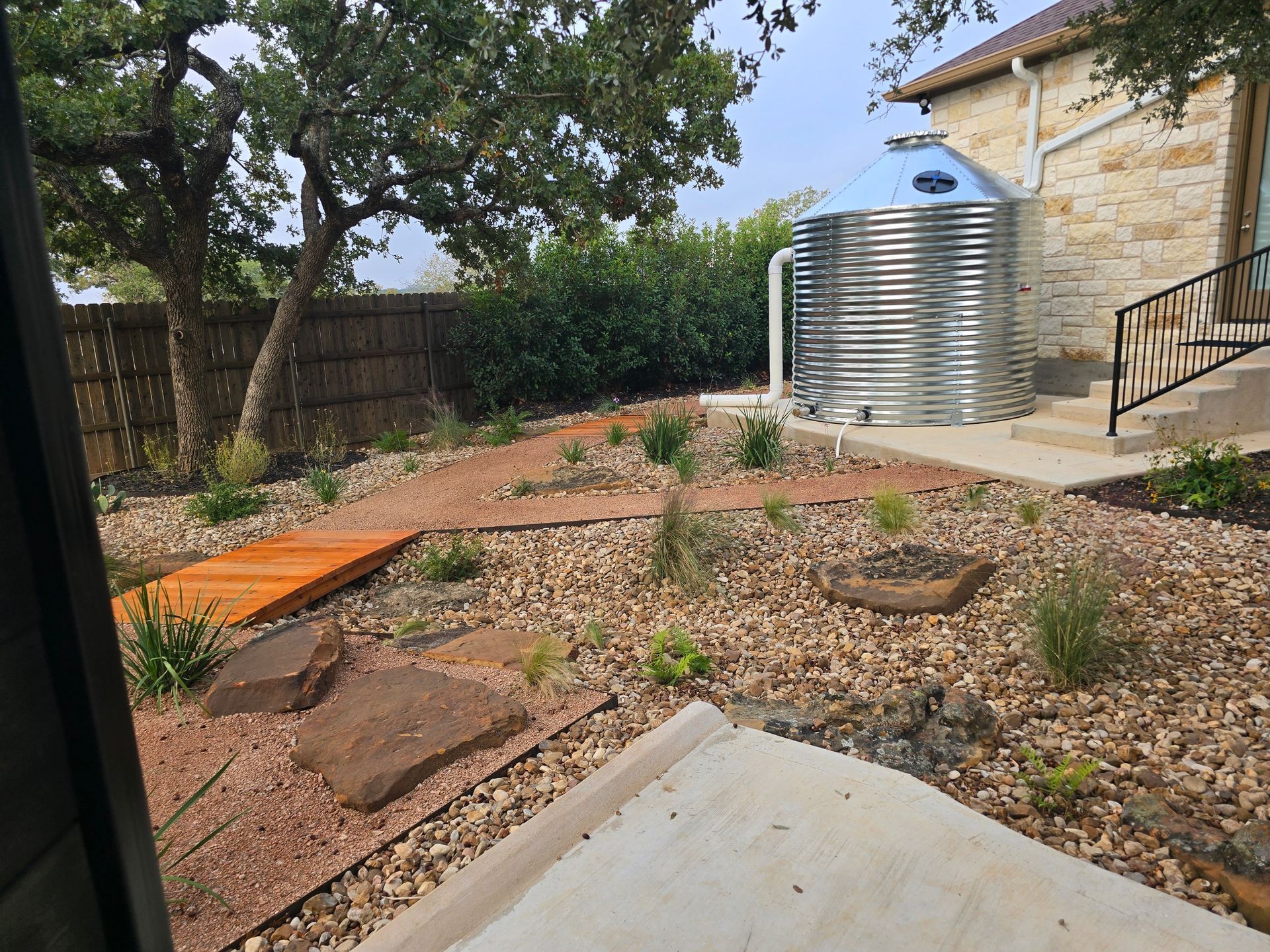
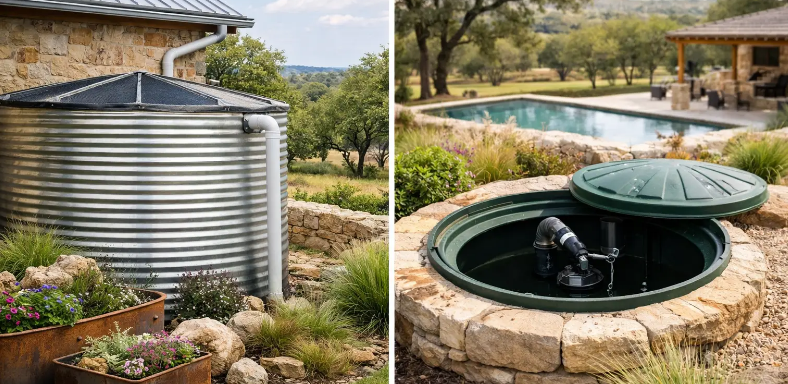
A cistern is the storage vessel within that system. It is the tank that holds collected water until you need it. Cisterns come in many materials and sizes, including polyethylene, metal, concrete, and fiberglass. They can be installed above ground, partially buried, or underground when site conditions and access call for it.
So, it is not usually an either-or decision. You can have rainwater collection without a large cistern, such as a small barrel setup. But a cistern by itself does not collect anything until it is connected to a properly designed rainwater collection system.
That difference matters because the tank gets most of the attention, while the details around it determine whether the system stays clean, performs reliably, and delivers water where it is needed.
What a Complete Rainwater Collection System Includes
A dependable system starts at the roof. Roof material, roof size, gutter condition, and drainage layout all affect how much water can be captured and how cleanly it reaches storage. Rain landing on a roof may carry leaves, dust, pollen, insects, and debris. Good collection design manages those materials before they settle in the tank or clog irrigation equipment.
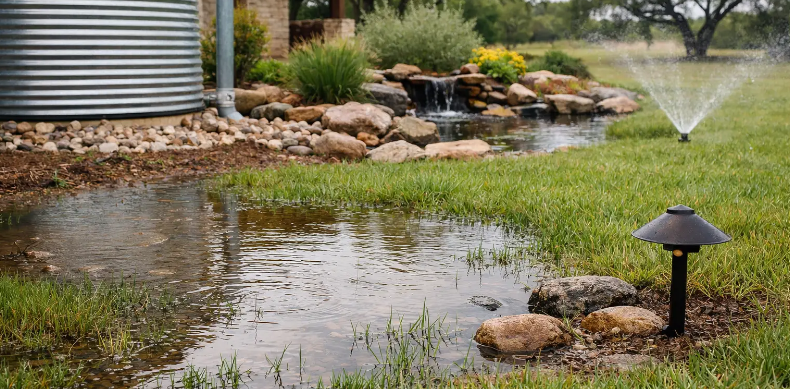
Pre-filtration and leaf screening help keep larger debris out. A first-flush device can divert the initial runoff, which is often the dirtiest portion of a rain event. Overflow piping is also essential. When a tank reaches capacity, excess water needs a planned route that moves it away from foundations, driveways, and erosion-prone areas.
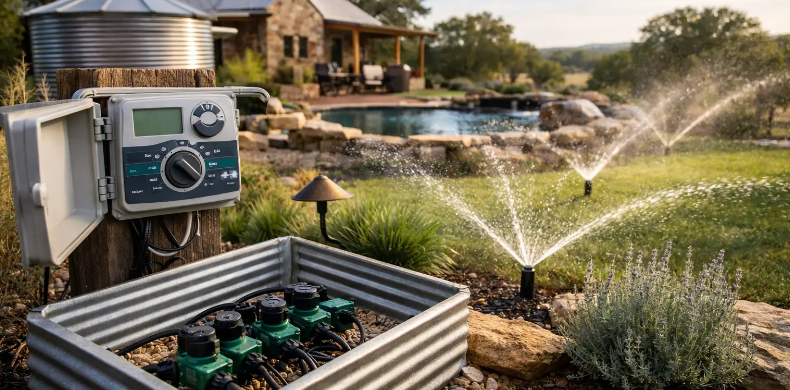
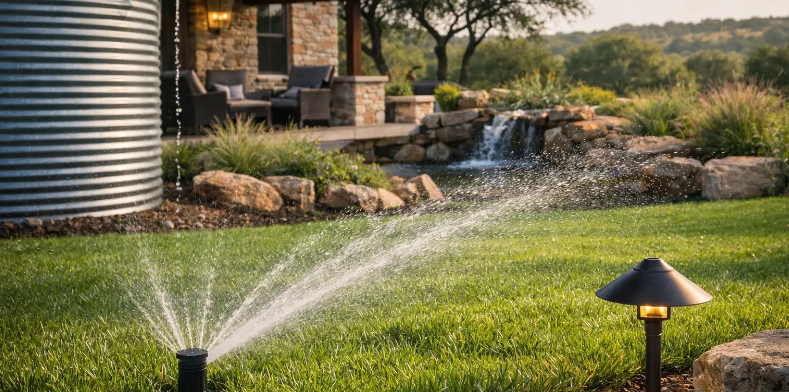
From there, the system has to match the intended use. Water meant for landscape irrigation may need a pump, pressure controls, filtration, and a connection to a drip system or selected sprinkler zones. Water intended for household use has a different level of design and treatment requirements. Many properties are best served by keeping harvested water focused on irrigation, ornamental plantings, trees, gardens, or other outdoor needs.
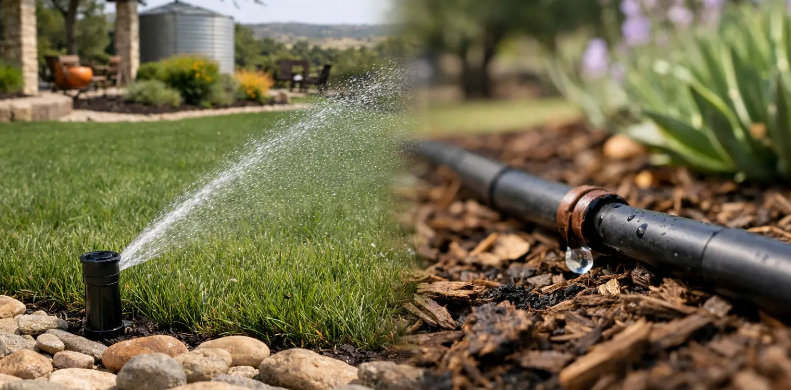
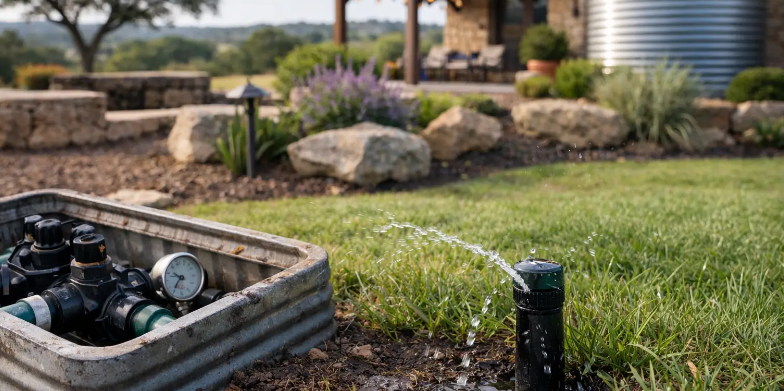
A well-designed irrigation connection also prevents common headaches. Too little pump capacity can leave sprinkler heads weak and uneven. Poor filtration can clog drip emitters. An improperly designed backup connection can create confusion when the tank is low. These are not reasons to avoid rainwater harvesting. They are reasons to plan the entire system rather than treating the tank as a standalone purchase.
When a Cistern Makes Sense
A cistern is a strong choice when you want to store a meaningful amount of water between storms. In Fredericksburg and across the Texas Hill Country, rain often arrives in bursts instead of in steady, predictable weekly amounts. A larger storage capacity gives you more flexibility to hold onto that rainfall for the hot days that follow.
Cisterns are especially useful for properties with sizable roof areas, established landscaping, gardens, orchards, livestock-related outdoor needs, or irrigation zones that require more than a rain barrel can provide. They can also make sense for properties that rely on wells and want another source for non-potable outdoor water use.
The right size is not always the largest tank that fits. Oversizing can add unnecessary cost and take up valuable space. Undersizing may mean the tank overflows frequently during good rain events and runs dry soon after. The best capacity depends on the catchment area, typical rainfall, water demand, available location, and budget.
As a basic example, one inch of rain falling on a 1,000-square-foot roof can produce roughly 600 gallons of collectible water before accounting for losses. That is enough to show why roof area matters. A large metal-roofed home, barn, or shop can provide substantial collection potential, but the storage and delivery system must be built to handle it.
Above-Ground or Underground Storage
Above-ground cisterns are generally easier to inspect, service, and expand. They may cost less to install because excavation is limited, and they are practical on properties with accessible side yards, utility areas, or barn locations. They do need a stable, level base and thoughtful placement so they look appropriate and remain protected from vehicle traffic.
Underground cisterns preserve visible space and may help maintain a cleaner landscape appearance. They can be a smart solution where aesthetics, limited lot space, or large storage goals are the priority. However, excavation, soil conditions, drainage, access, and maintenance all need careful consideration. Underground installations usually require a larger upfront investment and should be designed by professionals who understand the site.
The Trade-Offs Property Owners Should Consider
Rainwater harvesting can reduce demand on your primary water source, but it is not automatic free irrigation. A quality system requires planning, installation, and occasional maintenance. Gutters need to be kept clear, screens and filters need cleaning, pumps need service, and storage tanks should be checked for sediment and fittings.
The amount of water available also changes with the weather. A rainwater system is most useful when it is sized around realistic rainfall patterns and paired with an efficient landscape. Native and drought-tolerant plants, healthy mulch beds, drip irrigation, and properly scheduled zones stretch every stored gallon further.
There is also a difference between collecting water for occasional hand watering and using it as a dependable source for a larger irrigation system. A barrel may be perfect for a small vegetable garden. A ranch entrance, large lawn, commercial landscape, or estate garden may need a cistern, pump package, irrigation design, and a carefully planned backup water source.
For many Hill Country properties, a hybrid approach works best. Rainwater can supply specific planting beds, trees, garden areas, or selected irrigation zones, while municipal water or a well remains available for larger demands or extended dry periods. That approach protects the landscape without asking one source to do more than it can reasonably provide.
Choosing the Right Setup for Your Property
Start with the purpose. Are you trying to keep a few valuable trees healthier through summer? Reduce irrigation use around a home? Water a garden? Support a larger landscape without drawing as heavily from a well? The answer guides every decision that follows.
Next, look at the collection potential. A property with a small roof and high irrigation demand may benefit from conservation upgrades first, such as drip irrigation, repaired sprinkler coverage, better scheduling, and improved plant selection. A property with broad roof surfaces and a manageable outdoor water demand may be an excellent candidate for a larger harvesting system.
Location matters just as much as capacity. The cistern needs access for installation and maintenance, a sound foundation, room for plumbing, and a safe overflow path. It should also fit the way you use the property. A tank tucked behind a shop may be practical for an orchard or garden. A visible residential installation may need screening or thoughtful integration with the landscape.
Finally, consider who will use and maintain the system. The most effective design is not necessarily the most complex one. It is the one that delivers useful water consistently, is easy to service, and fits the property owner's expectations.
Joshua Buss Irrigation helps property owners plan practical rainwater harvesting and irrigation solutions that match real Texas landscapes, not one-size-fits-all plans. A site evaluation can identify the best catchment areas, storage options, irrigation connections, and drainage details before work begins.
The right system should make your landscape easier to care for when the next dry spell arrives. Start with your roof, your water needs, and the parts of the property worth protecting most, then build a collection and storage plan that earns its place year after year.