Texas Hill Country Landscaping That Holds Up
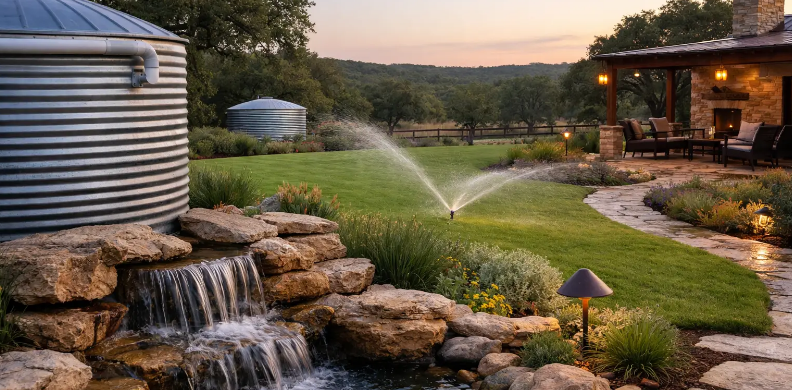
A good-looking yard in the Hill Country has to do more than make a strong first impression. It has to handle hard limestone, shallow soil, intense summer heat, sudden downpours, and long dry stretches without becoming a constant source of work and water expense. The best Texas Hill Country landscaping begins with a practical plan for those conditions, then builds beauty around it.
For homeowners, ranch owners, and commercial properties, that approach creates an outdoor space that feels right for the land instead of fighting it. It also helps avoid a common mistake: spending money on plants, turf, or decorative features that look great for a season but struggle once the weather turns.
Build With the Property, Not Against It
Every Hill Country property has its own challenges. One site may have deep pockets of workable soil, while another has exposed rock just below the surface. A sloped lot may shed water quickly during a storm, while a flatter area can hold too much moisture around plant roots. Before choosing plants or laying sod, look at how water moves across the property, where the strongest afternoon sun falls, and which areas need to serve a purpose.
That purpose matters. A front entrance may need clean curb appeal and low maintenance. A backyard may need shade, room for children or guests, and lighting for evening use. Larger properties often need durable planting around driveways, gates, patios, barns, or outdoor gathering spaces. The landscape should support how the property is actually used.
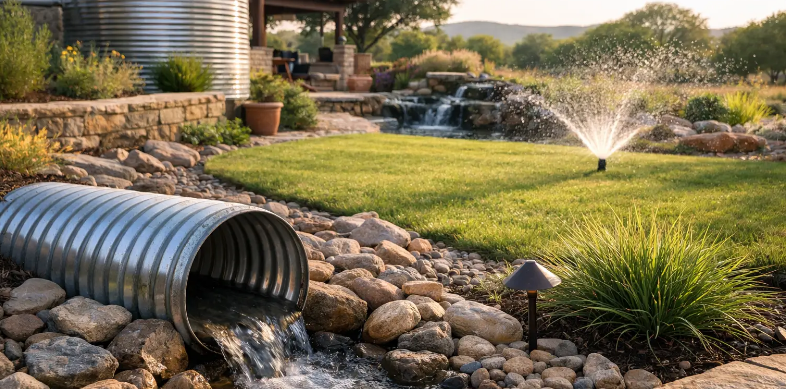
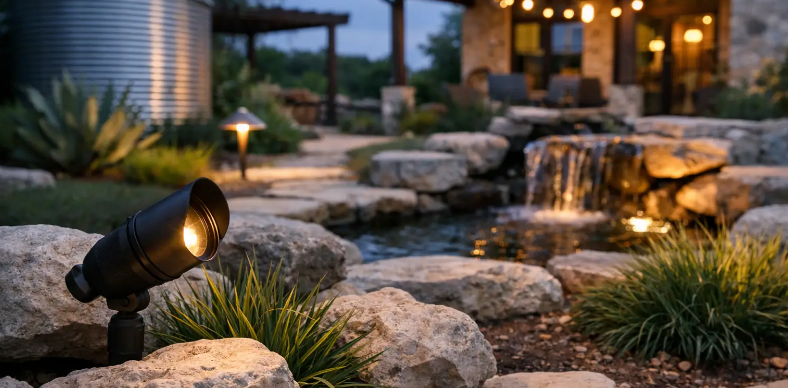
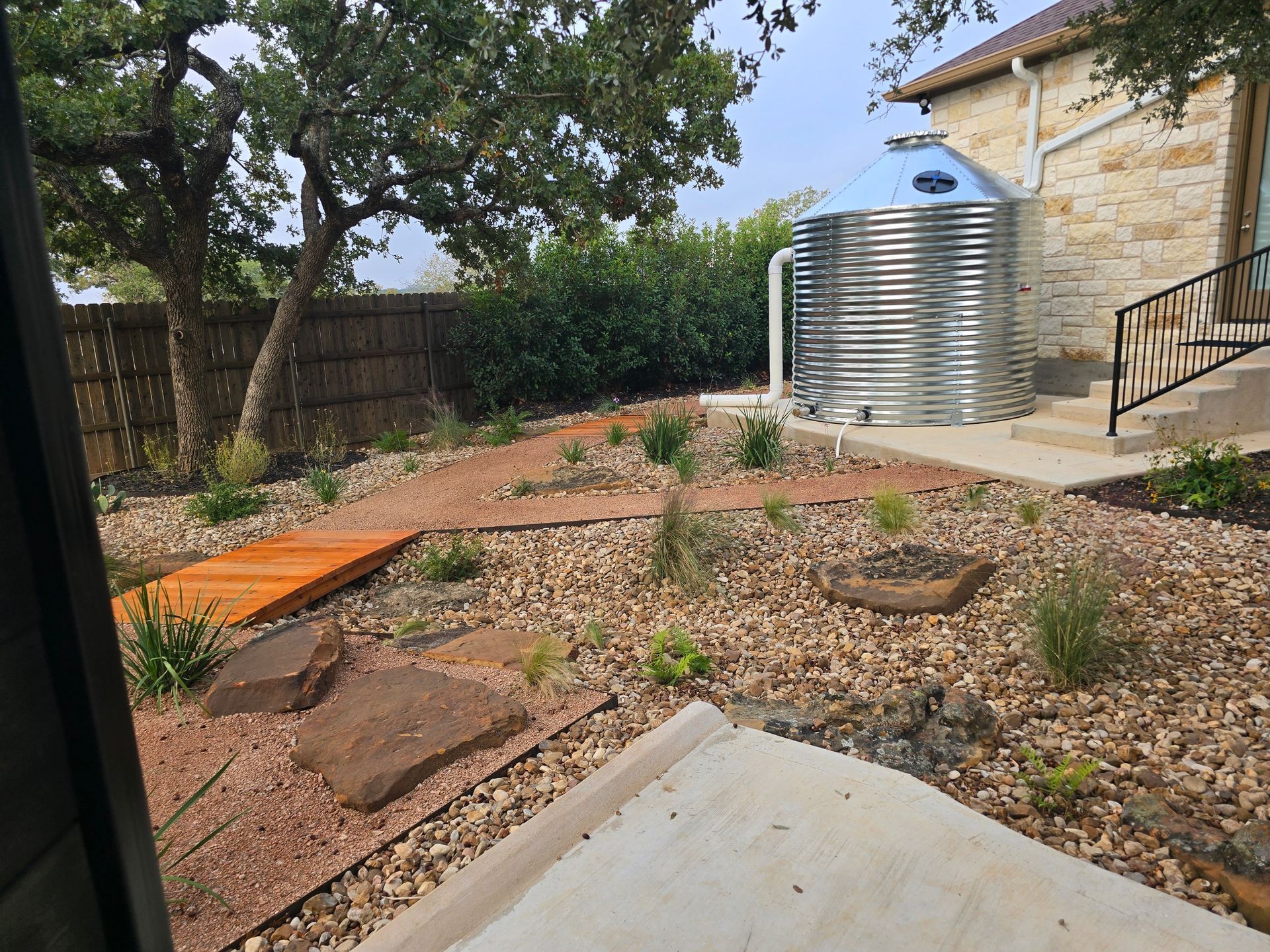
Stone can be an asset instead of an obstacle. Native limestone boulders, rock borders, and dry creek beds give a landscape a natural Hill Country character while helping define beds and direct runoff. The key is using them intentionally. Too much decorative rock can create extra reflected heat around plants and make a space feel harsh. Balanced with mulch, shade, and living plant material, stone adds structure without taking over the yard.
Texas Hill Country Landscaping Starts With Water
Water is usually the difference between a landscape that lasts and one that becomes expensive to maintain. A healthy lawn and planting bed do not necessarily need frequent watering, but they do need water delivered at the right time, in the right amount, and in the right place.
Use irrigation zones that match the landscape
A single irrigation schedule for an entire property wastes water because grass, trees, shrubs, and planting beds do not have the same needs. Turf typically needs broader coverage, while established trees and shrubs benefit from slow, deep watering at the root zone. Flower beds, containers, and newly installed plants may need more attention while they establish.
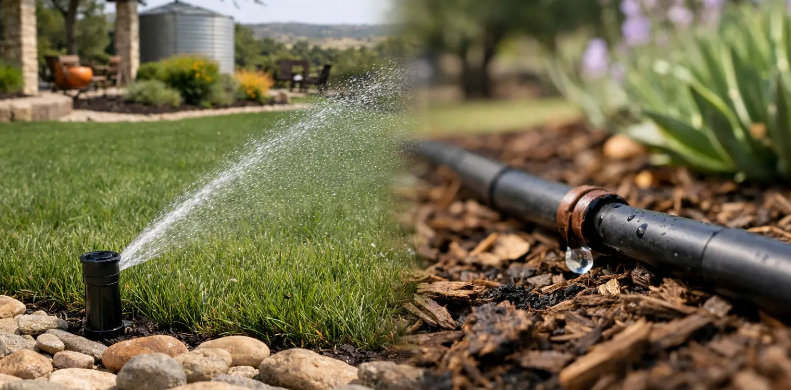
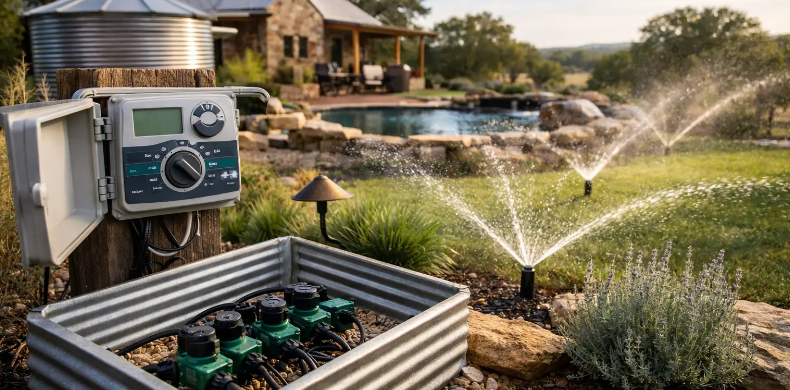
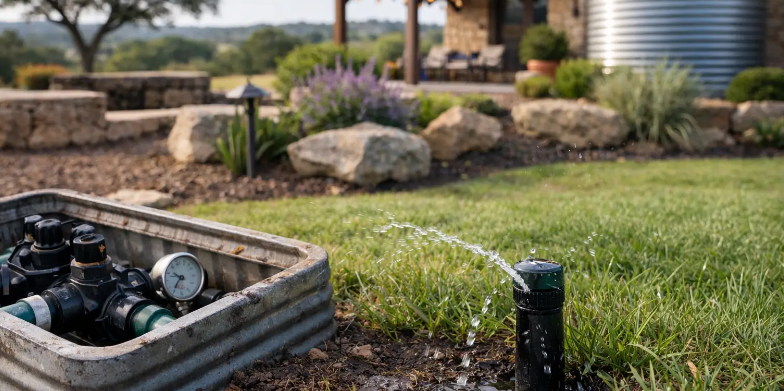
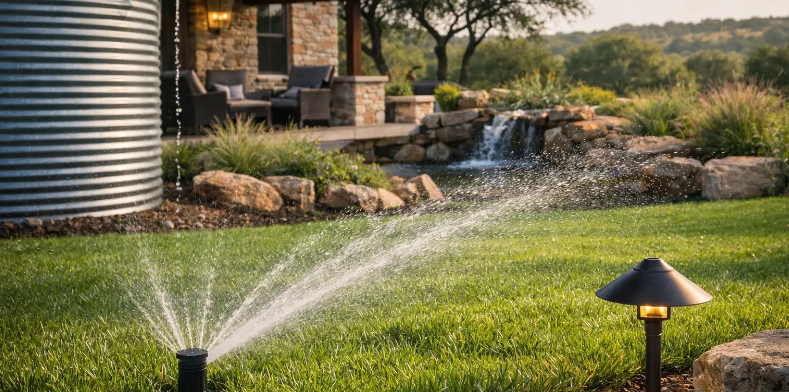
A properly designed system separates those needs into zones. Drip irrigation is often a smart choice for beds, foundations, and tree areas because it puts water near the roots rather than spraying it into the wind or onto rock and pavement. Spray heads may still be appropriate for turf, but they need correct spacing, pressure, and adjustment to avoid dry spots and runoff.
Smart controllers and rain sensors can improve efficiency, but technology is only helpful when the system itself is in good condition. Broken heads, clogged drip lines, leaks, poor coverage, and outdated timers can quietly waste a significant amount of water. Seasonal inspections and adjustments are part of responsible landscape ownership in this region.
Capture rain when it comes
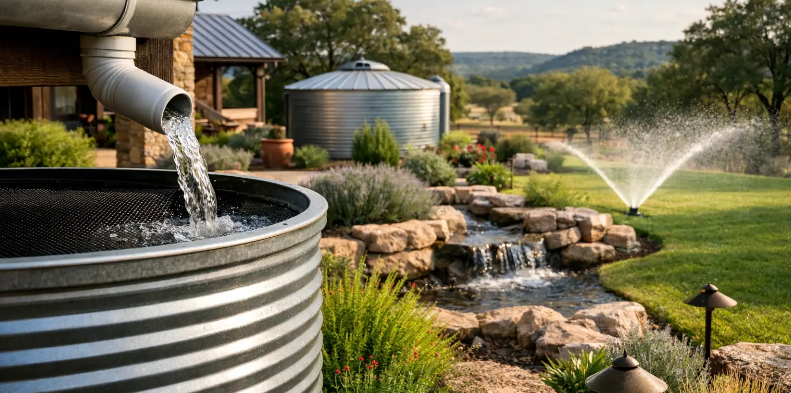
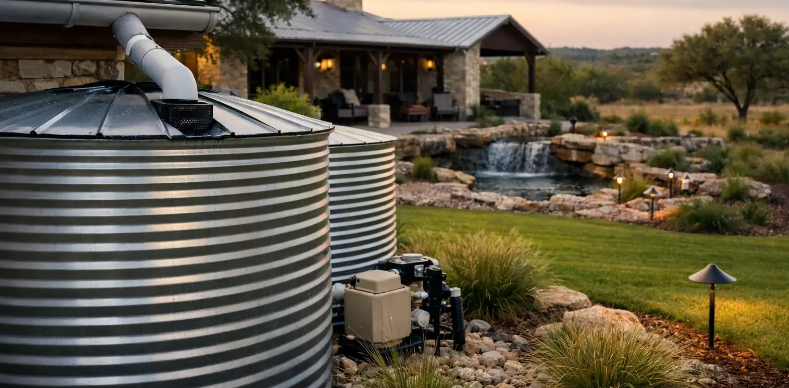
Hill Country rain can be unpredictable. A property may go weeks without meaningful rainfall, then receive several inches in a short period. Rainwater harvesting gives that water a job instead of allowing it to rush off the roof and away from the property.
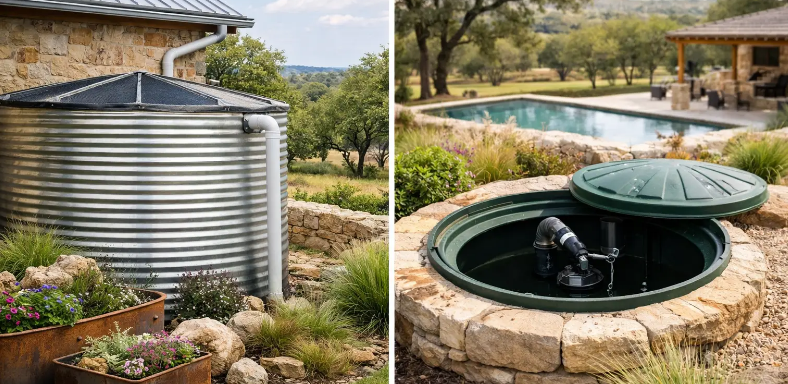
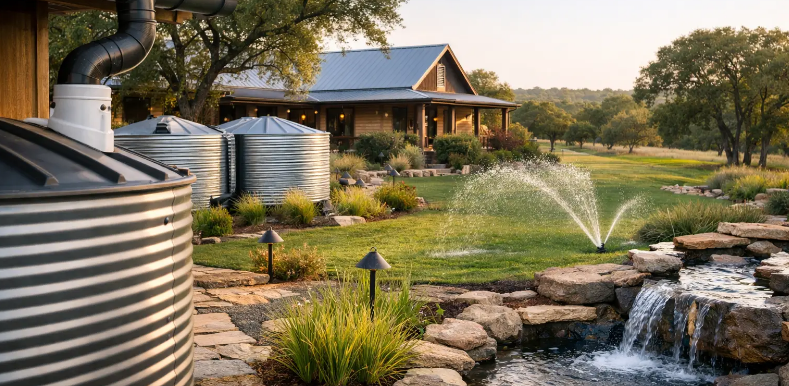
Collection systems can range from simple rain barrels for a small garden to larger storage tanks that support irrigation needs across a substantial landscape. The right setup depends on roof area, available space, intended water use, and budget. Even when a rainwater system does not replace every irrigation need, it can reduce reliance on treated water and provide a valuable reserve during dry weather.
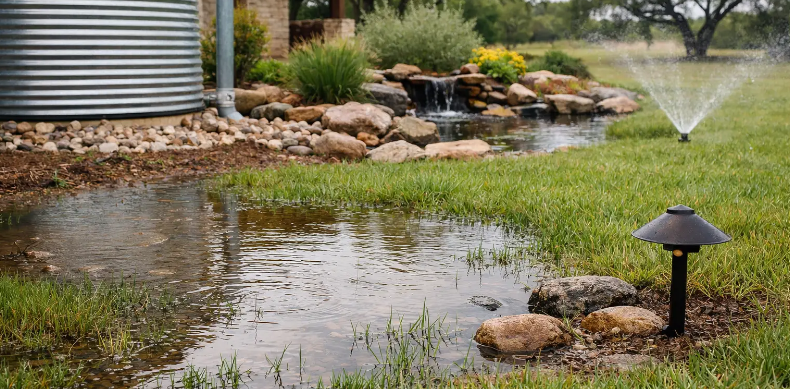
Drainage should be part of the same conversation. Gutters, downspouts, grading, swales, and dry creek beds can guide runoff away from foundations and toward areas where it can soak into the landscape. Good water management protects both the property and the investment made in its outdoor spaces.
Choose Plants That Can Earn Their Place
The Hill Country offers plenty of beautiful plant choices, but not every attractive plant belongs in every yard. A plant that needs constant moisture, rich soil, or protection from direct sun may require more maintenance than many owners expect. The goal is not to eliminate color or variety. It is to choose plants with a reasonable chance of thriving where they are installed.
Native and well-adapted plants are often the foundation of a durable design. Depending on the site, choices may include Texas sage, lantana, flameleaf sumac, yaupon holly, olive trees, native grasses, agaves, salvias, and selected oaks. These plants can provide texture, seasonal color, screening, and shade while standing up better to local conditions than many high-water alternatives.
Still, “native” does not automatically mean “no maintenance.” New plants need consistent watering until their roots establish. They also need enough spacing for mature growth, proper pruning, and healthy soil around the root zone. Crowding plants may make a new bed look full on day one, but it often creates problems with airflow, disease, and overgrowth later.
Mulch is one of the simplest tools for protecting plantings. A quality mulch layer helps moderate soil temperature, reduces evaporation, and limits weeds. It should be kept back from trunks and stems rather than piled against them. Rock mulch has a place in certain designs, but organic mulch is often better around many shrubs and trees because it improves the soil as it breaks down.
Be Honest About Turf
A green lawn is appealing, especially around a home, pool, patio, or commercial entrance. But turf can be the most water-demanding part of a Hill Country landscape. The right answer is rarely all lawn or no lawn. It is usually putting turf where it delivers real value and reducing it where it does not.
Keep usable grass in areas for play, pets, entertaining, or a clean visual transition around the home. In less-used corners, along long driveways, or on difficult slopes, native planting beds, groundcovers, gravel paths, or naturalized areas may be more practical. This approach reduces mowing and watering without making the property look unfinished.
If turf is part of the plan, proper irrigation coverage and soil preparation matter more than watering harder. Different grass types perform differently depending on sun exposure, traffic, and maintenance expectations. A lawn in full sun with good coverage has different needs than a shaded yard beneath mature live oaks. Choosing based on the site prevents frustration later.
Add Features That Improve How You Use the Space
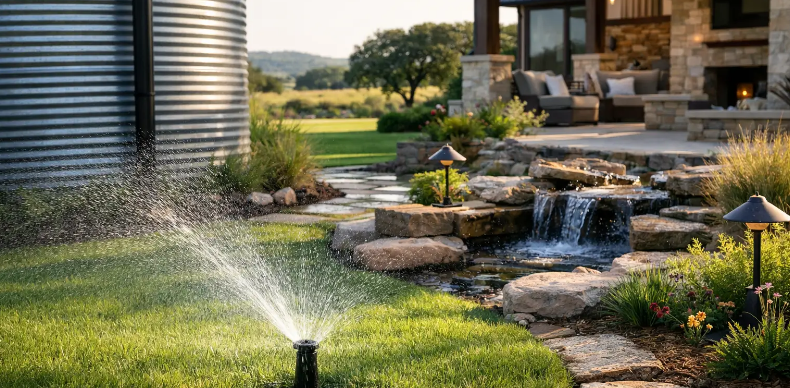
Landscaping is not limited to plants. Thoughtful hardscapes, water features, and low-voltage lighting can make an outdoor area more useful while reinforcing the property’s character.
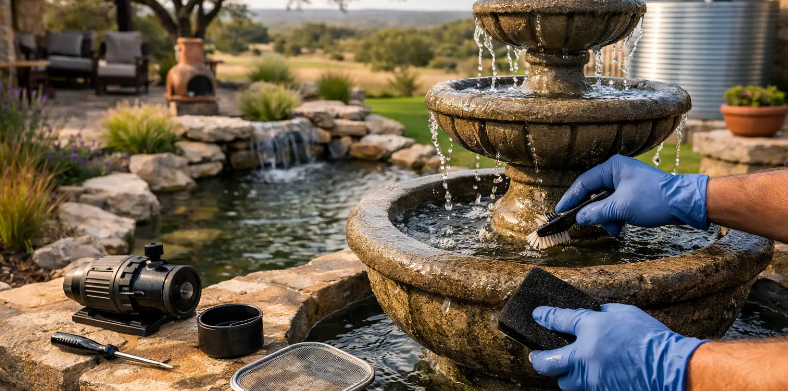
A well-built patio, stone path, or seating area creates a destination in the yard. It can also reduce wear on turf and make it easier to enjoy the property after rain. Water features bring movement and sound to a landscape, though they require dependable construction and a maintenance plan. In a water-conscious area, recirculating designs are generally the sensible choice.
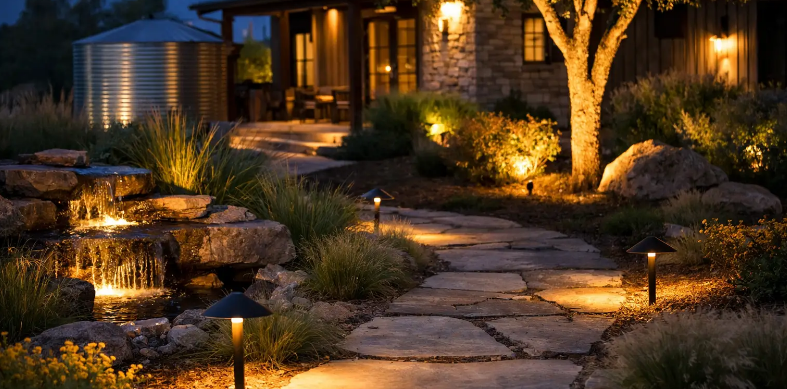
Low-voltage outdoor lighting adds safety along walks, steps, driveways, and entries. It also extends the use of patios and outdoor living areas after dark. The best lighting is not overly bright. It highlights key features, provides safe passage, and creates a warm, natural look without turning the landscape into a runway.
Plan for Maintenance Before Installation
A landscape should fit the owner’s available time, budget, and expectations. A detailed garden can be beautiful, but it will need more regular care than a simpler arrangement of established shrubs, trees, mulch beds, and native grasses. There is no single right level of maintenance. There is only the level that makes sense for the property and the people responsible for it.
Before work begins, ask practical questions. Who will manage irrigation checks? How often can beds be maintained? Is the property occupied year-round? Does the owner want a polished, formal appearance or a more natural Hill Country look? Clear answers help shape a design that remains attractive after the installation crew leaves.
At Joshua Buss Irrigation, the goal is to help property owners make those decisions with honest guidance and workmanship built for local conditions. Whether the project involves irrigation repair, rainwater collection, new planting beds, outdoor lighting, or a complete outdoor upgrade, the best results come from treating water, function, and appearance as one connected plan.
A landscape does not have to be fragile to be beautiful. When it respects the land, uses water wisely, and is built around the way a property is lived in, it can keep earning its place through heat, drought, storms, and the years ahead.