Why Is My Yard Soggy? 7 Causes to Check First
August 10, 2026
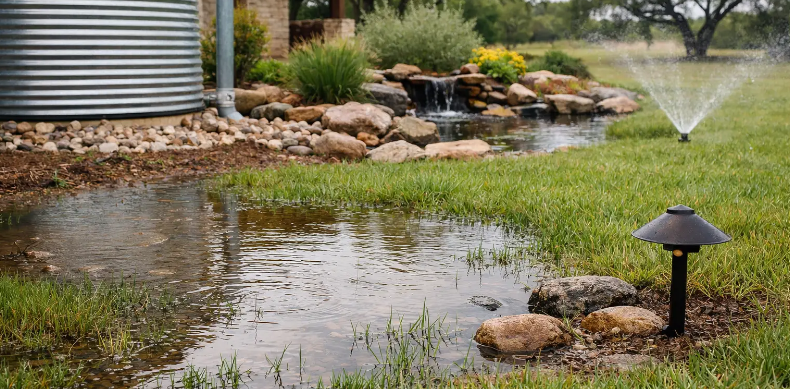
A lawn that squishes under your boots is more than an annoyance. Waterlogged soil can weaken turf, rot plant roots, create mosquito habitat, and turn a usable part of your property into a muddy mess. If you are asking, why is my yard soggy, the answer is usually not simply that it rained. In many cases, water is getting to the area faster than the soil can absorb or move it away.
In the Texas Hill Country, the problem can be especially frustrating. We often deal with dry, compacted ground, shallow soil over rock, sudden hard rains, and irrigated landscapes that need careful scheduling. Finding the actual source matters. Adding more grass seed or hoping the spot dries out may cover the symptom, but it will not fix the water problem underneath.
Why Is My Yard Soggy After Rain or Watering?
A soggy yard usually comes down to one of three things: too much water is being applied, water has nowhere to drain, or water is coming from a source you have not identified. The location and timing of the wet area offer useful clues.
If the same low spot stays wet after a heavy rain, grading or poor drainage is likely involved. If the ground becomes saturated when the irrigation runs, look at the sprinkler schedule, broken components, or coverage pattern. If the area stays wet even during dry weather, a hidden leak, runoff from another area, or a plumbing issue may be the culprit.
1. Low Spots Collect Water
Water follows gravity. A shallow depression in a lawn may not look serious when the grass is dry, but it can hold a surprising amount of water after a storm or irrigation cycle. Over time, soil settles around tree roots, construction areas, old trenches, patios, and driveways. Even a small grade change can direct water toward the wrong place.
Low spots need more than a load of topsoil dumped on top. The finished grade has to move water away from the home and toward a safe drainage area without creating a new problem for a neighboring section of the property. Depending on the site, the solution may involve regrading, adding soil in layers, installing a catch basin, or routing water through a properly designed drain line.
2. Compacted Soil Cannot Absorb Water Well
Hill Country soil can be thin, rocky, and compacted. Foot traffic, equipment, construction, livestock, and years of mowing can press soil particles tightly together. When that happens, water may sit on the surface instead of soaking in. Clay-heavy areas can have a similar issue, especially after a long dry period when the ground becomes hard.
Compaction is often mistaken for a drainage problem alone. The yard may have an acceptable slope, yet water still puddles because the soil cannot take it in quickly enough. Core aeration can help in some turf areas, but it is not a cure-all. If the problem is severe or the soil layer is shallow over rock, drainage improvements and plant choices may need to work together.
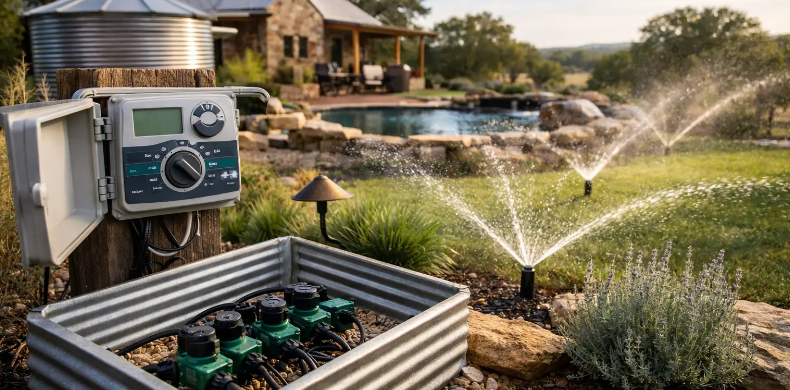
3. Your Irrigation System May Be Overwatering
A healthy landscape needs water, but longer run times do not always produce better results. If irrigation is running too often, the soil can remain saturated between cycles. This is common when controllers are set on a fixed schedule and never adjusted for rain, seasonal temperatures, shade, soil type, or plant needs.
Check whether the wet area appears shortly after a specific zone runs. Also look for runoff along sidewalks, driveways, or curbs. Water flowing away during a cycle is a sign that the application rate is too fast for the soil or that run times are too long.
For many properties, shorter cycle-and-soak watering is more effective than one long run. The system waters for a short period, pauses so the soil can absorb moisture, then resumes if needed. The right schedule depends on the sprinkler type, zone layout, slope, soil, and season. A schedule that worked during summer heat may be excessive in cooler weather or after a rainy stretch.
4. A Broken Irrigation Line or Valve Can Leak Underground
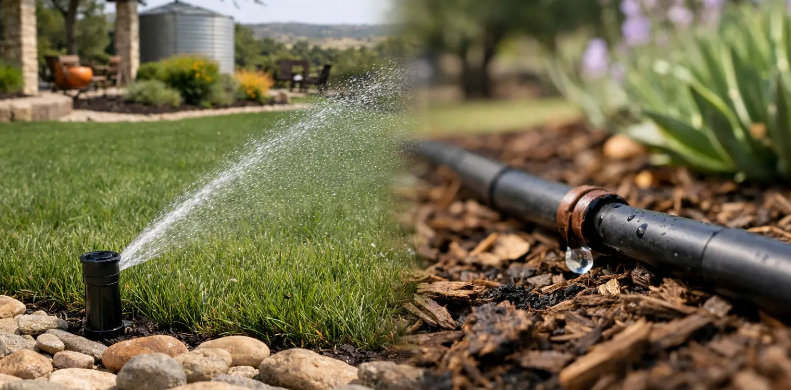
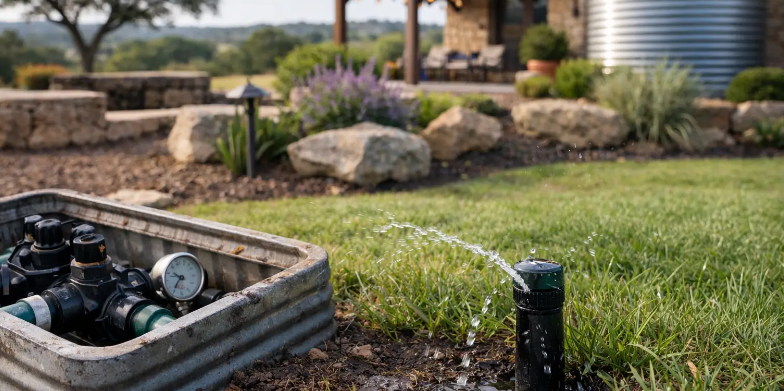
Not every irrigation leak creates a visible geyser. A cracked pipe, failed fitting, damaged drip line, or valve that does not fully close can release water underground for hours. The grass may look unusually green in one area, while the soil feels soft or muddy. You might also notice low water pressure in a zone, a sprinkler head that keeps dripping after the system stops, or an unexplained increase in water use.
Leaks are especially likely near areas that have been dug up, driven over, or disturbed by tree roots. If the soggy spot develops without rain and does not match your normal watering pattern, turn off the irrigation controller for a day or two. If the area continues getting wetter, the source may not be a scheduled zone and deserves closer investigation.
5. Downspouts, Roof Runoff, or Hard Surfaces Send Water There
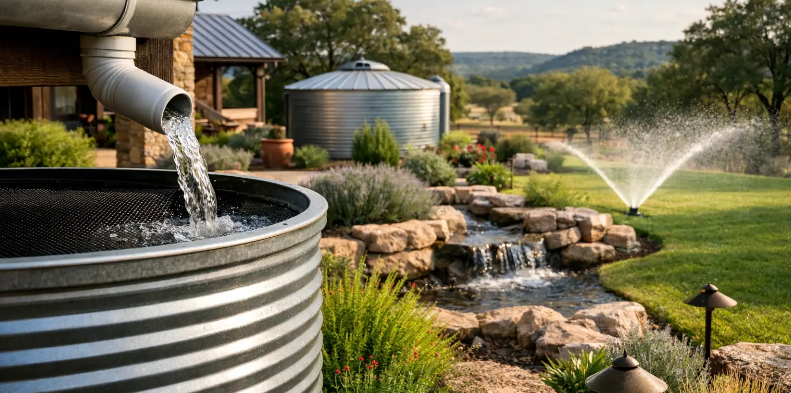
A roof sheds a large volume of water during a Texas downpour. If downspouts discharge beside the foundation or into a lawn low spot, that water can overwhelm the soil in a hurry. The same goes for runoff from driveways, patios, retaining walls, and neighboring slopes.
Watch the property during the next rain if it is safe to do so. You may see water spilling from a gutter outlet, concentrating at the edge of a patio, or flowing across a driveway into the lawn. This kind of observation is valuable because it shows the path water actually takes, not the path it appears to take when everything is dry.
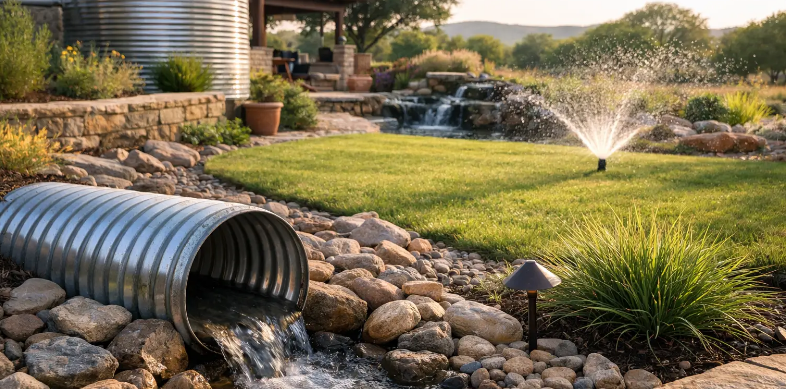
Extending downspouts, using a catch basin, or installing a buried drain line can help, but discharge locations must be planned carefully. Water should be directed to an appropriate area where it can disperse without undermining structures, washing out soil, or creating problems downhill.
6. Poor Drainage Around the Foundation Needs Attention
Water that pools near a house is not a wait-and-see issue. Besides damaging landscaping, prolonged moisture can affect foundations, patios, walkways, and exterior materials. Soil around the home should generally slope away from the structure so rainwater does not collect against it.
Do not assume a French drain is automatically the answer. French drains can be effective in the right setting, but they need correct depth, slope, aggregate, fabric selection, and a legitimate outlet. Installing one where water has no place to go can leave you with an expensive trench that still holds water. A proper drainage plan starts with the grade, the water source, and the available path for discharge.
7. Springs, Seepage, and High Water Tables Are Site Conditions
Some properties have natural seepage areas, seasonal springs, or a high water table that keeps certain ground wet. This can happen near creeks, low-lying land, and areas where groundwater moves through fractured rock or changes in soil layers. It may become more noticeable after extended rainfall.
These situations call for realistic expectations. You may be able to redirect surface water and improve access, but it may not be practical to make every inch of naturally wet ground behave like a dry lawn. In some cases, a drainage channel, rock feature, water-tolerant planting plan, or redesigned landscape area is more durable than repeatedly trying to force turf to survive there.
What to Check Before You Spend Money
Start by noting when the soggy area appears and how long it lasts. Take a photo after rain and another after an irrigation cycle. Check sprinkler heads for damage, look for runoff, and see whether the wet area aligns with a downspout, valve box, low point, or old trench.
Then turn off irrigation temporarily if weather allows. If the area begins drying normally, watering practices or a system leak are likely part of the issue. If water remains despite no rain and no irrigation, look beyond the controller. Roof drainage, underground leaks, neighboring runoff, or site conditions may be involved.
Avoid filling a wet area with loose soil until you know why it is wet. Soil added over a leaking line or poorly draining base can hide the evidence while leaving the root problem in place. Likewise, avoid repeatedly watering a struggling patch of grass just because it looks thin. Turf may be thinning because its roots are drowning, not because it needs more water.
When to Bring in a Drainage and Irrigation Professional
A professional assessment makes sense when standing water lasts more than a day or two after normal rainfall, when water is collecting near your foundation, or when the yard is wet during dry weather. It is also wise to get help if you suspect an irrigation leak, see erosion, or have tried basic schedule adjustments without improvement.
The best repair is rarely a one-size-fits-all product. A dependable solution may include irrigation repair, controller adjustments, surface grading, drain installation, downspout routing, or landscape changes that fit the property. Joshua Buss Irrigation approaches these projects by looking at the full outdoor picture, so the repair supports both water efficiency and the appearance of the landscape.
Your yard should be a place you can use and enjoy, not an area you avoid after every watering cycle. A careful look at where the water comes from and where it needs to go is the first solid step toward drier ground and a healthier landscape.