Residential Rainwater Collection Design That Works
August 5, 2026

A fountain should bring movement, sound, and a finished look to the landscape - not become a weekly source of frustration. Knowing how to maintain outdoor fountain equipment is especially valuable in the Texas Hill Country, where hot sun, windblown debris, hard water, and long dry stretches can all affect its performance. A steady maintenance routine protects the pump, keeps the water clear, and helps the feature look like it belongs on the property.
Start With the Water Level
The most common cause of fountain trouble is also one of the easiest to prevent: low water. Every fountain loses water through evaporation, splash, and wind. In Fredericksburg's summer heat, a shallow basin can lose a surprising amount in just a few days.
Check the water level at least once a week during warm weather, and more often during extended heat or windy conditions. The pump must stay fully submerged unless it is specifically designed for external use. When a pump runs dry, it can overheat quickly and may fail before the owner realizes there is a problem.
Add clean water as needed, but pay attention to how often you are refilling. A gradual drop is normal. A sudden or unusually fast loss can point to a cracked basin, loose plumbing connection, damaged liner, or water splashing outside the feature. Catching a leak early is far less costly than allowing it to undermine stonework, wash out nearby soil, or damage the pump.
Keep Debris Out Before It Reaches the Pump
Leaves, grass clippings, mulch, seed pods, and dust eventually settle in every outdoor fountain. Left in the basin, that material breaks down and creates sludge. It can also clog the intake screen, restrict water flow, and put unnecessary strain on the pump.
A quick skim every few days makes a real difference. Use a small net to remove floating debris, and check the pump intake when you notice reduced flow or an uneven stream. If the fountain sits beneath trees or near planting beds, expect to clean it more often during spring growth and fall leaf drop.
Avoid blowing lawn clippings directly toward the fountain. Grass and fertilizer residue can cloud the water and encourage algae growth. When landscape crews are working nearby, covering the feature temporarily can save time on cleanup afterward.
Clean the Basin on a Regular Schedule
A complete cleaning is not needed every week, but most fountains benefit from a basin cleaning every one to three months. The right schedule depends on the size of the feature, how much shade it receives, the amount of debris around it, and whether wildlife frequently uses it as a drinking spot.
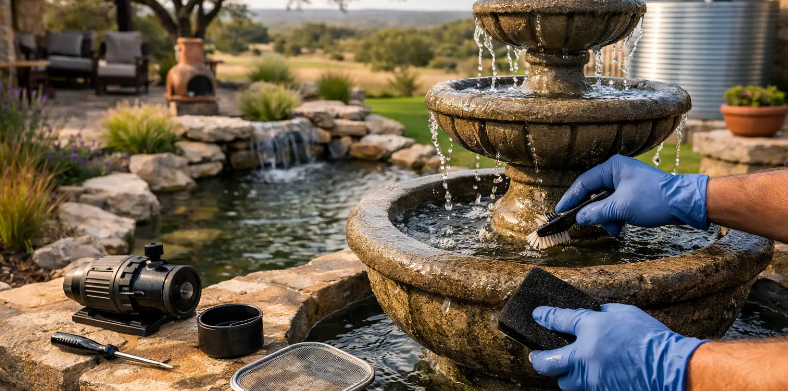
Turn off the pump before draining the basin. Remove the pump and any loose components, then use a soft brush or nonabrasive pad to scrub the basin walls, decorative stone, and spillways. A small amount of mild, fountain-safe cleaner can help with residue, but harsh household chemicals should be avoided. Bleach, strong acids, and abrasive cleaners can damage finishes, affect nearby plants, and leave behind residues that are hard on pumps.
Rinse thoroughly before refilling. If the fountain includes fish, aquatic plants, or sensitive materials such as certain natural stones, the cleaning approach needs to be adjusted. In those cases, use products made for that type of water feature and avoid changes that could disrupt the living environment.
How to Maintain Outdoor Fountain Pumps
The pump is the working heart of the fountain. It needs clear water, consistent water depth, and occasional attention to keep delivering the flow and sound the feature was designed for.
During each full cleaning, unplug the pump and remove its outer cover. Clean the intake screen and inspect it for mineral buildup or trapped debris. Depending on the pump model, the impeller can often be removed and rinsed as well. This small rotating part is where fine sediment and hard-water scale commonly collect.
If water flow has weakened, do not assume the pump has failed. Start by checking the water level, intake screen, tubing, and fountain nozzle. A partially clogged nozzle or kinked line can cause the same symptoms as a failing pump. If those items are clear and the pump still hums without moving water, it may need a more detailed inspection or replacement.
It is also wise to inspect the power cord and outlet area. Outdoor electrical connections should remain dry, protected, and connected to a properly functioning ground-fault circuit interrupter outlet. Never handle a plugged-in pump while standing in water.
Manage Algae and Hard-Water Deposits
Green water, slippery surfaces, and white crusty buildup are common outdoor fountain issues. Algae grows fastest when water is warm and exposed to direct sunlight. Mineral scale develops when water evaporates and leaves hard-water deposits behind, particularly on spillways, nozzles, and stone edges.
Shade can reduce algae growth, but it is not always practical or desirable to add it. A fountain placed in full sun may simply need more frequent cleaning and a fountain treatment formulated to control algae. Choose a product that matches your fountain's materials and whether pets, birds, or wildlife have access to the water.
For mineral deposits, gentle, regular cleaning works better than waiting for a thick layer to form. A soft brush and a cleaner approved for the fountain surface can remove most scale. Natural stone requires extra care because the wrong cleaner can etch or discolor it. If a feature has recurring heavy scale, a professional can help identify whether water chemistry, design details, or water loss is contributing to the problem.
Watch the Fountain During Texas Weather Changes
Texas weather can shift quickly, and fountains feel those changes. Summer requires the most frequent checks because evaporation is high and algae thrives in warm water. In periods of drought, keeping the basin properly filled also prevents unnecessary pump damage.
After a heavy storm, inspect the basin for dirt, mulch, and runoff. Stormwater may introduce fertilizer, soil, or organic matter that turns clear water cloudy. Clear debris promptly and make sure the fountain has not settled or shifted.
Freezing weather is less frequent in the Hill Country than in colder regions, but it still deserves attention. When a hard freeze is expected, turn off the feature, drain exposed lines if the system allows, and protect the pump according to the manufacturer's recommendations. Water left inside small pipes, bowls, or decorative pieces can expand and crack materials. For fountains that remain operational year-round, make sure water continues moving and that the equipment is rated for cold-weather use.
Protect the Surrounding Landscape
A well-maintained fountain should support the landscape, not create wet spots or waste water. Check the splash pattern after cleaning or adjusting the pump. Water should fall back into the basin rather than soak nearby mulch, stone joints, or planting beds.
This matters even more on sloped properties, where repeated overspray can carry soil and mulch away from the feature. Adjust nozzles, water pressure, or decorative rocks as needed to keep the water contained. If a fountain is constantly splashing out in high wind, reducing the pump flow may be the practical answer. A dramatic stream is appealing, but not if it requires constant refilling or causes erosion.
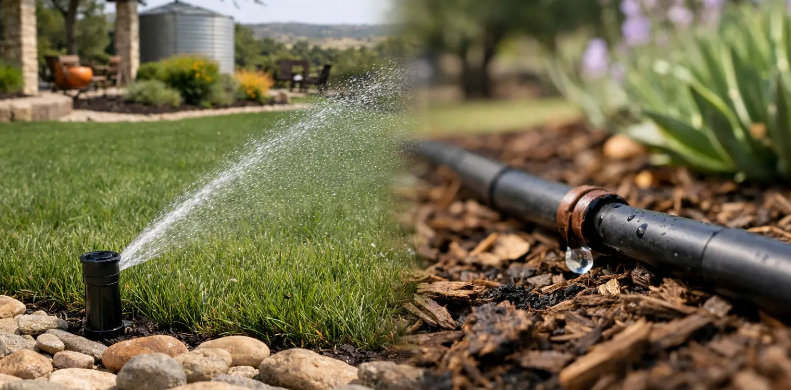
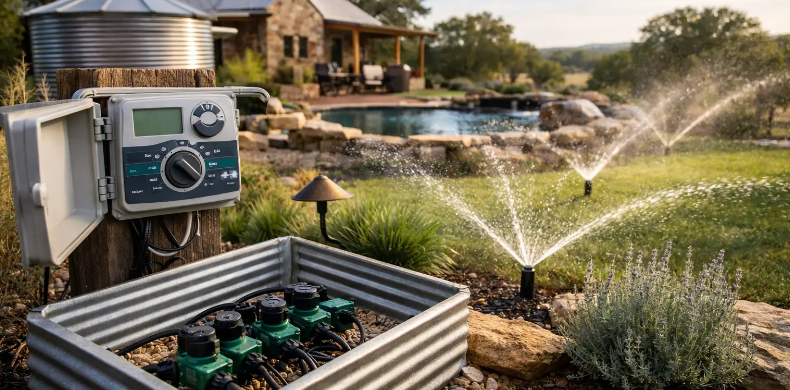
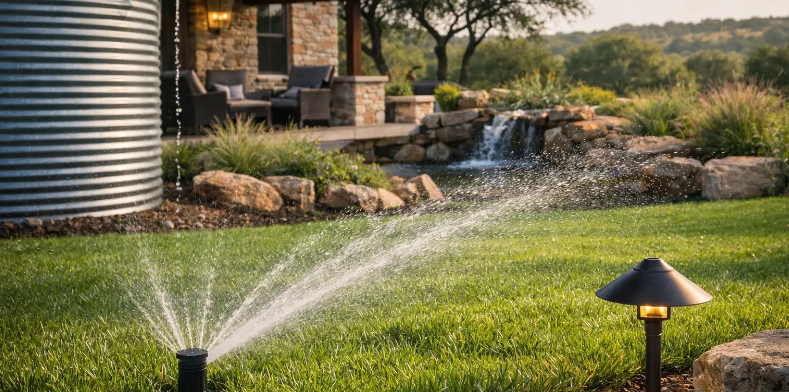
Keep nearby irrigation heads aimed away from the fountain as well. Overspray adds unnecessary water, can introduce lawn chemicals, and may leave mineral spots on stone surfaces. When irrigation, drainage, and water features are planned together, the entire outdoor space is easier to maintain.
Know When a Repair Is Worth It
Some maintenance is simple: topping off water, skimming leaves, and cleaning a screen. Other problems need a trained eye. Call for help when the fountain loses water rapidly, trips the electrical outlet, has recurring pump failures, shows cracks in masonry or stone, or has water that will not stay clear despite regular care.
A qualified water-feature professional can trace leaks, repair plumbing, replace or resize a pump, correct a poor splash pattern, and address drainage around the basin. Joshua Buss Irrigation helps property owners evaluate the full system so the repair supports both the fountain and the surrounding landscape.
A fountain does not need complicated care to stay dependable. It needs regular attention before small issues become expensive ones. Give the water level and pump a quick check as part of normal landscape care, and the feature can keep adding character to the property through every season.