Rainwater Harvesting Installation That Works
August 13, 2026
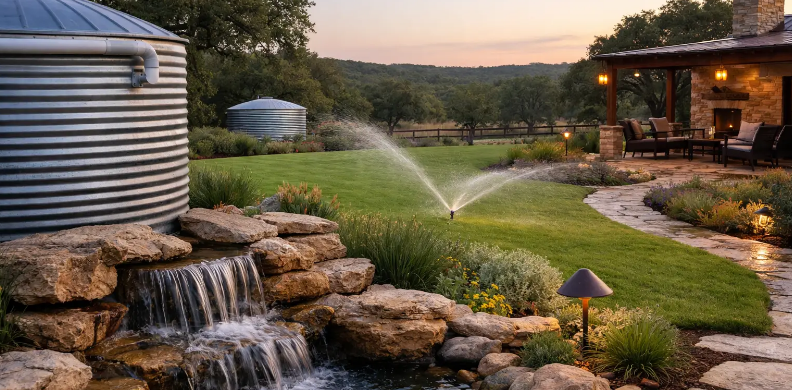
A hard Texas rain can send thousands of gallons off a roof in a single afternoon. Without a collection system, that water rushes through gutters, cuts across the property, and is gone before the landscape needs it most. A properly planned rainwater harvesting installation puts that rainfall to work, giving your lawn, trees, beds, and irrigation system a dependable supplemental water source when dry weather returns.
For Fredericksburg-area homes, ranches, commercial sites, and estates, the goal is not simply to place a tank beside a building. The system has to fit the roof, the terrain, the landscaping, the way the property is used, and the amount of water you want available between rains. Good workmanship up front makes the difference between a system you can count on and an expensive tank that never performs as expected.
Start With the Water You Can Actually Collect
Roof area is the starting point for every rainwater system. As a general rule, one inch of rain falling on 1,000 square feet of roof can yield roughly 600 gallons of water after normal collection losses. A larger metal roof can produce a substantial amount of water during a Hill Country storm, but the actual yield depends on roof shape, gutter layout, downspout placement, debris, and rainfall patterns.
This is why tank size should not be chosen by appearance alone. A small tank may be right for watering a few foundation beds or keeping newly planted trees alive. A larger storage system may be a better fit for a broad landscape, a ranch entrance, a commercial property, or a property owner looking to reduce dependence on well or municipal water for irrigation.
Storage is always a balance. More capacity provides a better reserve for long stretches without rain, but it also requires more space, a stable foundation, and a larger investment. In some cases, several tanks positioned where they work best are more practical than one oversized tank. The right answer depends on the property and the water demand, not a one-size-fits-all recommendation.
Rainwater Harvesting Installation Begins With Site Planning
A collection system needs a solid plan before equipment arrives. The tank location should be accessible for maintenance and close enough to the collection point to keep plumbing efficient. It also needs to work with the property’s grade, existing utilities, traffic patterns, landscaping, and appearance.
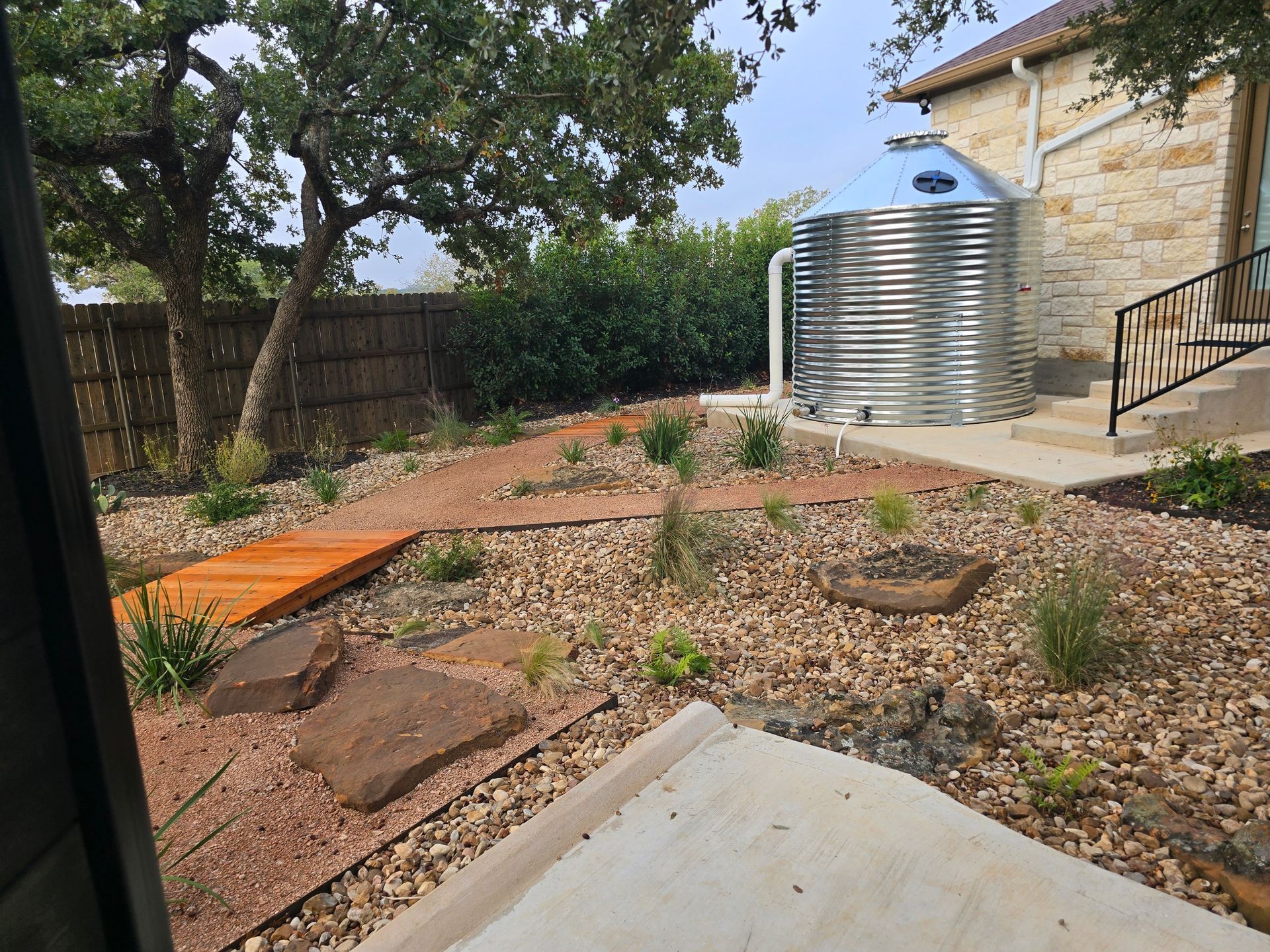
A full tank is heavy. Water weighs more than eight pounds per gallon, so a 5,000-gallon tank holds over 40,000 pounds when full. That is why a level, properly prepared base is not optional. Depending on the tank and site, that may mean a compacted gravel pad, a concrete pad, or another engineered foundation that supports the load and keeps the tank level over time.
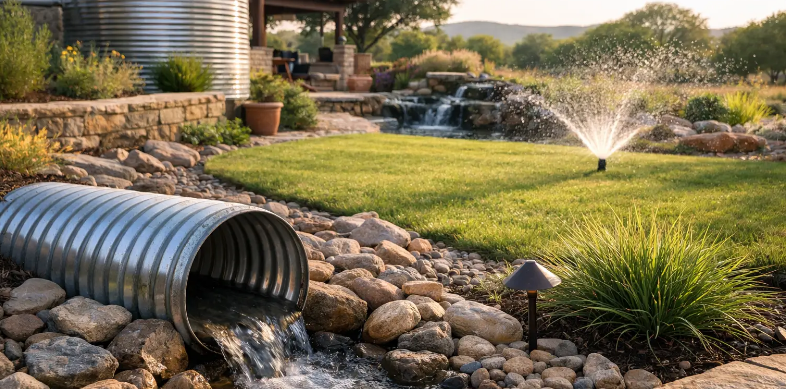
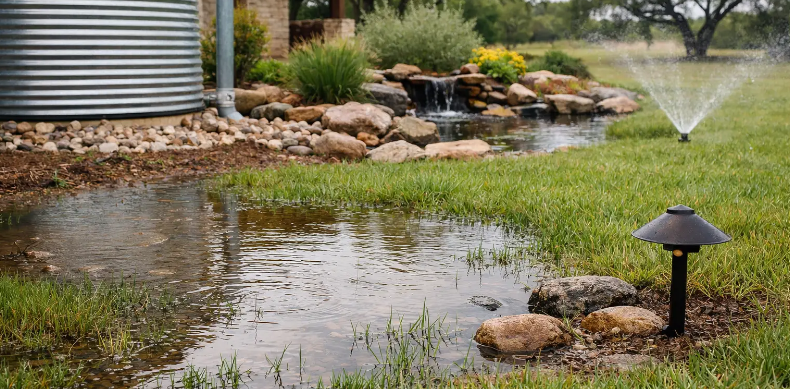
Drainage matters, too. A rainwater system should capture water, not create new runoff problems around the home, barn, or commercial building. Overflow must have a planned path that carries excess water away from foundations, driveways, and erosion-prone areas. On many Hill Country properties, that overflow can be directed toward a swale, drainage feature, or planted area where it can soak into the ground safely.
Clean Water Starts Before the Tank
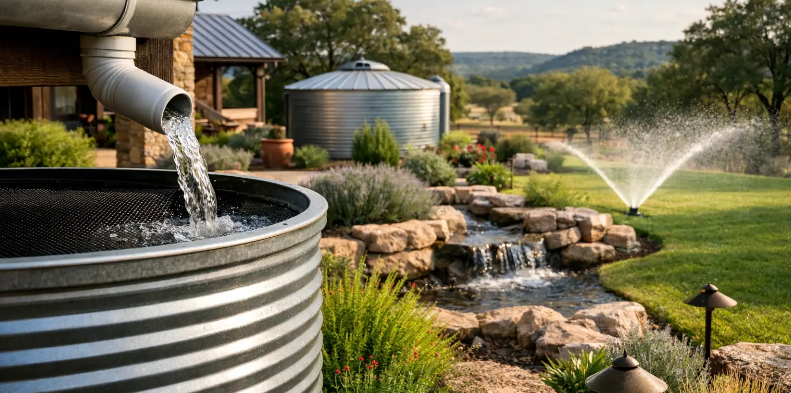
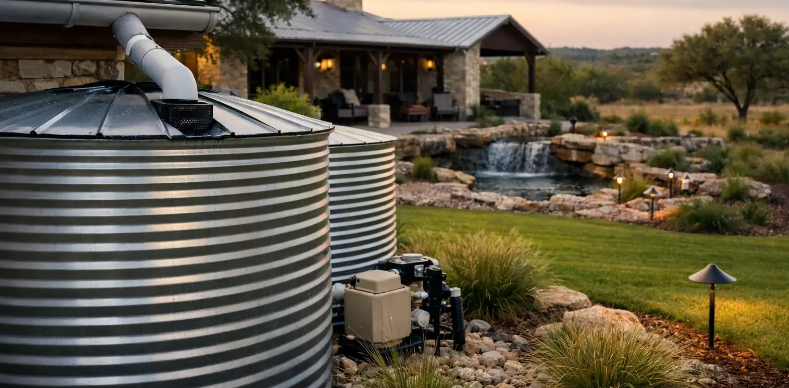
The tank is only one part of the system. Gutters and downspouts guide roof runoff toward the storage tank, but they also carry leaves, dust, pollen, and other debris. Proper screening and filtration protect the stored water and reduce maintenance.
A well-built system typically includes leaf protection at the gutters or downspouts, a first-flush device that diverts the initial dirty runoff from the roof, and a screened tank inlet. The first flush is especially useful after long dry periods, when dust and debris have had time to build up on the roof. An overflow screen also helps keep insects and small animals out of the tank.
These details may not be the most visible part of a project, but they are where dependable craftsmanship shows. Skipping them can lead to clogged lines, poor water quality, unnecessary cleaning, and frustration after the first big storm.
Match the System to How You Will Use the Water
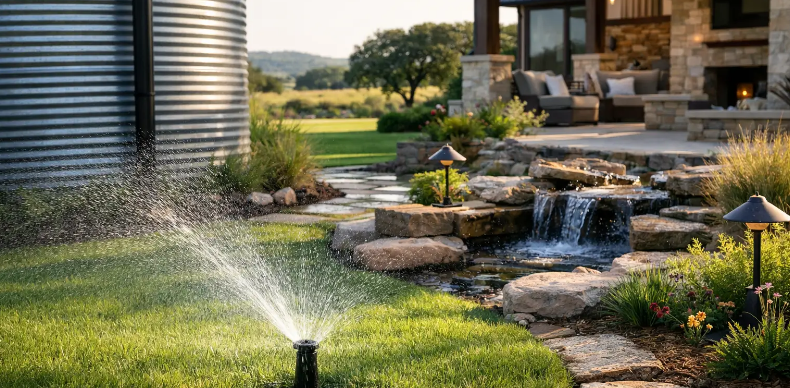
For most property owners, harvested rainwater is used for landscape irrigation. It is excellent for trees, shrubs, flower beds, vegetable gardens, and lawns because it is free of many of the minerals and treatment chemicals found in other water sources. It also helps keep the landscape alive during water restrictions, drought conditions, or periods when well production is under pressure.
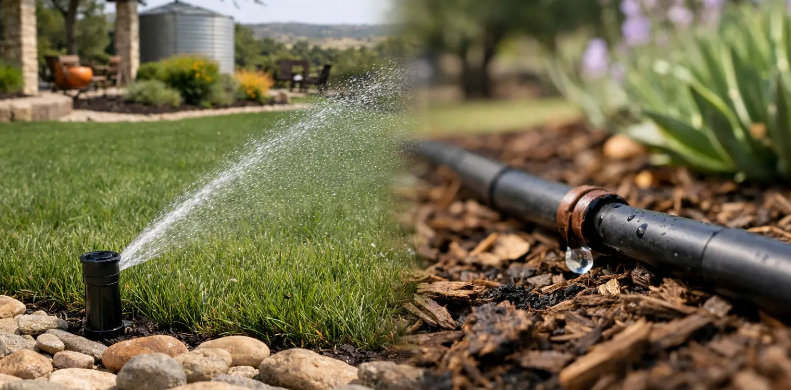
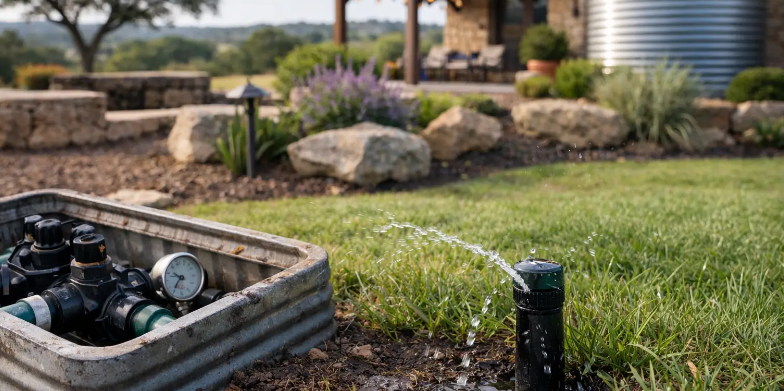
The way the water will be delivered determines the equipment needed. A gravity-fed setup may work when the tank sits above the area being watered, though that is not practical on every property. More commonly, a pump moves water from the tank through a dedicated irrigation zone, drip system, hose connection, or integrated irrigation system.
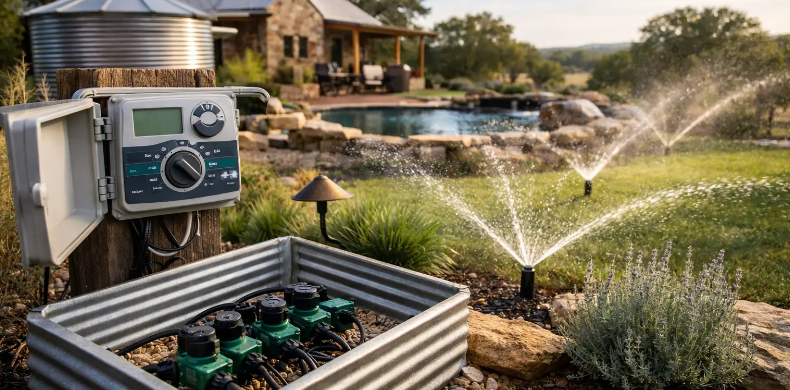
Pump sizing should be based on the required flow and pressure, not guesswork. Drip irrigation needs far less pressure than spray heads, while a large lawn zone may require more flow than a small pump can provide. Controls can be set up to run manually, on a timer, or as part of a smart irrigation schedule that responds to weather and seasonal needs.
If rainwater will be connected to an existing irrigation system, the design must clearly separate water sources and include the proper valves and backflow protection. This is one area where professional installation protects both the system and the property owner. A clean connection makes it easy to use harvested water when it is available and switch to another source when the tank runs low.
Potable Water Is a Different Project
Rainwater can be treated for household use, but a potable system requires more than a basic irrigation tank. Filtration, disinfection, plumbing design, testing, and applicable local requirements all need to be addressed carefully. For many homeowners, using rainwater for irrigation delivers the most immediate value with a simpler system.
That does not mean future needs should be ignored. If a property owner may eventually want to expand the system, planning tank access, plumbing routes, and equipment space during the original installation can save time and money later.
Choose Components Built for Texas Conditions
Texas heat, sudden heavy rain, windblown debris, and long dry spells are hard on outdoor equipment. Tanks, fittings, pumps, valves, screens, and control components should be selected for the conditions they will face. The least expensive component is not always the best value if it cracks in the sun, clogs easily, or is difficult to service.
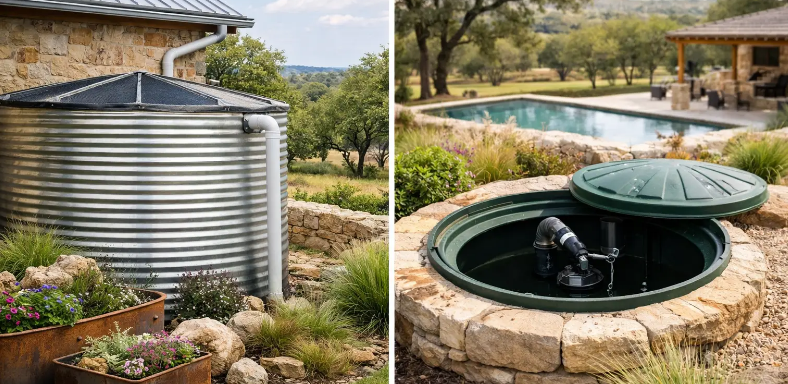
Tank material and color deserve attention. Some property owners prefer tanks that blend into the landscape, while others need a placement that keeps the system less visible from the road or outdoor living areas. Appearance matters, but access to lids, filters, pumps, and shutoff valves matters just as much. A system should look like it belongs on the property without becoming difficult to maintain.
For larger ranch, estate, or commercial applications, the system may include multiple collection points, larger storage capacity, booster pumps, pressure tanks, and irrigation zoning. Those projects benefit from a single contractor who can consider collection, water movement, drainage, and landscape needs together rather than treating each piece as a separate job.
Keep Your System Working Season After Season
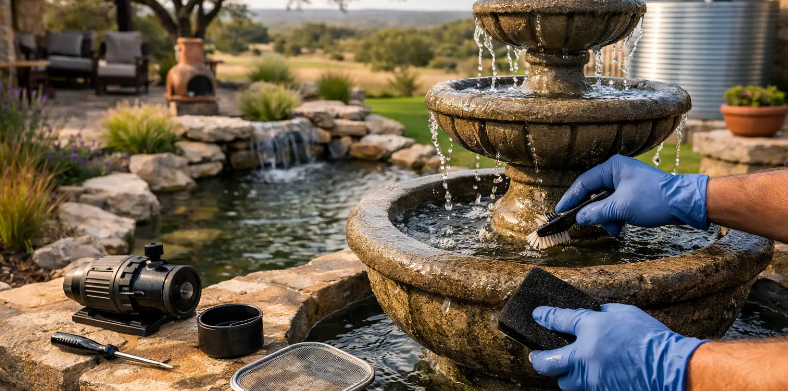
Rainwater collection is low maintenance, not no maintenance. A few routine checks keep the system performing well and help catch small issues before they become repairs. Gutters should be cleared when leaves and debris build up. Screens and first-flush devices should be inspected after major storms. Tank lids, inlet screens, overflow lines, and pump connections should be checked periodically for damage or blockage.
It is also wise to review irrigation settings as the seasons change. A rainwater tank can be drained quickly if irrigation zones run too long or too often. Drip irrigation around trees, native plantings, and beds often makes the stored water go further than high-volume spray heads. Healthy soil, mulch, and properly selected plants extend that benefit even more.
During extended dry weather, be realistic about the reserve available. Rainwater harvesting is a powerful conservation tool, but it does not make rainfall predictable. A well-designed system gives you flexibility and helps reduce water use, while a backup source may still be needed for larger landscapes or prolonged drought.
Build a System That Fits Your Property
A rainwater system should earn its place on the property. It should collect meaningful amounts of water, protect the building and surrounding ground, work with the irrigation plan, and be straightforward to maintain. That takes careful sizing, proper site preparation, quality components, and an installer who understands how water behaves on Hill Country land.
Joshua Buss Irrigation approaches rainwater projects with that practical mindset. A thoughtful consultation can identify the best collection areas, the right storage approach, and the most useful way to put captured water back into the landscape. Done right, every good rain becomes one more resource your property can use when the heat sets in.