How Irrigation Contractors Protect Hill Country Lawns
August 21, 2026
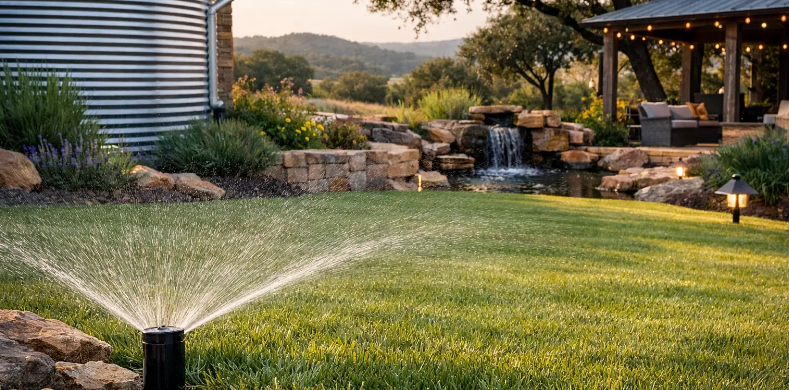
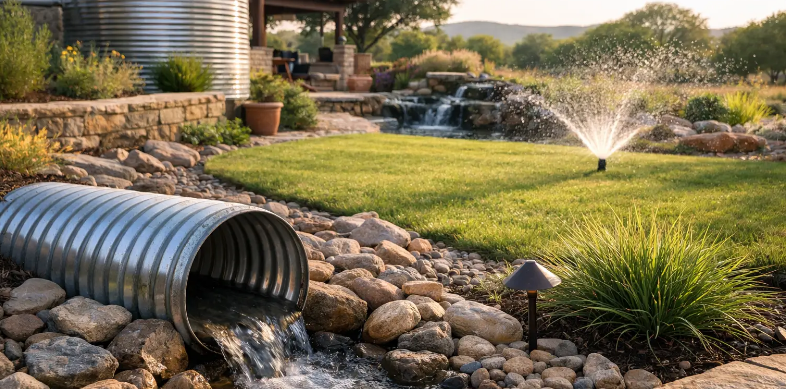
A Texas Hill Country lawn can look healthy one week and stressed the next. High heat, rocky soil, strong sun, shifting rainfall, and water restrictions can expose weak spots in any irrigation system fast. Experienced irrigation contractors do more than install sprinkler heads. They help property owners deliver the right amount of water to the right areas, protect plant material, and avoid paying to water driveways, sidewalks, or already-saturated ground.
For homeowners, ranch owners, and commercial property managers, the goal is not simply a greener lawn. It is a landscape that holds up through summer heat while using water responsibly and remaining manageable for years to come.
What Irrigation Contractors Actually Do
A qualified irrigation contractor starts by looking at the property as a complete system. That means considering the slope of the land, soil conditions, sun exposure, plant types, water source, drainage patterns, and the way the property is used. A front lawn, shaded courtyard, native planting bed, vegetable garden, and livestock area do not have the same water needs. Treating them as if they do is where waste and plant damage begin.
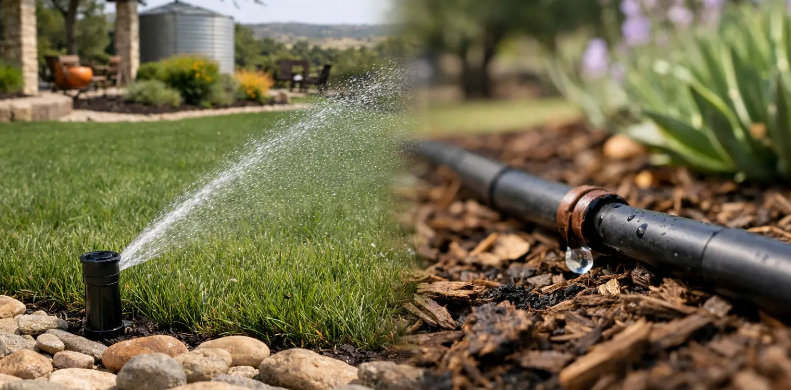
From there, the contractor can design or improve zones that match those needs. Turf areas may need a different application rate than shrubs or trees. Drip irrigation is often a practical choice for beds, gardens, and trees because it directs water at the root zone instead of spraying it into the air. Spray heads and rotary nozzles have their place, but they must be selected and spaced correctly to provide even coverage.
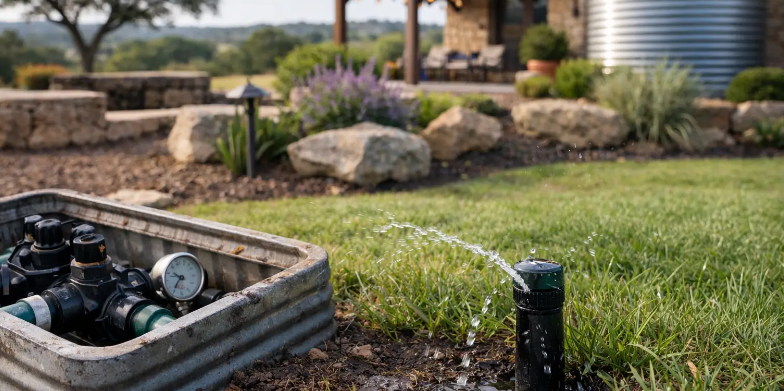
Installation is only one part of the work. Reliable contractors also diagnose leaks, broken valves, failing controllers, poor pressure, damaged wiring, clogged nozzles, and zones that run too long or not long enough. On an established property, a thoughtful repair can sometimes make a major difference without replacing the entire system.
Why Local Design Matters in the Hill Country
Irrigation is not one-size-fits-all, especially around Fredericksburg. Many properties have shallow, rocky soils that drain quickly in some places and hold water in others. Elevation changes can affect pressure. Long driveways, large lots, mature oak trees, and outbuildings can make trenching and zoning more complicated than they appear on a basic site plan.
A system designed for a flat suburban lot may perform poorly on a Hill Country property. If water is applied faster than the soil can absorb it, it runs downhill instead of reaching the roots. If sprinkler heads are poorly positioned, trees and structures may block coverage while exposed areas dry out. If zones are oversized, low pressure can lead to uneven watering across the entire section.
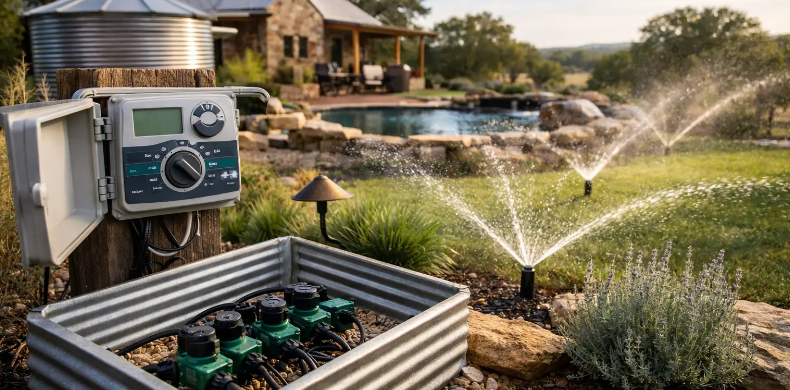
Good design accounts for those real conditions. It may include shorter cycle-and-soak run times on slopes, separate zones for sunny and shaded areas, pressure-regulated components, drip lines for planting beds, and rain or soil-moisture sensors. The best approach depends on the property, the landscape goals, and the available water supply.
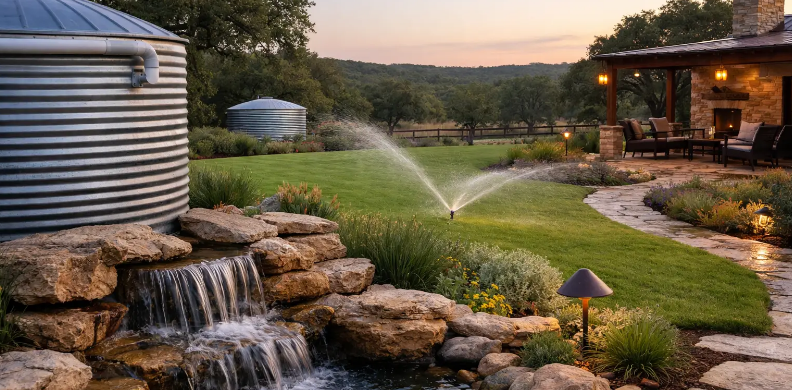
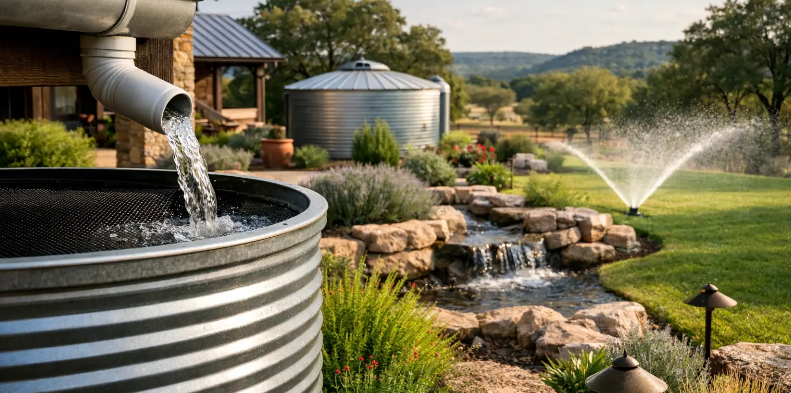
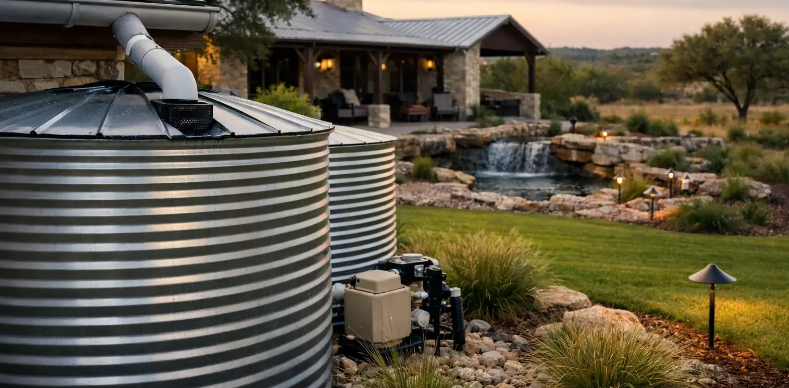
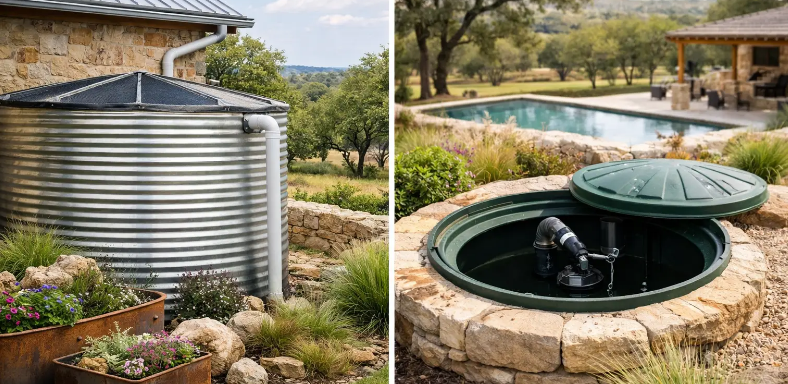
That local knowledge also matters when planning rainwater harvesting. A collection system can supplement irrigation needs, reduce dependence on other water sources, and make better use of rainfall when it arrives. It requires careful planning around roof catchment, storage capacity, filtration, pumping, overflow, and how the collected water will be used. It is a practical investment for some properties, while others may benefit more from repairing an inefficient existing irrigation system first.
Signs Your Irrigation System Needs Professional Attention
A system does not have to fail completely before it needs service. In fact, the most expensive problems often begin as small issues that go unnoticed for a season or two. A wet spot near a valve box, a zone that will not shut off, or an unusually high water bill deserves attention before it turns into a damaged lawn or a major repair.
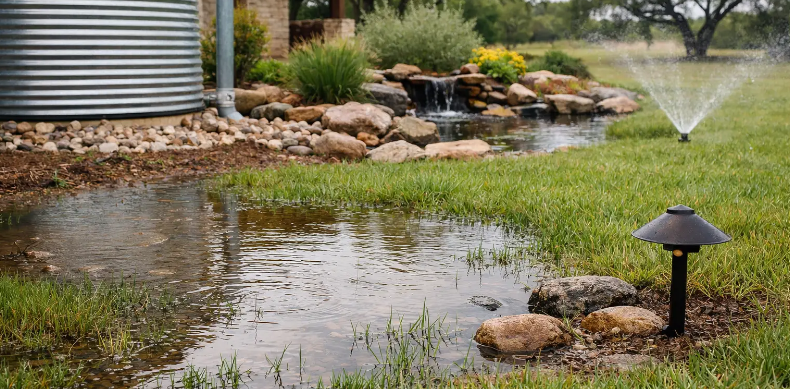
Watch for dry patches that remain after a regular watering cycle, water pooling near heads, misting instead of a clean spray pattern, runoff along pavement, or plants that look stressed even though the system runs often. These issues can point to broken heads, poor nozzle selection, a pressure problem, a leak, or a controller schedule that does not match seasonal conditions.
It is also wise to inspect systems after freezes, construction work, landscaping changes, or a long period of drought. Roots grow, soil shifts, equipment ages, and a landscape rarely looks the same five years after a system is installed. An irrigation layout should be allowed to evolve with the property.
Choosing Irrigation Contractors You Can Trust
The right contractor should be willing to walk the property, ask clear questions, and explain the recommended work in plain language. You should understand what is being repaired or installed, why it is necessary, and how it will improve coverage or efficiency. A contractor who only offers a quick quote without evaluating the site may miss the conditions that drive long-term performance.
Ask how the contractor approaches zone design, pressure management, drainage, controller programming, and future maintenance. If you are planning landscaping, lighting, a water feature, or rainwater collection, ask whether the work can be coordinated from the start. Planning these elements together helps prevent unnecessary digging, conflicts between systems, and costly changes later.
Price matters, but the lowest bid is not always the best value. A cheaper installation can become expensive if it uses undersized piping, poorly placed heads, inadequate valves, or components that are difficult to service. On the other hand, not every property needs the most elaborate system. Honest recommendations should fit the size, goals, and budget of the job.
Dependability matters just as much as technical ability. Look for a contractor who returns calls, provides a clear scope of work, respects the property, and stands behind the craftsmanship. For a system that is buried underground and expected to perform in demanding weather, details matter.
Smart Watering Starts After Installation
Even a well-designed system needs sensible management. A controller should change with the season instead of running the same schedule all year. Summer heat may require more frequent watering, but that does not mean every zone should run longer. Deep, appropriate watering usually serves established turf and many plants better than frequent shallow cycles, though new landscaping often needs a different schedule while roots establish.
Rainfall should also affect the plan. A rain sensor or smart controller can help prevent watering during or immediately after a storm, but it still needs periodic review. Technology is useful when it supports good judgment, not when it is left unattended for years.
Property owners can help protect their investment by keeping heads clear of mulch and grass, avoiding damage from mowers and vehicles, and reporting changes early. If a landscape bed is expanded or a new patio is added, the irrigation system may need to be adjusted rather than worked around.
Build an Outdoor System That Works Together
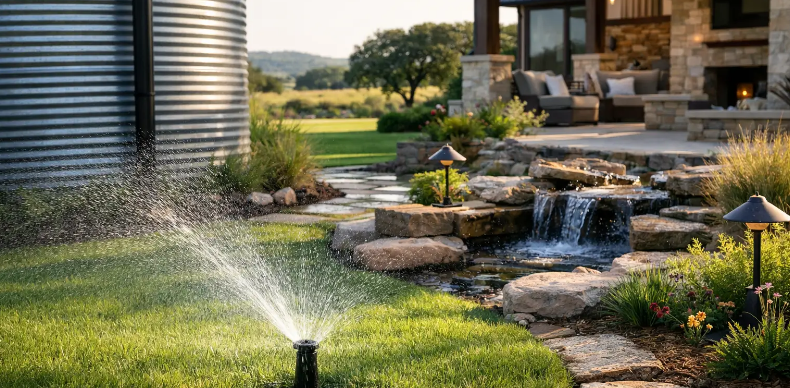
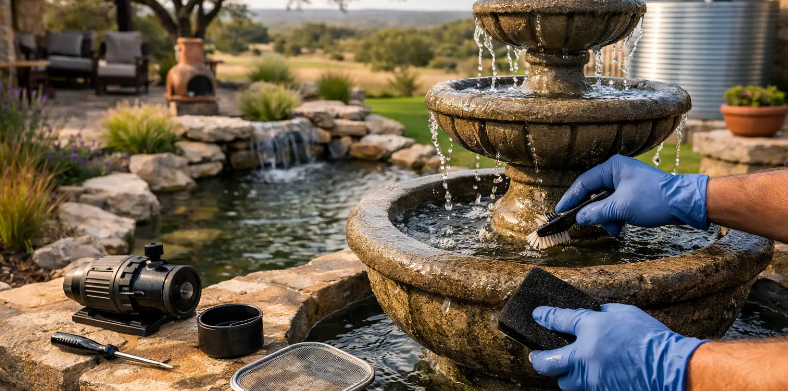
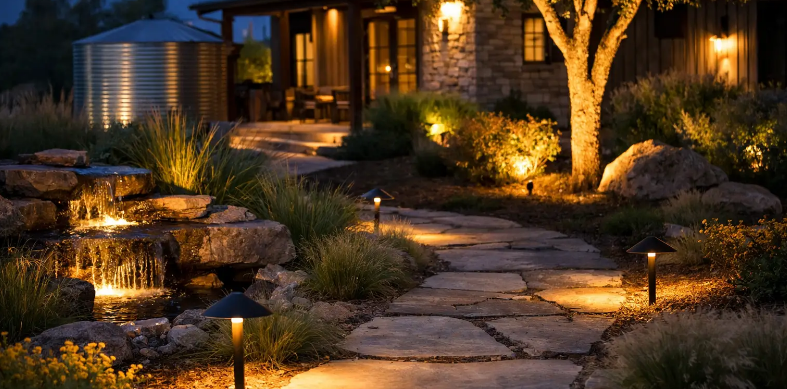
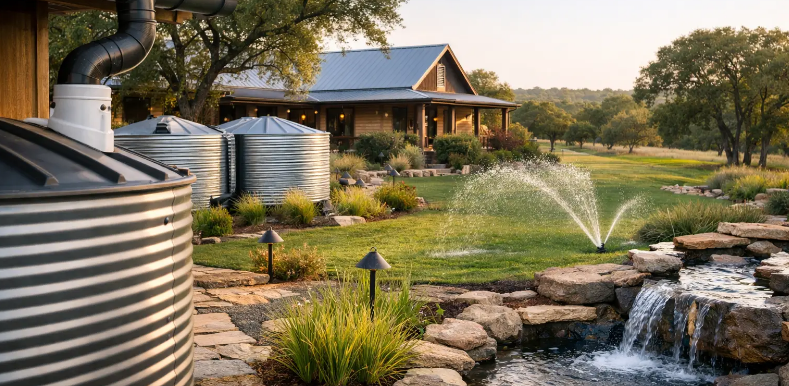
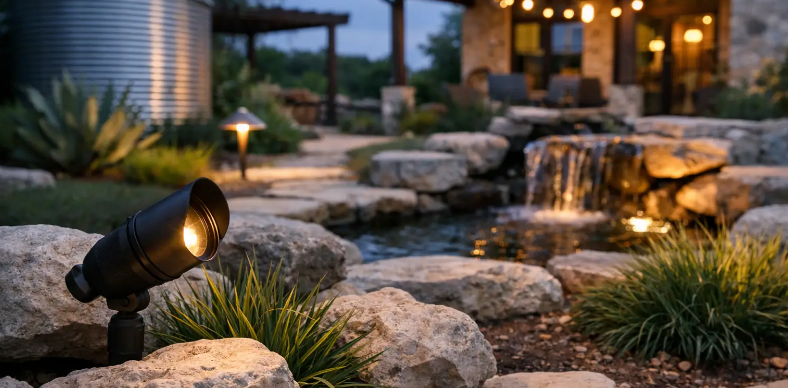
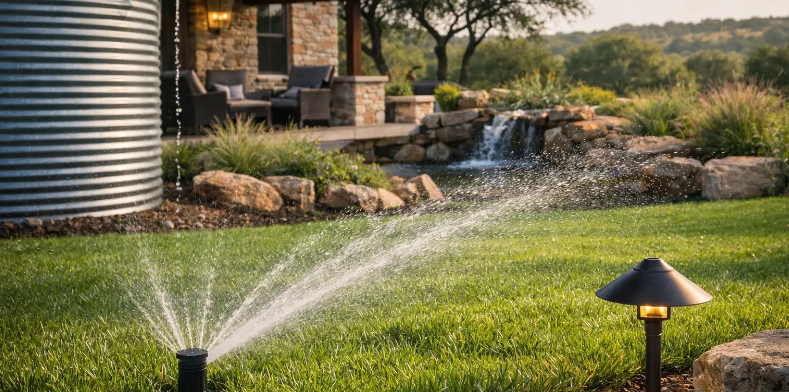
The best outdoor improvements work as one plan. Irrigation supports healthy turf and plantings. Rainwater collection can provide a valuable supplemental source. Landscaping adds shade, color, and curb appeal. Low-voltage lighting improves safety and lets the property be enjoyed after dark. Water features can create a focal point when they are designed with practical maintenance in mind.
When these pieces are coordinated, the finished property looks intentional and works harder for the owner. Joshua Buss Irrigation approaches projects with that bigger picture in mind, combining water management with custom outdoor improvements built for the way Hill Country properties are actually used.
If your lawn is struggling, your water bill is climbing, or your current system has become more trouble than help, start with a professional evaluation. A clear look at the property today can prevent wasted water, stressed landscaping, and larger repairs down the road.